
Dr. med. Daniel Bányai
Dr. med. Daniel Bányai is an ophthalmologist at Bányai Neue Augen and specializes in refractive laser eye treatments at the Stuttgart and Karlsruhe locations.
Dear readers, dear patients,
as an ophthalmologist and part of the Bányai New Eyes team, improving your visual acuity through state-of-the-art medical procedures is particularly important to me.
In a team that can look back on over 51,000 successful treatments and more than 3,000 procedures per year, I bring my experience from renowned clinics in Germany and Great Britain.
In our specialized laser centers in Stuttgart and Karlsruhe as well as in the ophthalmological practices in the greater Stuttgart area, Bányai Neue Augen offers the entire spectrum of modern ophthalmology – with the latest technical equipment and a personal, trusting atmosphere.
“Good vision means quality of life. It is my goal to help you achieve a clear and unrestricted view of the world.”
I look forward to accompanying you on your journey to greater visual comfort and perhaps a life without glasses and contact lenses!

Dr. med. Daniel Bányai
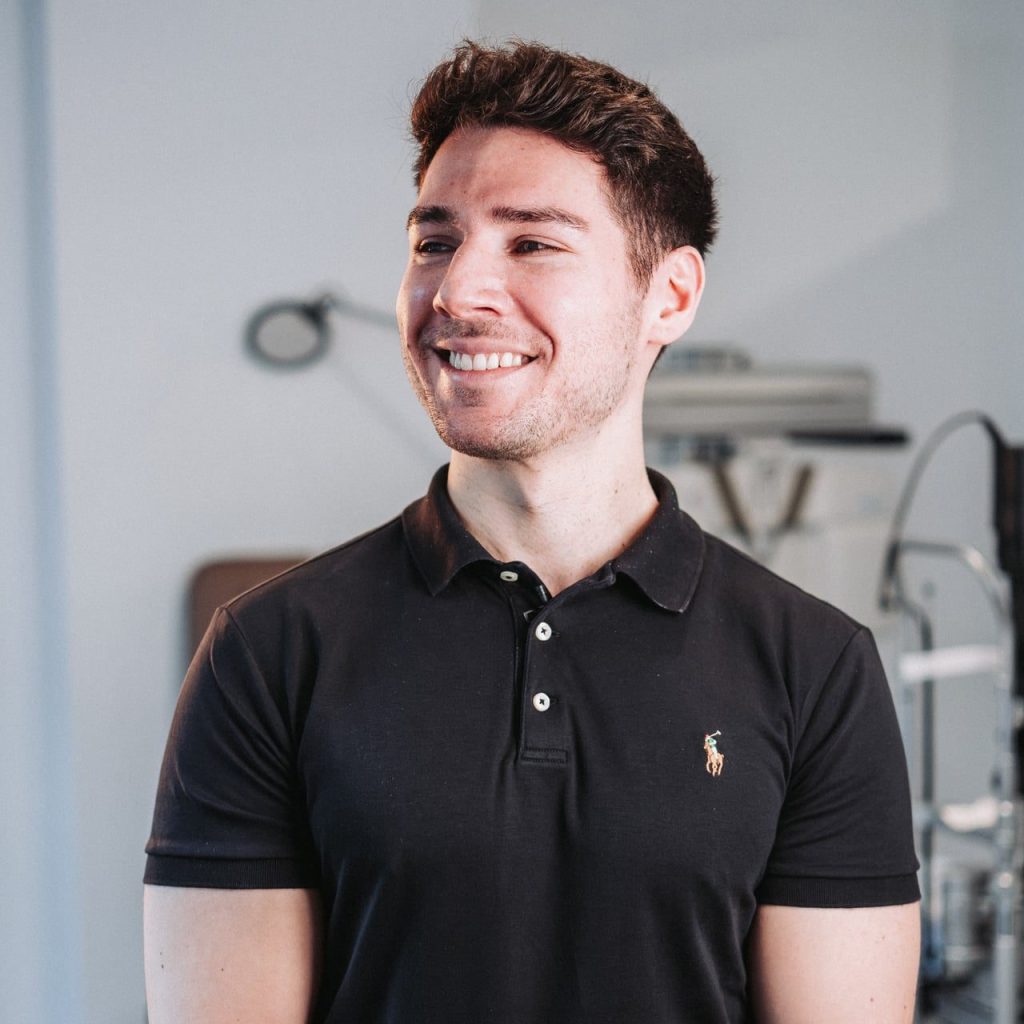
My resume:
- 2021 – Assistant physician, Aophthalmology practice of Dr. Bányai, Leonberg
- 2021–2022 – Resident physician in training, University Eye Clinic Ulm
- 2022–2023 – Resident physician in training, Charité University Eye Clinic Berlin
- 2023–heute – Resident Physician in Training, Bányai Ophthalmology
Educational path
I completed my medical studies at the Martin Luther University of Halle-Wittenberg, supplemented by an Erasmus semester at the University of Strasbourg. I passed all three state examinations there and received my medical license in December 2020.
2013 – International Baccalaureate, International School of Stuttgart
2014-2020 – Medical studies, Martin Luther University Halle-Wittenberg
- First State Examination (2016)
- Erasmus Semester, Université de Strasbourg (2017/2018)
- Second State Examination (2019)
- 3rd State Examination (2020)
Dezember 2020 – Medical license
Practical experience in ophthalmology
Even during my studies I gained practical experience at international eye clinics, including the Charlottenklinik Stuttgart, the LMU Munich, the Moorfields Eye Hospital London and the Charité Berlin.
- 2013 – Nursing internship, Charlottenklinik for Ophthalmology Stuttgart
- 2013 – Voluntary internship, Dr. Banyai Eye Clinic, Leonberg
- 2017 – Clinical elective, Eye Clinic of the University of Munich
- 2017 – Famulatur, Moorfields Eye Hospital London
- 2018 – Clinical elective, Institute of Ophthalmology Halle (Saale)
- 2020 – Clinical elective (ophthalmology), Charité Eye Clinic – Virchow Clinic Berlin
Research
Doctoral thesis in ophthalmology: Research group of Prof. Dr. med. Ricarda Schumann, Ludwig Maximilian University of Munich. “Pores of the inner limiting membrane – Immunocytochemical analysis of the vitreoretinal interface in tractional maculopathies”
Continuing education and training:
Dr. Daniel Banyai is committed to continuous professional development and regularly participates in renowned international conferences and training courses. This includes, in particular, annual attendance at the ESCRS (European Society of Cataract and Refractive Surgeons), one of the world’s leading professional societies for cataract and refractive surgery. He has been an official ESCRS member since 2026. Through regular continuing education and specialized courses, he ensures that his patients always benefit from the latest findings and treatment methods in modern ophthalmology.
About the Laser Centers in Stuttgart and Karlsruhe:

In the state-of-the-art eye laser centers in Stuttgart’s Zeppelin-Carré and in Karlsruhe, Doctor medic Liliana Bányai & Dr. med. Daniel Bányai and their specialized team of doctors combine decades of experience with the latest technology.
Since their opening in Stuttgart (2022) and Karlsruhe (2024), the centers for refractive surgery have offered state-of-the-art laser procedures such as Femto LASIK, Smile PRO or Presbyond® in a central location.
With over 3,000 procedures performed annually, the Bányai Neue Augen laser centers in Stuttgart and Karlsruhe are among the most experienced providers of refractive surgery in the region. Utilizing state-of-the-art technologies and surgical techniques, the team covers the entire spectrum of vision correction.
In Stuttgart and Karlsruhe, you benefit from the synergy of personal medical experience and a practice structure that pursues one goal through continuous training and the most precise diagnostics: A life without glasses and contact lenses.
To all articels
-

Does varifocal spectacles make sense for farsightedness?
A progressive spectacle is a type of spectacle that allows farsighted people to see more clearly while having a wide angle of vision. These glasses are particularly useful as they help the eyes to see sharply at different distances. In this article, we will explore the pros and cons of using progressive glasses. We will…
-

Corneal curvature Cause: Dr. med. Bányai clarifies
A corneal curvature (astigmatism) is caused by different refractive powers of the eye or an uneven curvature of the cornea of the eye. Causes are genetic predisposition, injuries, corneal diseases or defective vision. Read more in this post.
-

Herpes in the eye: Dr. med. Bányai clarifies
In this article, we will inform you in detail about eye herpes, its causes and how you can best combat it.
-

Farsightedness correction – all methods and tips from the ophthalmologist
Farsightedness is a problem that affects more and more people. The causes for this are different and often hereditary. If you suffer from farsightedness, there are several methods to correct your visual impairment. In this article, you will learn everything you need to know to correct your farsightedness.
-

How dangerous is it to have your eyes lasered?
Most people worry when they think about getting their eyes lasered. You ask yourself questions like, “Is it dangerous? What are the risks of laser eye surgery? What happens if something goes wrong?“ These questions are valid, and it’s important to get them answered before making a decision. We will answer these questions and more…
-

Contact Lenses in Sports – Benefits & Possible Risks
Contact lenses offer excellent support, they do not restrict the field of vision, they do not fog up and no water drops block the view. Are they the optimal solution for athletes? We’re clearing things up!
-
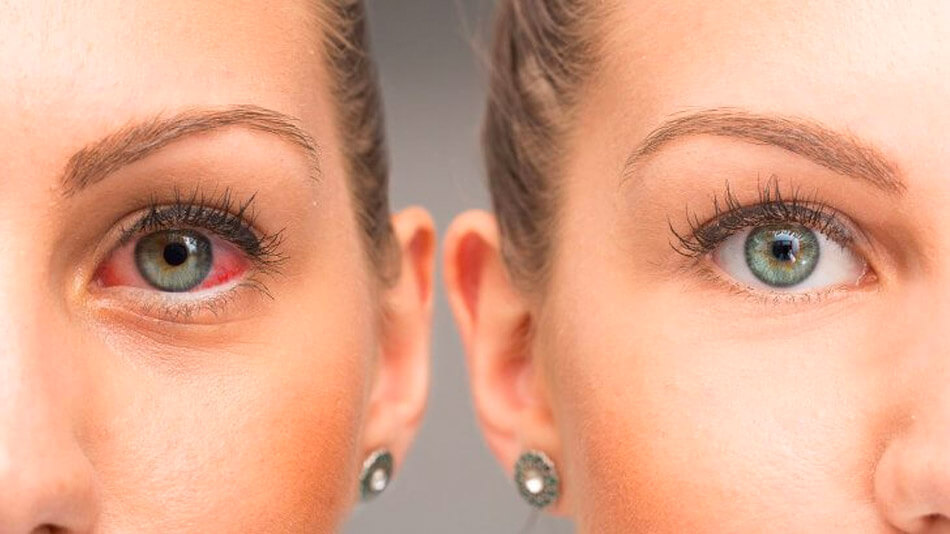
Conjunctivitis: Are you particularly at risk as an athlete?
Bacterial conjunctivitis is more common in team athletes because close contact with others makes it easier to transmit viruses. We explain in the following article how conjunctivitis can be alleviated or prevented at all.
-

Sports glasses with prescription – 5 tips for buying glasses
Although vision contributes significantly to safety during sports, around 40 percent of people with impaired vision exercise without appropriate sports glasses. Read on to find out what you should look out for when buying and what other alternatives are available!
-

The most common eye diseases in 2026. Dr. med. Bányai informed
Large parts of the population are affected by various eye diseases. You can find out which of these are particularly common in this article.
-

Blurred vision? This is what ophthalmologist Dr. med. Bányai advises
Has it ever happened to you after getting up or during the day that you see blurred or feel pressure in the eye for a short time? Here’s what you can do about it and what causes blurred vision!
-

Visual disturbances – Causes, symptoms and risks explained by Dr. med. Bányai
Changes in optical perception are referred to as visual disturbances. These include visual field restrictions, eye fibrillation or double vision. Sometimes vision problems are harmless, but when should an ophthalmologist be contacted?
-

Does eye rubbing lead to keratoconus? Dr. med. Bányai explains
Do you rub your eyes more often? Probably yes, because eye rubbing is a natural reflex when the eye itches. With tiredness, dry eyes and allergies, many people rub their eyes out of habit. Beware of bacteria – read more now!
-

Laser eye surgery for nearsightedness – What should I know?
In order for laser eye surgery to be performed, myopia should be between 1 & 10 diopters. You can find out here which methods are suitable for correcting myopia and what you need to pay attention to.
-
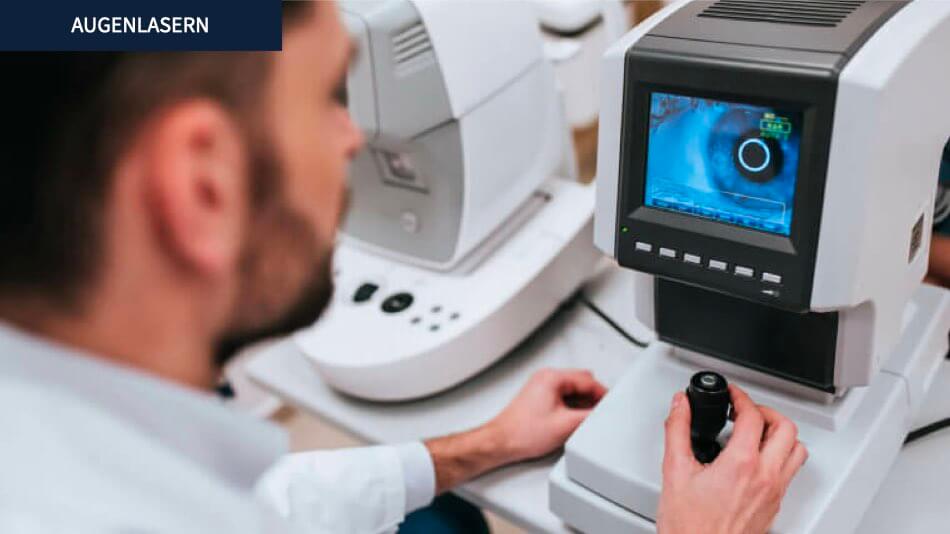
Symptoms of retinal detachment – see an ophthalmologist!
Retinal detachment must be treated annually in about 30,000 people. Find out in the blog about the risk of retinal detachment, how it is caused and what possible therapies are.
-

Sensitive eyes – When headlights glare strongly!
Do headlights of oncoming vehicles glare or is there a hypersensitivity to lighting? Photosensitivity (photophobia) may be present. Find out more here!