
Dr. med. Daniel Bányai
Dr. med. Daniel Bányai is an ophthalmologist at Bányai Neue Augen and specializes in refractive laser eye treatments at the Stuttgart and Karlsruhe locations.
Dear readers, dear patients,
as an ophthalmologist and part of the Bányai New Eyes team, improving your visual acuity through state-of-the-art medical procedures is particularly important to me.
In a team that can look back on over 51,000 successful treatments and more than 3,000 procedures per year, I bring my experience from renowned clinics in Germany and Great Britain.
In our specialized laser centers in Stuttgart and Karlsruhe as well as in the ophthalmological practices in the greater Stuttgart area, Bányai Neue Augen offers the entire spectrum of modern ophthalmology – with the latest technical equipment and a personal, trusting atmosphere.
“Good vision means quality of life. It is my goal to help you achieve a clear and unrestricted view of the world.”
I look forward to accompanying you on your journey to greater visual comfort and perhaps a life without glasses and contact lenses!

Dr. med. Daniel Bányai
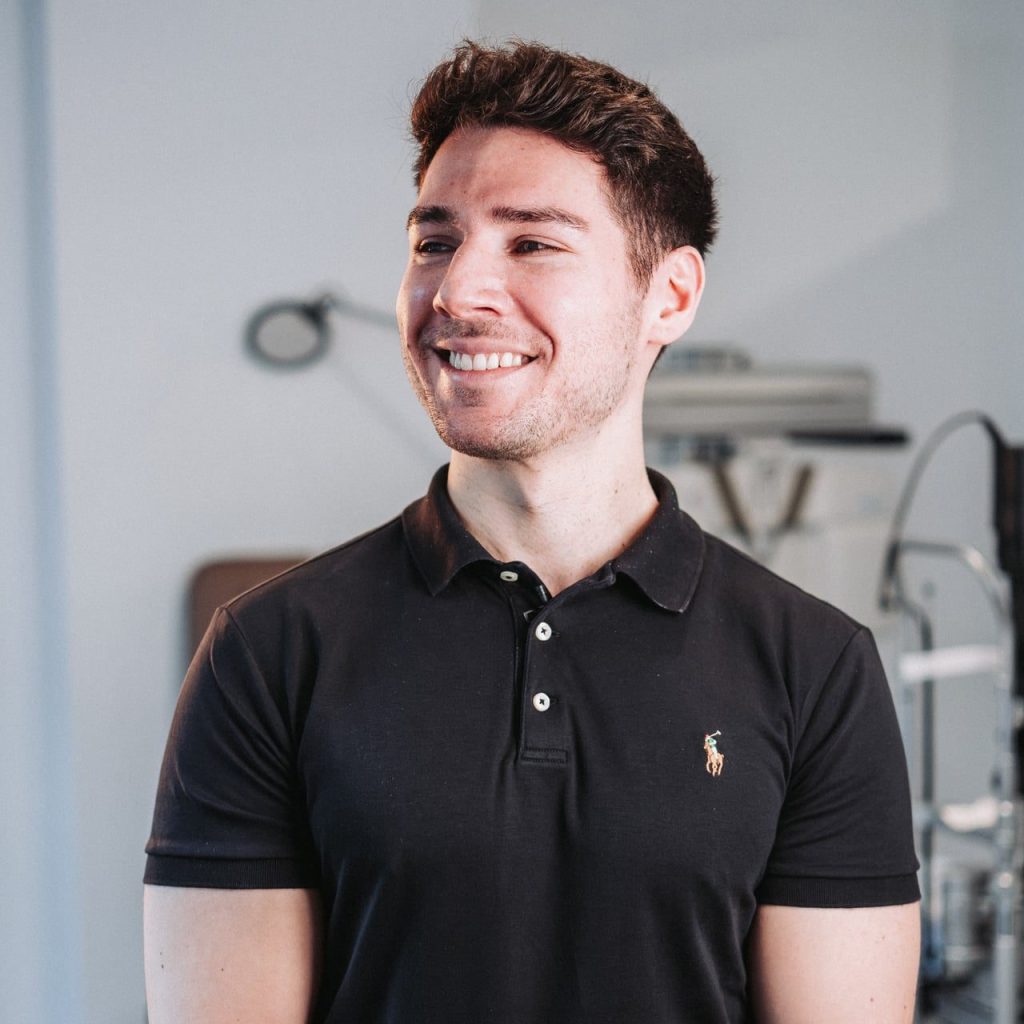
My resume:
- 2021 – Assistant physician, Aophthalmology practice of Dr. Bányai, Leonberg
- 2021–2022 – Resident physician in training, University Eye Clinic Ulm
- 2022–2023 – Resident physician in training, Charité University Eye Clinic Berlin
- 2023–heute – Resident Physician in Training, Bányai Ophthalmology
Educational path
I completed my medical studies at the Martin Luther University of Halle-Wittenberg, supplemented by an Erasmus semester at the University of Strasbourg. I passed all three state examinations there and received my medical license in December 2020.
2013 – International Baccalaureate, International School of Stuttgart
2014-2020 – Medical studies, Martin Luther University Halle-Wittenberg
- First State Examination (2016)
- Erasmus Semester, Université de Strasbourg (2017/2018)
- Second State Examination (2019)
- 3rd State Examination (2020)
Dezember 2020 – Medical license
Practical experience in ophthalmology
Even during my studies I gained practical experience at international eye clinics, including the Charlottenklinik Stuttgart, the LMU Munich, the Moorfields Eye Hospital London and the Charité Berlin.
- 2013 – Nursing internship, Charlottenklinik for Ophthalmology Stuttgart
- 2013 – Voluntary internship, Dr. Banyai Eye Clinic, Leonberg
- 2017 – Clinical elective, Eye Clinic of the University of Munich
- 2017 – Famulatur, Moorfields Eye Hospital London
- 2018 – Clinical elective, Institute of Ophthalmology Halle (Saale)
- 2020 – Clinical elective (ophthalmology), Charité Eye Clinic – Virchow Clinic Berlin
Research
Doctoral thesis in ophthalmology: Research group of Prof. Dr. med. Ricarda Schumann, Ludwig Maximilian University of Munich. “Pores of the inner limiting membrane – Immunocytochemical analysis of the vitreoretinal interface in tractional maculopathies”
Continuing education and training:
Dr. Daniel Banyai is committed to continuous professional development and regularly participates in renowned international conferences and training courses. This includes, in particular, annual attendance at the ESCRS (European Society of Cataract and Refractive Surgeons), one of the world’s leading professional societies for cataract and refractive surgery. He has been an official ESCRS member since 2026. Through regular continuing education and specialized courses, he ensures that his patients always benefit from the latest findings and treatment methods in modern ophthalmology.
About the Laser Centers in Stuttgart and Karlsruhe:

In the state-of-the-art eye laser centers in Stuttgart’s Zeppelin-Carré and in Karlsruhe, Doctor medic Liliana Bányai & Dr. med. Daniel Bányai and their specialized team of doctors combine decades of experience with the latest technology.
Since their opening in Stuttgart (2022) and Karlsruhe (2024), the centers for refractive surgery have offered state-of-the-art laser procedures such as Femto LASIK, Smile PRO or Presbyond® in a central location.
With over 3,000 procedures performed annually, the Bányai Neue Augen laser centers in Stuttgart and Karlsruhe are among the most experienced providers of refractive surgery in the region. Utilizing state-of-the-art technologies and surgical techniques, the team covers the entire spectrum of vision correction.
In Stuttgart and Karlsruhe, you benefit from the synergy of personal medical experience and a practice structure that pursues one goal through continuous training and the most precise diagnostics: A life without glasses and contact lenses.
To all articels
-
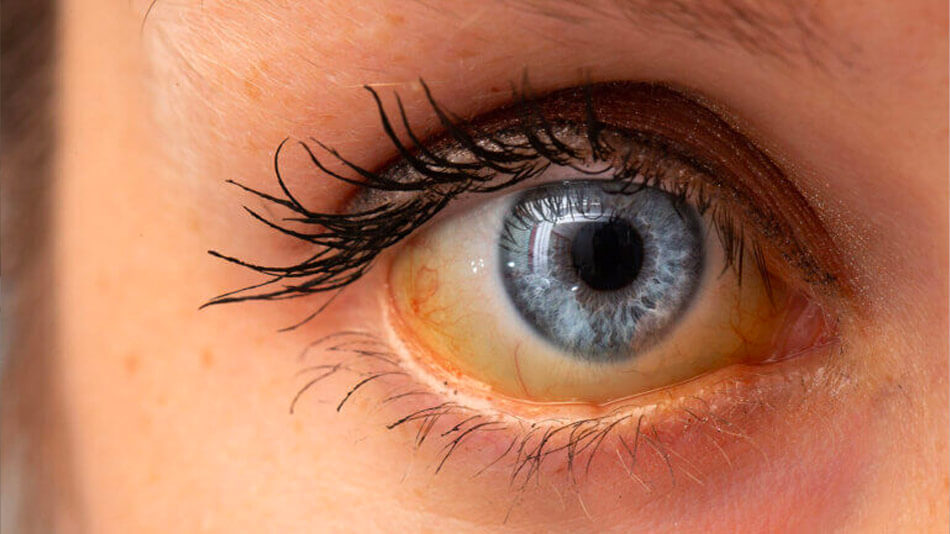
Yellow Eyes: Causes and What They Reveal About Your Health
Yellowing of the eyes can have different causes. Certain medications, a number of medical conditions, and in most cases yellow eyes are due to jaundice. Learn more about this in the following post!

-

Eye lasers & dioptres: up to what value is it possible according to Dr. med. Bányai?
In the meantime, an enormous spectrum of refractive errors and diopter values can be treated with lasers. In the following article, we will explain to you up to which values treatment is possible and which methods are suitable.
-

Are there any negative experiences with eye lasers? Dr. med. Bányai explains
Despite the many positive reports of laser eye treatments, there are also negative experiences, such as temporary vision problems or complications. It is important to be thoroughly informed about risks and possible side effects before deciding on the procedure.
-

How long do visual fluctuations last after LASIK? Dr. med. Bányai informed
The LASIK eye laser procedure changes the shape of the cornea and thus improves the vision of many patients. One question remains with many interested parties: “How long will my vision fluctuate after LASIK?” This post explains the recovery process after LASIK treatment and what you can expect in terms of vision fluctuations
-

Laser eye treatment Age: Recommendation by Dr. med. Bányai
As a rule, you are suitable for laser eye surgery from the age of 18 if your eyes are as healthy as possible. However, in most cases, the limit can also be moved upwards. Minimum age may vary by country. Find out more!
-

How quickly does vision deteriorate in old age?
Is your vision rapidly deteriorating? With age, many people notice that their eyesight declines – a completely normal development. How fast vision loss progresses is influenced by various factors.
-

Glasses or contact lenses for presbyopia? Dr. med. Bányai explains
Should you reach for glasses or try contact lenses when presbyopia sets in? This article aims to help you decide.
-

Contact lenses for presbyopia: What you need to know!
If you don’t want to wear glasses, contact lenses can be a practical option for presbyopia. This article explains what to consider.
-

Eye problems due to presbyopia – an issue from the age of 40
In old age, the risk of visual impairment increases, which on the one hand is completely normal, but on the other hand is also the result of serious eye disease. You can find out which eye problems are particularly common from the age of 40 here.
-
Treatment for presbyopia – what are the options? Dr. med. Bányai explains
When the first signs of presbyopia appear, or if it has already been diagnosed, questions about treatment options arise. This article addresses them.
-

Do people become nearsighted or farsighted with age? Dr. med. Bányai explains
It’s often assumed that people become farsighted as they get older. Although the symptoms of age-related farsightedness and regular farsightedness are similar, it’s not that simple. Read on to learn more.
-

What helps with age-related vision loss?
Age-related vision impairment usually refers to presbyopia, but (sometimes serious) eye diseases can also lead to worsening vision in later life. In this article, you can find out what can help in each case.
-

How does presbyopia differ from other vision problems? Dr. med. Bányai explains.
Presbyopia, like other visual impairments, causes reduced vision. In this article, you’ll learn how it differs from other vision problems.
-

When is a laser eye retreatment necessary? Dr. med. Bányai explains
Learn more about laser eye corrections! Although most patients achieve perfect results after the initial treatment, a follow-up correction may sometimes be necessary to further improve vision.
-

What should you eat before laser eye surgery?
Wondering what to eat before laser eye surgery? Learn how the right nutrition can support your recovery. Book your appointment now and prepare optimally!