
Differences between LASIK and Femto-LASIK
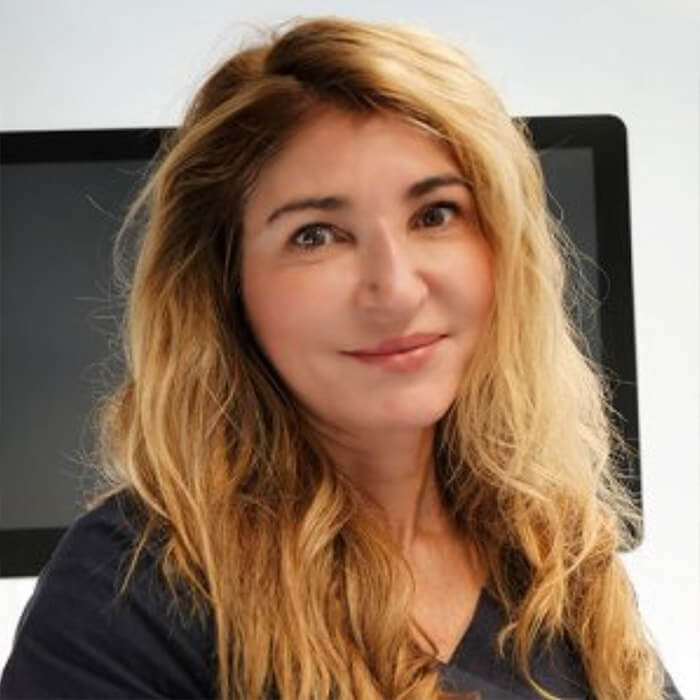
The number of laser eye centers and available procedures is constantly increasing. Some refer to it as LASIK, others as Femto-LASIK. But what exactly is the difference? Which is better for my eye? Ophthalmologist Doctor-medic Liliana-Iulia Bányai clarifies.
LASIK or Femto-LASIK?
LASIK vs. Femto-LASIK: If you want to permanently free yourself from your visual aid – whether glasses or contact lenses – you have had the option to have your eyes surgically corrected for several decades. In this context, laser eye surgery has undergone enormous development over the years.
As early as 1987, the first laser eye treatment to correct refractive errors was performed with the excimer laser. Methods and technology, along with surgeons’ experience, have advanced rapidly. Today, the various laser eye techniques are scientifically recognized, and the risks are minimal.
The LASIK method has a long track record.
The term LASIK is an abbreviation of “laser in situ keratomileusis”.
Since the 1990s, the most widely used procedure in refractive surgery has been LASIK. With more than 32 million procedures performed to date, it is the world’s preferred laser eye procedure. It can correct mild to moderate myopia (up to -10 dpt.), farsightedness (up to +4 dpt.), and corneal curvature up to 6 diopters.
This procedure takes only a few minutes and is performed under local anesthesia. By removing corneal tissue, light rays can once again be focused precisely on the retina, producing a sharp image. For many people, this step restores a sense of life they thought they had lost.
Femto LASIK – the next evolution of LASIK
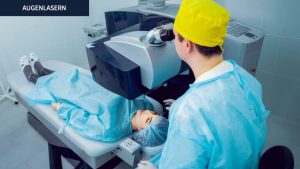
In classic keratome-LASIK — performed for more than 20 years — the surgeon prepares the corneal flap with a cutting instrument. By contrast, Femto-LASIK is an all-laser procedure that uses a femtosecond laser. At our eye laser centre, we use only the most advanced current standard: Femto-LASIK.
With the femtosecond laser, a more precise correction of the cornea is possible without using any mechanical instruments. As a result, the patient enjoys the major advantage of a reduced risk of infection. It also provides psychological benefits, since the eye is no longer cut open with a “knife”; everything is carried out by laser. Even the space agency NASA has permitted its astronauts to undergo femtosecond laser treatment for vision problems since 2007.
One of the main advantages of this treatment is that it can be performed on people with particularly thin corneas. For some patients, other methods are therefore not suitable, making Femto-LASIK one of the best alternatives. It can also be used to correct presbyopia.
Another advantage is that it promotes healing, and the patient will notice an improvement in their vision the next day.
The cost of Femto-LASIK treatment is lower today than it was a few years ago, even though the method and technology have continued to evolve. Before undergoing the procedure, check with your health insurance provider about whether costs will be reimbursed. As a rule, however, only private health insurers cover part of the expense, and statutory health insurance does not cover the treatment.
However, the patient should not focus solely on price but should also consider the quality of laser eye centers evaluated in Germany. Caution is often warranted with refractive procedures abroad, as adequate follow-up care is not always guaranteed and can become very costly if complications arise.
Personalized consultations at our clinics
You can always determine the appropriate treatment method by talking to your ophthalmologist or by visiting one of our laser eye centers, where we perform free suitability checks. If laser treatment is not an option, that doesn’t mean you have to continue living with glasses or contact lenses. The latest eye treatment methods include lens implantations such as the so-called KAMRA inlay and multifocal lenses like the VISAN ICL™.
Click here to take the online laser eye aptitude test
As you can see, treatment methods in ophthalmology have advanced tremendously in recent years, greatly reducing risks and making the appropriate method available to almost everyone after a thorough diagnosis.