

Contact Lenses in Sports – Benefits & Possible Risks

Kontaktlinsen tragen beim Sport? Haben Sie sich das auch schon einmal gefragt? Welcher Fehlsichtige hat sich diese Frage noch nicht gestellt. Kontaktlinsen bieten einen hervorragenden Halt, sie schränken das Blickfeld nicht ein, sie beschlagen nicht und auch keine Wassertropfen versperren die Sicht.
Aber dennoch bergen sie mögliche Risiken. Unter die Kontaktlinsen kann Sand oder Staub gelangen, Sie können sie verlieren und Sie brauchen oft zusätzlichen Schutz durch Sportbrillen oder Sonnenbrillen. Lesen Sie im Folgenden, welche Vorteile Kontaktlinsen im Sport haben und welche Art von Linsen für welche Sportart geeignet sind. Erfahren Sie auch etwas zu den Nachteilen und den Alternativen.
Die Vorteile von Kontaktlinsen beim Sport
Vorteile von Kontaktlinsen im Sport sind das Gefühl der Freiheit und der Tragekomfort. Sie haben zum einen ein freies Sichtfeld, das durch die seitlichen Bügel nicht eingeschränkt wird. Zum anderen ist da auch kein lästiges Gestell, das beim Training stört. Kontaktlinsen sitzen zudem perfekt und verrutschen nicht bei Bewegung.
Wenn Sie viel schwitzen, müssen Sie nicht die Brille abnehmen, um Ihr Gesicht abzuwischen. Auch brauchen Sie sich bei Ball- oder Kontaktsportarten keine Sorgen um Ihre Brille zu machen, wenn Sie im Gesicht getroffen werden. Das ist zwar auch mit Kontaktlinsen nicht angenehm, aber die Verletzungsgefahr ist geringer.
Vorteile von Kontaktlinsen im Sport im Überblick:
- freie und uneingeschränkte Sicht
- optimaler Halt
- vorteilhaft bei starkem Schwitzen im Gesicht
- kein Verletzungsrisiko
- kein Beschlagen oder Wassertropfen auf der Linse
Für diese Sportarten eignen sich Kontaktlinsen besonders
Kontaktlinsen eignen sich besonders für Sportarten, wo ein Komplettvisierhelm erforderlich ist, wie beim Motorrad- oder Kartfahren. Eine Brille unter einem Helm zu tragen, ist unangenehm und ruft Druckstellen hervor. Auch bei Sportarten mit viel Körperkontakt oder wo Schnelligkeit und Reaktionsfähigkeit gefragt sind, wie bei Ball- oder Schlagsportarten, sind Sportlinsen die erste Wahl.
Diese rutschen nämlich nicht im Eifer des Gefechtes von der Nase, wie eine Brille. Auch im Wassersport sind Kontaktlinsen besser geeignet. Keine lästigen Wassertropfen versperren die Sicht und Sie müssen auch keine Angst haben, bei starkem Wellengang die Brille im Meer oder See zu verlieren.
Welche Kontaktlinse passt für meine Sportart?
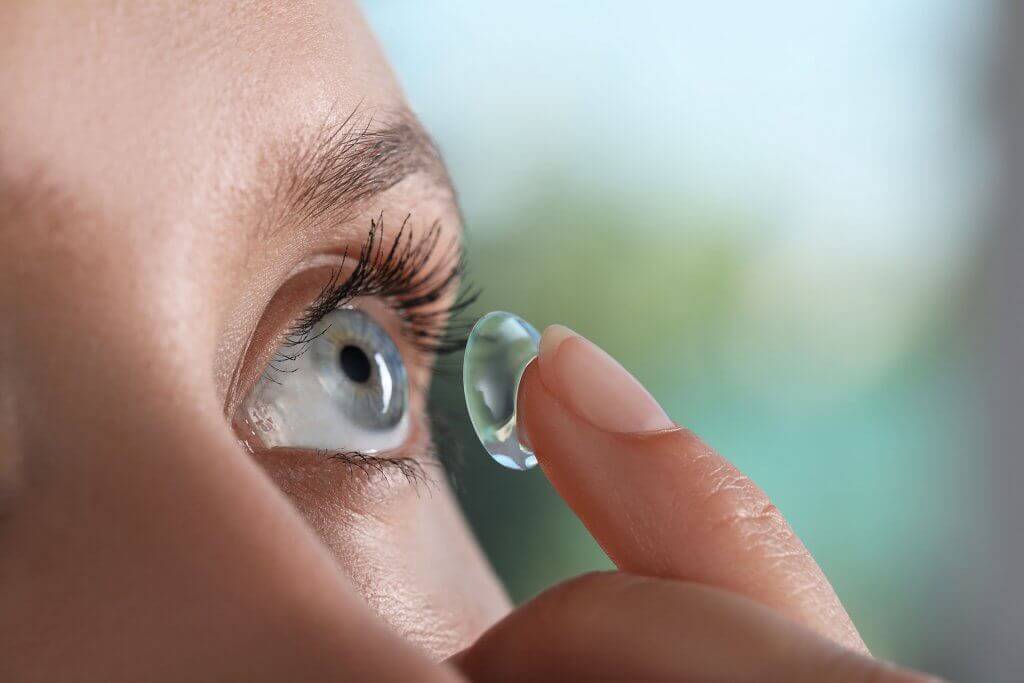
Für jede Sportart gibt es auch passende Kontaktlinsen, sogar spezielle Sportkontaktlinsen. Generell sollten Sie beim Sport auf weiche Kontaktlinsen oder formstabile Kontaktlinsen zurückgreifen. Harte Linsen liegen auf dem Tränenfilm und können schneller aus dem Auge fallen. Ebenso ist es schmerzhaft, wenn ein Staub- oder Sandkorn unter harte Kontaktlinsen kommt.
Auch sollten die beim Sport verwendeten Kontaktlinsen eine besonders hohe Sauerstoffdurchlässigkeit besitzen. Zu empfehlen sind zudem Monatslinsen oder Tageslinsen, die nach dem Sport entsorgt werden können. Auch einen UV-Schutz sollten Sie beim Sport im Freien am besten berücksichtigen. Augenoptiker oder Kontaktlinsenspezialisten beraten Sie ausführlich und führen eine Kontaktlinsenanpassung durch.
Kontaktlinsen im Ausdauersport
Bei Ausdauersportarten wie Laufen oder Radfahren herrscht ein hoher Sauerstoffbedarf und ein anaerober Stoffwechsel – die Linsen können sich schnell eintrüben. Außerdem besteht Sturzgefahr und erschwerte Sicht durch Wind, Regen, Sand oder UV-Strahlung.
Anforderungen an die Linse:
- hoch sauerstoffdurchlässig
- zusätzlicher Schutz durch Sportbrillen
Kontaktlinsen bei Ballsportarten
Ballsportarten, wie Volleyball, Fußball, Handball, Tennis oder Squash sind sehr bewegungsintensiv und erfordern schnelle Blickbewegungen und Reaktionen. Bälle können Sie ins Gesicht treffen oder Sie können stürzen. In Hallen ist es oft trocken. Bei Beachvolleyball könnten Sie Sand in die Augen bekommen.
Anforderungen an die Linsen:
- formstabile oder weiche Linsen
- bei trockenen Augen ebenfalls formstabile oder dafür geeignete weiche Linsen
- Schutzbrille
Kontaktlinsen im Wassersport
Bei Schwimmen, Segeln oder Surfen besteht eine hohe Keimbelastung in freien Gewässern und Hallenbädern. Dort können auch Reizungen durch Chlor oder Meerwasser hervorgerufen werden. Beim Tauchen können die Kontaktlinsen verloren gehen. Reflexionen auf dem Wasser können Ihre Sicht erschweren. Im Freien ist auch auf die UV-Strahlung zu achten.
Anforderungen an die Linsen:
- weiche Tageslinsen, die nach dem Schwimmen entsorgt werden können, sind oft empfehlenswert
- unter der Schwimm- und Taucherbrille können formstabile und weiche Linsen verwendet werden
- Linsen nach dem Wasserkontakt sorgfältig mit einem geeigneten Pflegemittel reinigen und desinfizieren. Ausnahme: Tageslinsen
- Verlustgefahr unter Wasser: Augen besser schließen
- Schutz durch Schwimm- oder Sportbrillen vorteilhaft
Kontaktlinsen bei Bergsportarten und Wintersport
In den Bergen werden hohe Anforderungen an die Kontaktlinsen gestellt. Ab 2.000 m Höhe herrscht hoher Sauerstoffmangel, zudem trockene Luft. In einer Höhe von über 7.000 m können Hornhautödeme und -schwellungen entstehen. Beim Skifahren hat man mit Fahrtwind zu kämpfen, beim Klettern mit Staub und Sand. Auch UV-Strahlen und Reflexionen auf dem Schnee belasten die Augen.
Anforderungen an die Linsen:
- formstabile Linsen und hoch sauerstoffdurchlässige weiche Linsen beim Skifahren und Bergsteigen
- weiche Linsen beim Klettern (Sand/Staub)
- keine Linsen ab 5.000 m Höhe
- UV- und Blendschutzbrillen

Mögliche Risiken durch Kontaktlinsen beim Sport
Kontaktlinsen haben zwar einen guten Halt, aber gerade wenn Sport in trockenen Räumen betrieben wird, kann es nach längerer Tragezeit zu trockenen Augen führen. Dann wird das Tragen recht unangenehm. Es können Entzündungen (Bindehautentzündung, Gerstenkorn), Infektionen oder tränende rote Augen (trockene Augen) entstehen.
Im Freien bieten Kontaktlinsen kaum Schutz gegen die UV-Strahlung. Hier braucht es einen zusätzlichen UV-Filter durch Sport- oder Sonnenbrillen. Ein weiteres Risiko besteht bei Wassersportarten: die Kontaktlinsen können aus dem Auge herausgeschwemmt werden. Schwimmbrillen sind daher für gutes Sehen erforderlich.
Die Nachteile von Kontaktlinsen:
- Augen können austrocknen
- Entzündungen und Infektionen können entstehen
- schlechter Schutz bei UV-Strahlung
- Schwimmbrille bei Wassersport empfehlenswert
Alternativen zur Kontaktlinse im Sport
Wenn Kontaktlinsen nicht vertragen werden, kann eine Brille genutzt werden. Bei vielen Sportarten ist diese aber einfach störend. Eine Alternative für Kontaktlinsen- und Brillenträger ist es, die Fehlsichtigkeit an sich bei einem Augenarzt zu beseitigen. Daher lassen sich viele Sportler die Augen lasern.
Durch das Lasern der Augen wird die Sehschwäche in 15 – 20 Minuten korrigiert und eine Sehhilfe wird ein Leben lang nicht mehr benötigt. Viele Sportler nutzen die Möglichkeit des Augenlaserns, um ihre Weitsichtigkeit oder Kurzsichtigkeit zu beheben. Nach dem Eingriff können sie bereits nach wenigen Tagen ungestört Sport treiben.