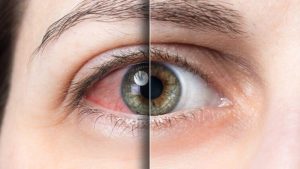

Barley grain (Hordeolum), what now?

Ein Gerstenkorn ist eine unangenehme Entzündung am Augenlid. Diese Augenlidentzündung wird in der Fachsprache auch Hordeolum genannt und wird durch Bakterien (Staphylokokken) bzw. verstopfte Talgdrüsen hervorgerufen. Das Gerstenkorn äußert sich durch eine schmerzhafte, gerötete und geschwollene Stelle am Auge. Entweder findet man diese am Lidrand (äußeres Gerstenkorn) oder am gesamten Lid (inneres Gerstenkorn). Im Verlauf der Entzündung kann sich häufig Eiter bilden.
Meist heilt die durch das Gerstenkorn hervorgerufene Entzündung von alleine ab. Trotzdem werden vom Augenarzt manchmal eine antibiotische Salbe oder Tropfen verschrieben.
Je nach Schwere der Infektion begünstigen Wärme oder antibiotische Salben den Heilungsprozess. Auf klassische Hausmittel bei einem Gerstenkorn sollten Sie eher verzichten, da diese das Bakterienwachstum fördern. Dasselbe gilt für Make-up – damit kontaminieren Sie die entzündete Stelle und leisten dem Hordeolum Vorschub.
Kontaktlinsenträger sollten außerdem auf eine Brille wechseln, um den Heilungsprozess zu beschleunigen. Leiden Sie immer wieder unter einem Gerstenkorn, kann das auf eine chronische Erkrankung wie Diabetes mellitus hinweisen. Verschwindet die akute Infektion nicht wieder, spricht man von einem Hagelkorn. Diese chronische Form ist auch als Chalazion bekannt.
Egal, ob es sich um ein Hordeolum oder das chronische Chalazion handelt, Sie sollten die Infektion am Auge in jedem Fall von einem Augenarzt untersuchen lassen. Dieser wird umgehend die optimale Behandlung einleiten, damit das Gerstenkorn abheilen kann.
In diesem Beitrag erfahren Sie alles Wichtige zum Gerstenkorn, seiner Entstehung und zu den möglichen Behandlungsoptionen.
Gerstenkorn Auge – was ist ein Hordeolum?
Hordeolum ist der Fachbegriff für ein Gerstenkorn am Auge. Es handelt sich dabei um eine bakterielle Infektion im Augenlid. Diese Infektion führt zu einer schmerzenden roten Schwellung im Bereich des Infektionsherds und kann ein Spannungsgefühl verursachen.
Talgdrüsen oder Haarfollikel können durch Unreinheiten verstopft werden. Die Unreinheiten wiederum können beispielsweise durch Make-up, abgestorbene Hautschüppchen oder Schmutz verursacht werden. In Folge können sich Bakterien ansammeln und eine Infektion verursachen. Die von der Entzündung betroffene Drüse wird Gerstenkorn genannt.
Gerstenkorn Auge – Video Erklärung
Welche Arten von Gerstenkörnern gibt es?
Im Allgemeinen unterscheidet man zwischen 2 Arten von Gerstenkörnern:
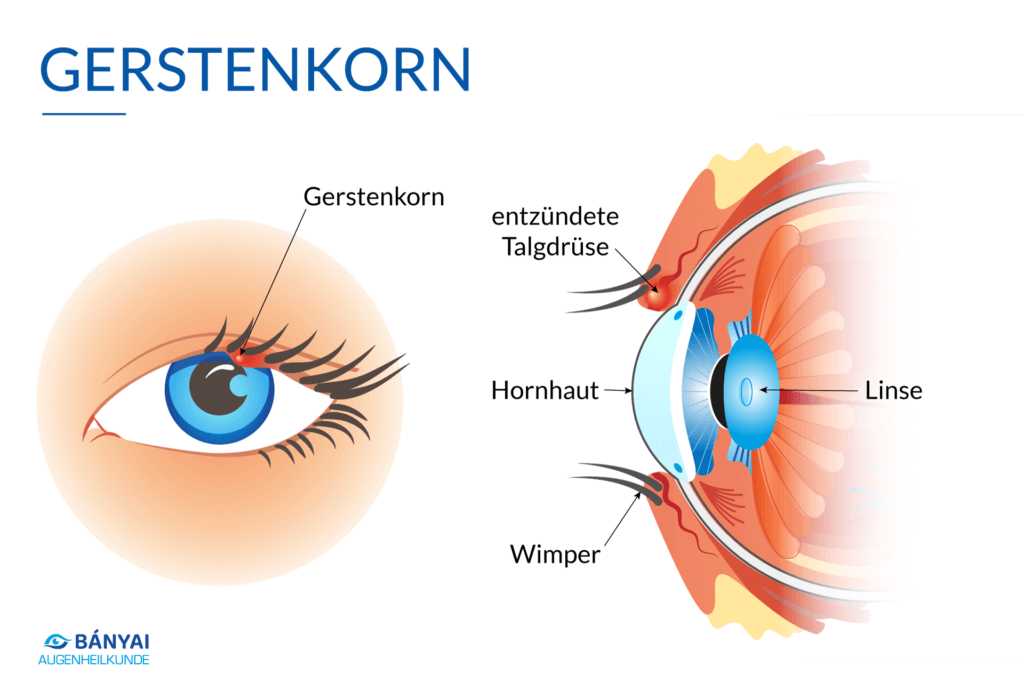
- Ein äußeres Gerstenkorn (Hordeolum externum) sitzt an der Basis der Wimpern, betrifft also die Haarfollikel.
- Als inneres Gerstenkorn (Hordeolum internum) wird eine infektiöse Talgdrüse an der Innenseite des Augenlids bezeichnet.
Wo entsteht ein Gerstenkorn am Auge?
In der Regel findet man Gerstenkörner am Auge an der Lidinnenseite oder am Lidrand und an der Wimpernbasis. Dabei kann sowohl das obere als auch das untere Lid betroffen sein. Verschiedene Talg- und Schweißdrüsen sorgen dafür, dass die Augen nicht austrocknen.
Die Meibom-Drüsen an der Innenseite produzieren Talg, die Moll- und Zeis-Drüsen an der Außenseite sondern Schweis und Talg ab. Diese Drüsen bilden Sekrete die sich wiederum mit dem Tränenfilm vermischen, um die Augen feucht zu halten.
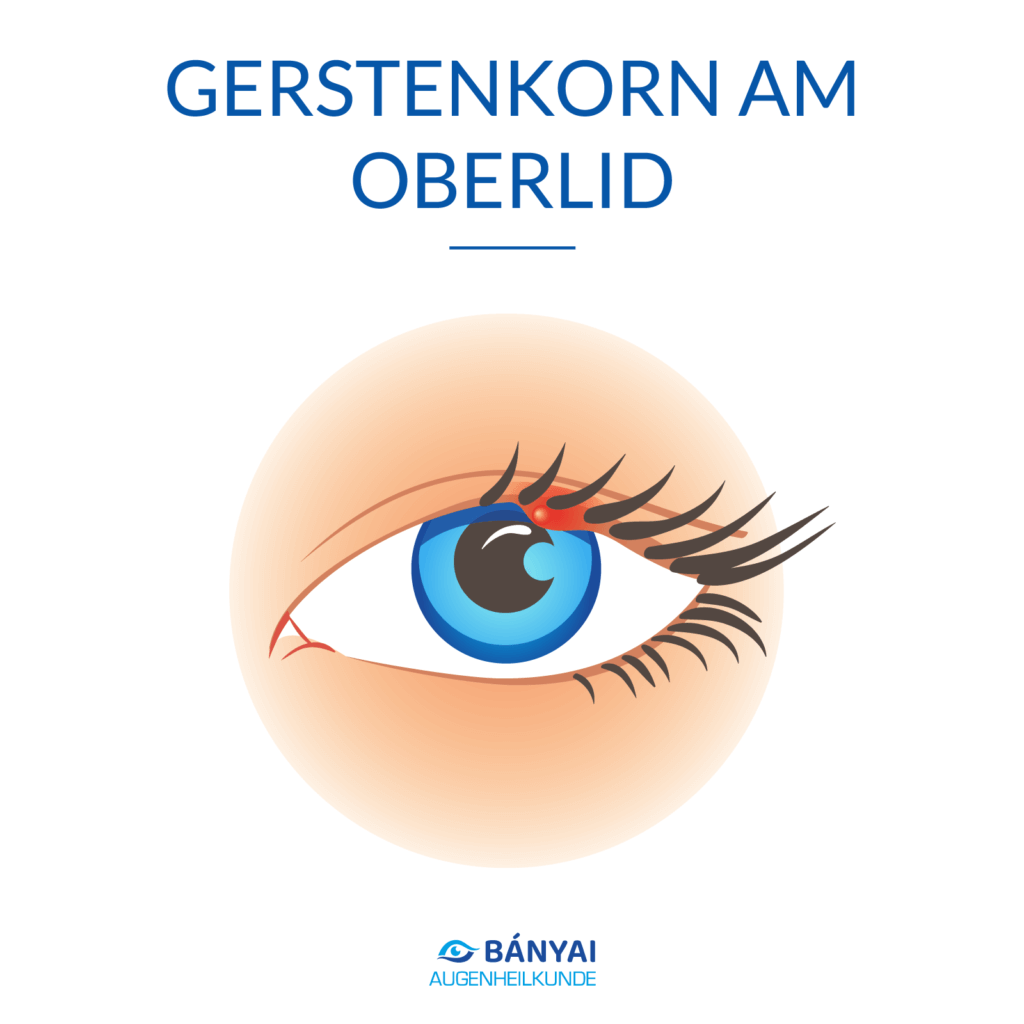
Wenn der Ausführungsgang dieser Lidranddrüsen verstopft oder mit Bakterien infiziert ist, kann sich die Zusammensetzung der Tränenflüssigkeit verschlechtern und das Augenlid entzünden.
Generell bildet sich ein Gerstenkorn an einem Auge aus. Da es sich um eine bakterielle Infektion handelt, kann das Gerstenkorn ansteckend sein und in seltenen Fällen beide Augen betreffen.
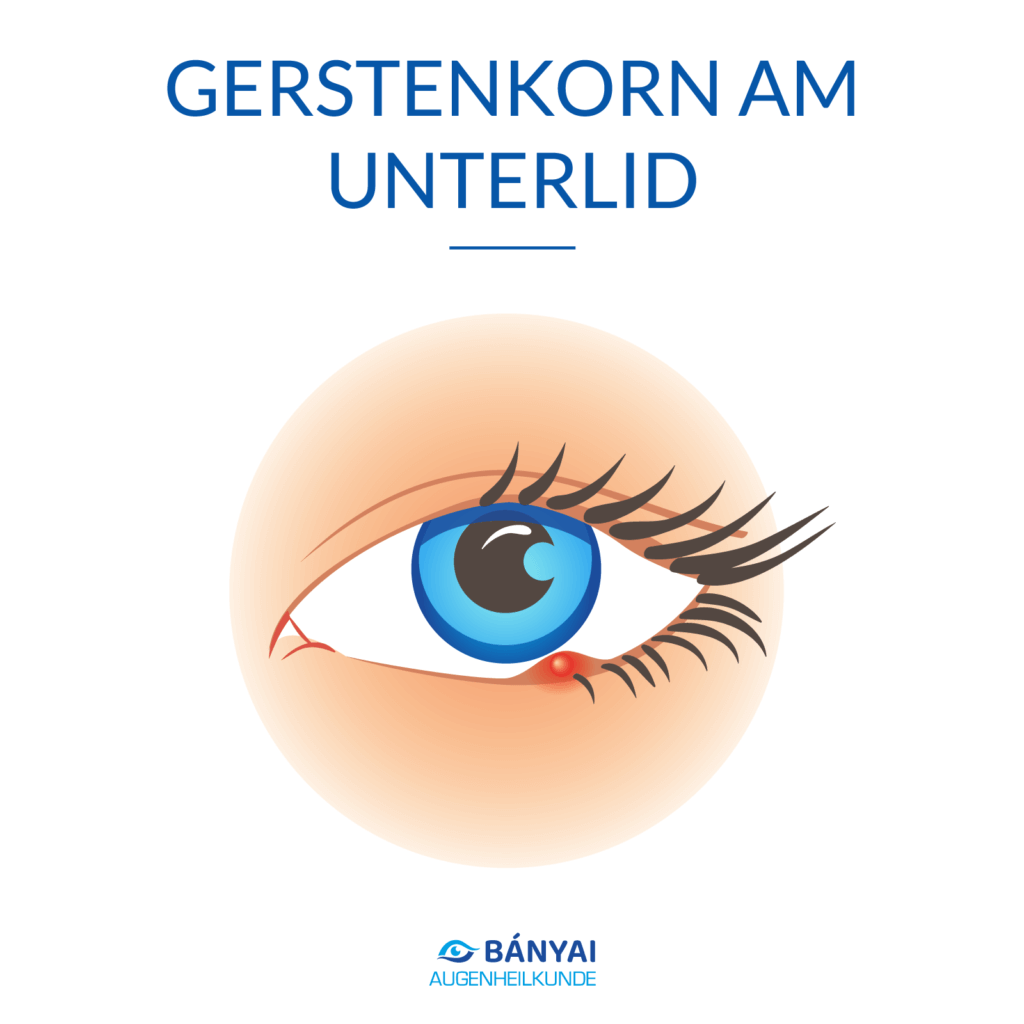
Wie lange dauert es, bis ein Gerstenkorn am Auge wieder verschwindet?
Wann ein Hordeolum oder Gerstenkorn wieder verschwindet, hängt von der Infektion und Behandlung ab. Bei einer leichten Infektion wird das Gerstenkorn nach wenigen Tagen von selbst abheilen. In solchen Fällen sind normalerweise antibiotische Salben nicht nötig, um den Heilungsprozess zu fördern.
Allerdings kann sich das Gerstenkorn auch zu einer chronischen Entzündung oder einem Hagelkorn auswachsen. Haben Sie generell ein schwaches Immunsystem oder die Beschwerden halten mehrere Tage an, sollten Sie einen Augenarzt aufsuchen.
Der Arzt kann die nötigen Schritte zur Behandlung der Entzündung einleiten. Medikamente, Salben, Antibiotika und Augentropfen sollten nach wenigen Tagen ihre Wirkung zeigen.
Gerstenkorn Ursachen – Wie entsteht diese Infektion beim Auge?
Für die Entstehung eines Gerstenkorns gibt es verschiedene Ursachen. Haben Sie zum Beispiel ein geschwächtes Immunsystem oder Akne, kann ein Gerstenkorn an der Lidkante oder an der Innenseite des Augenlids entstehen.
Inneres und äußeres Gerstenkorn unterscheiden sich nicht nur durch die betroffene Stelle des Auges. Insbesondere ist hier nach der Art der entzündeten Drüsen zu unterscheiden. Infiziert sein können entweder die Zeis- oder die Moll-Drüsen an der Außenseite des Lids oder aber die tiefer gelegenen Meibom-Drüsen.
Ausgelöst wird die Infektion meist durch Hautkeime wie Staphylokokken, also Bakterien. In seltenen Fällen können auch Streptokokken verantwortlich sein. Zusätzlich kann Schmutz an den Fingern leicht ins Auge gelangen und die Entstehung eines Gerstenkorns begünstigen.
Kinder kommen sehr schnell in Kontakt mit Schmutz oder Keimen und greifen sich gerne mit den ungewaschenen Händen ins Gesicht. Sie sind deshalb deutlich häufiger von einem Gerstenkorn betroffen als Erwachsene. Achten Sie daher besonders nach dem Spielen auf dem Spielplatz auf saubere Hände bei Ihrem Schützling. Dies ist ein einfacher Weg, um unangenehmen Schwellungen am Augenlid vorzubeugen.
Wer generell unter einem schwachen Immunsystem leidet, ist ständig der Gefahr einer bakteriellen Infektion ausgesetzt. Eine Stoffwechselerkrankung wie beispielsweise Diabetes mellitus kann somit schnell zu einem Gerstenkorn oder sogar einem Hagelkorn führen.
Gerstenkorn Symptome – wie erkenne ich die Entzündung?
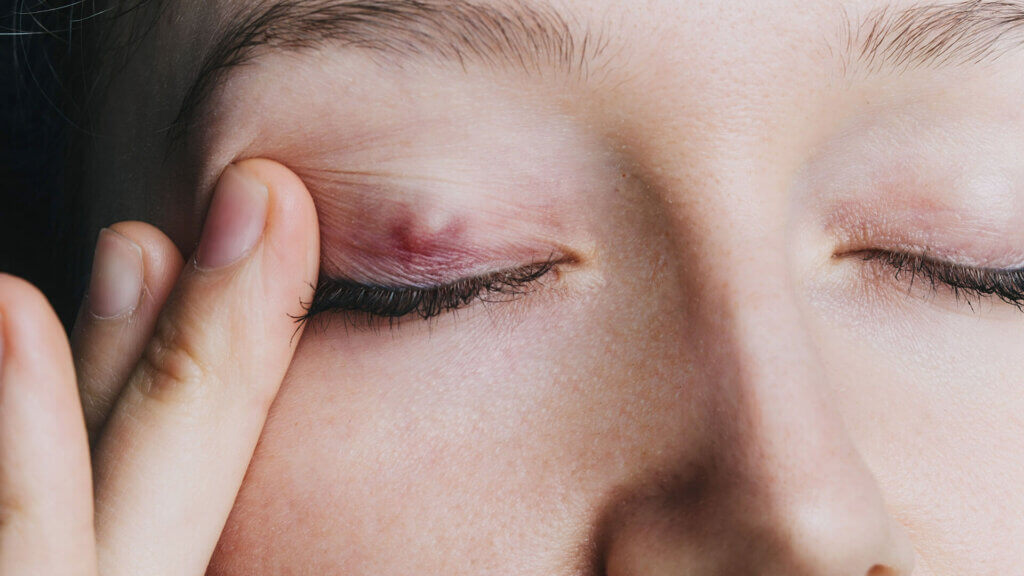
Das Gerstenkorn äußert sich typischerweise als kleiner, aber oft schmerzhafter Pickel. Die betroffene Stelle ist meist deutlich geschwollen und kann mit Eiter bedeckt sein.
Zu den weiteren Symptomen eines Gerstenkorns gehören:
- Ein Knoten am Augenlid
- Schmerzen am Augenlid
- Rötung
- Geschwollene Augenlider
- Schmerzempfindlichkeit
- Schlaffe Augenlider
- Augenausfluss (Kruste um das Augenlid)
- Ein brennendes Gefühl
- Vermehrte Tränenflüssigkeit
In seltenen Fällen kann sich ein Gerstenkorn auch durch Fieber und geschwollene Lymphknoten im Bereich der Ohren bemerkbar machen.
Gerstenkorn Behandlung – was können Sie tun?
Im Normalfall ist ein Gerstenkorn kein Anlass zur Sorge. Die Entzündung verläuft meist unkompliziert und heilt von alleine wieder ab.
Sollte ein Gerstenkorn häufiger oder ungewöhnlich lang auftreten, kann es sich um eine chronische Entzündung oder ein Hagelkorn handeln. In einem solchen Fall sollten Sie sich dringend an einen Augenarzt wenden. Um zu verhindern, dass sich die Infektion ausbreitet, verschreibt dieser antibiotische Augensalben oder auch Augentropfen.
Da die inneren Drüsen des Augenlids größer sind als die äußeren, geht ein inneres Gerstenkorn oft auch mit stärkeren Symptomen einher. Die Entzündung kann sich leicht auf die Bindehaut oder die Augenhöhle ausbreiten, deshalb werden neben Salben manchmal auch andere Arzneimittel, wie Antibiotikatabletten, zur Gerstenkorn Behandlung verordnet.
Welches Hausmittel kann bei Gerstenkorn (Hordeolum) oder Hagelkorn helfen?
Hausmittel können bei der Heilung von Gerstenkörnern nur bedingt eingesetzt werden. Um die Gesundheit Ihres Auges zu Hause wieder herzustellen, empfiehlt sich unter anderem die Rotlichttherapie. Mithilfe einer Rotlichtlampe wird trockene Wärme erzeugt. Diese lässt den Eiter schneller abfließen und unterstützt so die Heilung.
Feuchte Wärme würde hingegen das Bakterienwachstum fördern. Dies ist somit nicht zur Behandlung zu empfehlen. Von klassischen Hausmitteln wie feucht-warmen Umschlägen ist ebenso abzuraten. Meist fördern diese eher die Entzündung, als sie zu bekämpfen.
Dasselbe gilt für feuchtwarme Kompressen mit Kamillentee oder anderen warmen Auflagen. Diese Hausmittel führen leider oft mehr zu Schaden als zu Linderung. Dennoch haben wir ein paar Gerstenkorn Hausmittel für Sie zusammengefasst.
Gerstenkörner am Auge auf keinen Fall ausdrücken!
Der Augenarzt kann das Gerstenkorn am Auge unter örtlicher Betäubung öffnen. Das empfiehlt sich gerade dann, wenn der Eiter nicht von selbst abfließen kann.
Auch wenn Schmerz und Schwellung im entzündeten Bereich des Augenlids zunehmen sollten und ein Spannungsgefühl entsteht, macht es Sinn, den Abszess zu öffnen.
Versuchen Sie auf keinen Fall den Eiter selbst auszudrücken! Das kann nicht nur sehr schmerzhaft sein, sondern vor allem bei ungewaschenen Händen zu weiteren Keime im Bereich der Wimpern führen. Dadurch wird die Entzündung nur verschlimmert und der Heilungsprozess unnötig erschwert.
Gerstenkorn und Hagelkorn – Ärztliche Behandlung oder Hausmittel?
Eine ärztliche Behandlung ist bei einem Gerstenkorn in der Regel nicht notwendig. Unter normalen Umständen heilt das Hordeolum von alleine ab. Trotzdem sollten Sie in folgenden Fällen dringend einen Augenarzt konsultieren:
- Zunehmende Schwellung am Augenlid
- Beeinträchtigung Ihres Sehvermögens
- Selbst nach Tagen keine Besserung in Sicht
- Chronische From: Hagelkorn oder Chalazion
Ein Arzt wird die Infektion mittels einer Spaltlampe untersuchen, die Behandlung einleiten und gegebenenfalls entsprechende Arzneimittel verschreiben. Eine Behandlung unter örtlicher Betäubung ist nur in besonders schweren Fällen erforderlich.
Haben Sie ein Gerstenkorn, ist es außerdem wichtig, andere Augenkrankheiten auszuschließen, um schwere Verläufe zu vermeiden.
Ist ein Gerstenkorn oder Hagelkorn ansteckend?
Ein Gerstenkorn kann ansteckend sein und übertragen werden. Oft versuchen Betroffene, das entzündete Gerstenkorn selbst auszudrücken. Das kann dazu führen, dass sich die Entzündung weiter ausbreitet und vielleicht sogar das andere Auge ansteckt.
Grundsätzlich sollten Sie die Finger vom Gerstenkorn lassen, um eine weitere Ansteckung zu vermeiden. Falls es durch das Gerstenkorn zu einer Bindehautentzündung kommt, ist Vorsicht geboten. Eine Bindehautentzündung ist in den meisten Fällen sehr ansteckend.
Zudem kann sich ein Gerstenkorn zu einem chronischen Leiden, also einem Hagelkorn, auswachsen. Um dies zu vermeiden und nicht auch andere Menschen anzustecken, sollten Sie ein eigenes Handtuch verwenden und sich regelmäßig die Hände waschen.
Wie kann man einem Gerstenkorn vorbeugen?
Sie können Gerstenkörner vermeiden, indem Sie allgemein auf Ihre Gesundheit achten. Da es sich bei diesem Abszess um eine bakterielle Infektion handelt, kann ein schwaches Immunsystem begünstigend wirken.
Versuchen Sie daher generell, mit regelmäßiger Bewegung und einer gesunden Ernährung die eigenen Abwehrkräfte zu stärken, um sich gegen unangenehme Erreger zu schützen.
Generell sollten Sie auf eine ausgiebige Hand- und Augenhygiene achten. So können Sie einer bakteriellen Infektion an der Lidkante, an der Innenseite des Lids oder im Bereich der Wimpern einfach vorbeugen. Da die Erreger für Gersten- und Hagelkorn auf Haut und Schleimhäuten leben, können sie sehr leicht übertragen werden.
Gelangen sie ins Auge, können sie innerhalb kürzester Zeit eine Entzündung hervorrufen. Waschen Sie sich deshalb regelmäßig die Hände. Versuchen Sie sich nicht mit schmutzigen Händen ins Auge zu fassen.
Sollten Sie trotzdem typische Symptome eines Gerstenkorns bemerken, verzichten Sie auf warme Kompressen und andere Hausmittel.
Wenden Sie sich stattdessen an eine erfahrene Fachärztin für Augenheilkunde wie Frau Doctor-medic Bányai. Sie ist eine ausgewiesene Expertin auf dem Gebiet der Augenlaserbehandlungen und der Korrektur von Fehlsichtigkeiten.
In den modernen Augenlaserzentren in Karlsruhe und Stuttgart bietet sie individuelle Beratung und präzise Behandlungen auf höchstem medizinischen Niveau an.
Frequently asked questions about styes
What is a stye?
A stye, medically known as a hordeolum, is usually a bacterial infection of a gland in the eyelid. Typical symptoms include a red, painful swelling and sometimes a small collection of pus.
What is the difference between an external and an internal stye?
An external stye usually develops along the edge of the eyelid or at the base of an eyelash. An internal stye forms on the inside of the eyelid and can cause more pronounced symptoms.
How long does a stye last?
A mild stye often heals on its own within a few days. If the swelling persists, becomes worse or keeps returning, an ophthalmologist should clarify the cause.
Can you squeeze a stye?
No. Squeezing a stye can spread bacteria and make the inflammation worse. If the inflammation is severe or does not heal, it should be examined by an ophthalmologist.
When should you see an ophthalmologist for a stye?
An examination is particularly advisable if the swelling or pain increases, your vision is affected, you develop a fever, styes keep returning or there is no improvement after a few days.