

Is a stye contagious?

Yes, a stye (hordeolum) can technically be contagious. It is an inflammation of the eyelid, typically caused by bacteria (such as staphylococci). While you cannot “catch” a stye simply by being near someone, the bacteria causing the infection can be spread through direct contact or shared items like towels and makeup. Therefore, practicing good hygiene is essential to prevent the spread of the bacteria to others or even to your other eye.
What is a stye (hordeolum)?
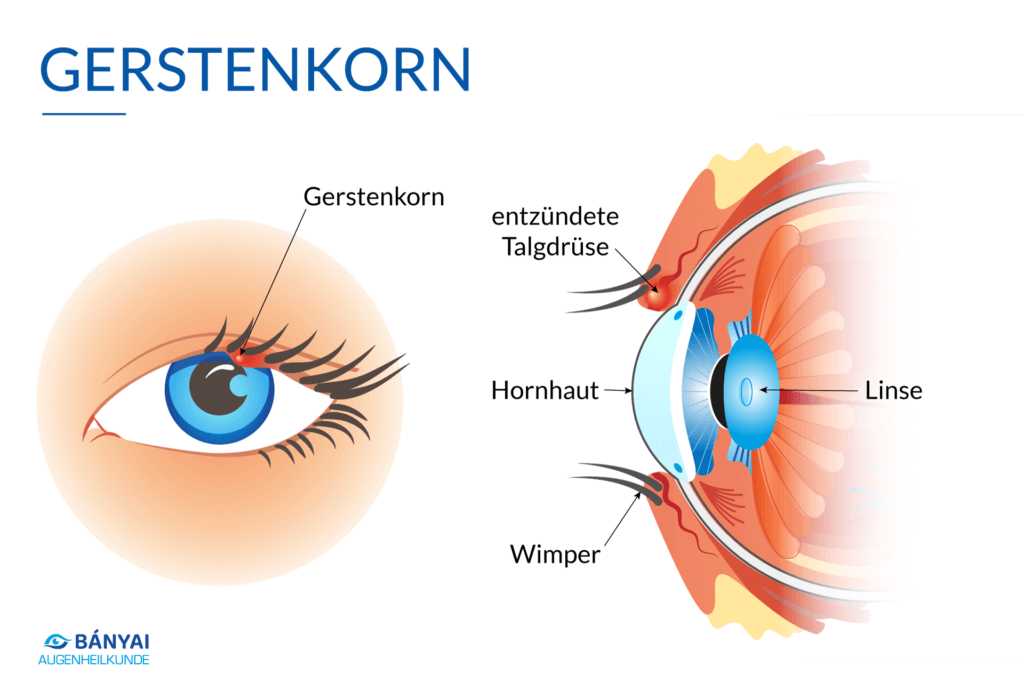
A stye, or hordeolum, is a common type of eye infection caused by bacteria. It manifests as a small, firm nodule on the edge of the eyelid. These nodules can be painful and often contain pus.
Because styes can be confused with other eye conditions—such as tear duct abscesses or eyelid cysts (chalazia)—an ophthalmologist should assess persistent or severe symptoms. Treatment depends on the cause and severity; medication should only be used as prescribed.
Treatment options for a stye
Treatment depends on the cause and severity of the inflammation. An ophthalmologist may recommend suitable eye drops or ointments if necessary. Do not use antibiotic medication unless it has been prescribed for you, and seek medical advice if the stye does not improve within a few days.
- Medical therapy: An ophthalmologist may recommend prescription treatment if the inflammation is severe or does not improve.
- Surgical Option: In rare cases where conservative treatment is ineffective, a minor surgical procedure may be recommended to precisely drain or remove the affected area.
At our specialised eye centres in Stuttgart and Karlsruhe, our experienced ophthalmologists also provide diagnosis and treatment recommendations for eye conditions. Early examination can help identify the appropriate next steps.
How can you prevent the infection from spreading?
Wash your hands before and after touching the affected eyelid. Do not share towels, cosmetics or eye drops, and avoid touching or squeezing the stye. Replace eye makeup that may have been contaminated.
Conclusion: Is a Stye Contagious?
A stye can be contagious under certain circumstances, as it is an inflammation of the sebaceous glands beneath the skin. The bacteria causing the stye can be transferred from person to person, potentially leading to new infections.
Therefore, strict hygiene measures (such as frequent handwashing) are highly recommended, especially when interacting with babies and small children. This also applies to conjunctivitis (pink eye), which—whether bacterial or viral—is highly contagious.
Frequently asked questions about styes
Is a stye contagious?
A stye can be transmitted through the bacteria involved. The risk increases if the inflamed area is touched or squeezed and other people or objects are then touched.
How is a stye transmitted?
Transmission can occur through hands, shared towels or other objects that have come into contact with the inflamed area. Regular hand washing and good eye hygiene help reduce the risk.
How long is a stye contagious?
There is no single fixed duration. As long as the inflammation is present and discharge occurs, particular attention should be paid to hygiene. If you are unsure or also have conjunctivitis, the cause should be examined by a medical professional.
Can you share towels if you have a stye?
It is better not to. Use your own towel and change towels, washcloths and pillowcases regularly. Eye make-up and cosmetic products should not be shared with other people.
Can a stye spread to the other eye?
This is possible if bacteria are transferred via the hands or shared objects. Do not touch the stye, and wash your hands after any contact with the area around the eye.