
How quickly does vision deteriorate with age?

Is your vision deteriorating rapidly? As we age, many people notice that their vision declines — a normal part of aging that affects us all. How quickly vision loss progresses is influenced by various factors.
In this article, we discuss the most common causes of age-related vision decline and explain how quickly presbyopia develops. You will also learn when the first signs typically appear and what treatment options are available.
As an experienced ophthalmologist, I have guided countless patients through this process and would like to help you understand the most important information and take appropriate steps to maintain your eye health over the long term.
Why does eyesight deteriorate with age?
The deterioration of vision with age is a natural process resulting from structural changes in the eye. As we age, the lens loses its flexibility, making it difficult to focus on nearby objects. This age-related condition is called presbyopia, or age-related long-sightedness.
In addition, the muscles that control the lens lose elasticity. This muscle weakness makes the eye less able to adjust quickly to different distances, leading to further vision problems in old age.
In my practice, I often observe that, from about the age of 40, patients begin to complain of difficulty reading small print. The lens of the eye, which used to focus easily on objects at different distances, becomes stiffer, resulting in blurred vision during close work.
Rapid progression of presbyopia
Presbyopia usually develops gradually but can sometimes progress quite rapidly. Our patients at Bányai Neue Augen report noticing a significant deterioration in their near vision within a few years—sometimes in as little as one year.
The first symptoms often appear around the age of 40. Reading becomes more difficult, especially in low light or when the print is small. In some people, presbyopia progresses more rapidly, depending on factors such as genetic predisposition or the strain of prolonged screen work.
The deterioration of vision in old age is therefore quite natural. How quickly vision deteriorates varies greatly between individuals. If presbyopia affects your daily life, it is advisable to schedule a check-up with an ophthalmologist you trust.
For most patients, reading glasses or multifocal contact lenses can alleviate symptoms and make everyday life easier. Laser correction is also an option and can free you from reading glasses or contact lenses.
Which eye diseases are common in old age?
In addition to presbyopia, various eye diseases that can impair vision may develop with age:
- Cataracts (gray cataract): This is the most common age-related eye disease. The eye’s lens becomes cloudy, leading to blurred vision. Surgery to replace the clouded lens with an artificial one is one of the most common and safest procedures.
- Age-related macular degeneration (AMD): This condition affects the retina and can impair central vision, making it difficult to read and recognize faces. Regular eye examinations can help detect AMD early and enable prompt treatment.
- Glaucoma (green star): Glaucoma causes increased pressure on the optic nerve and, if left untreated, can lead to blindness. Early diagnosis and treatment are crucial to prevent permanent vision loss.
When should you be concerned?
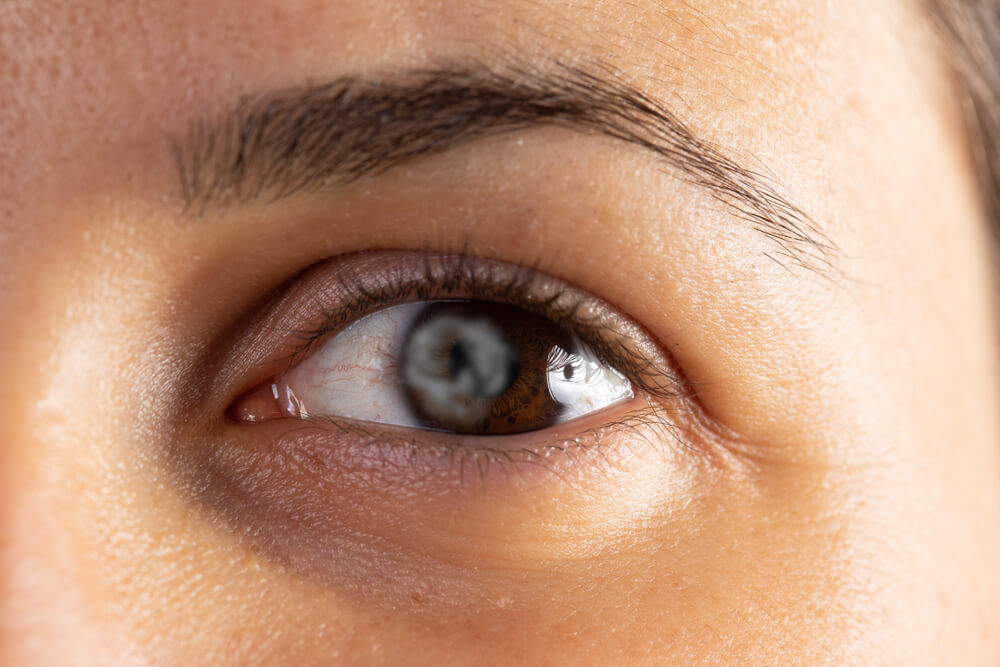
It is important not to ignore changes in vision. Early signs of vision problems often include blurred vision, difficulty focusing, and increased sensitivity to light.
Many people tend to overlook or dismiss symptoms, especially when they only notice minor issues. From the age of 40, it is advisable to undergo regular eye examinations—even if you have no complaints. This helps identify problems early and treat them in a targeted manner.
If you notice a particularly rapid decline in your vision, inform your ophthalmologist and discuss the next steps together.
How can one slow down the natural aging process?
Although the natural aging process of the eye cannot be stopped, several measures can help slow the deterioration of vision:
- Regular eye examinations: Early diagnosis of vision problems allows appropriate treatments to be started. Regular check-ups are therefore particularly important.
- Healthy diet: A balanced diet rich in omega-3 fatty acids, lutein, and vitamins A, C, and E can help preserve eye health.
- Protection against UV radiation: Wearing sunglasses with 100% UV protection is essential to shield the eyes from harmful radiation and slow the development of cataracts.
- Healthy lifestyle: A healthy lifestyle—regular exercise and avoiding smoking—has a positive effect on your eye health. Studies (DOG) show that exercise reduces the likelihood of developing cataracts or macular degeneration. It also lowers the risk of diabetes and high blood pressure, both of which negatively affect eye health. Smokers have a significantly higher risk of developing cataracts.
What treatment options are available for age-related vision problems?
To correct presbyopia, there are various treatment options that can be chosen based on individual needs. In addition to traditional reading glasses, which are a first solution for many people, there are also advanced surgical procedures such as SMILE Monovision and PRESBYOND®. These laser treatments precisely correct refractive errors and provide lasting solutions without relying on visual aids.
The modern method PRESBYOND® (Laser Blended Vision) enables a complete correction of presbyopia by precisely adjusting vision in both eyes, eliminating the need for glasses.
If laser treatment isn’t possible, lens replacement can be an effective alternative to permanently eliminate the need for reading glasses. A comprehensive examination at Bányai Neue Augen at the eye laser centre in Stuttgart or Karlsruhe will determine which treatment is best suited to your eye condition. Get personal advice or take our online suitability test to learn more about your options.
For those who prefer a non-surgical option, multifocal contact lenses and glasses remain an effective way to improve near vision.
How often does visual acuity decline in old age?
The rate at which vision deteriorates varies from person to person. It depends on factors such as genetic predisposition, lifestyle, and overall health.
In my practice, I see that some patients notice hardly any changes over the years, while others experience a significant deterioration in their vision after a short time. Regular check-ups are key to monitoring these changes and taking appropriate action.
FAQs
Wie erkenne ich, ob ich eine altersbedingte Sehschwäche habe?
Typical signs include blurred vision, difficulty reading, or headaches after prolonged periods of focusing.
Kann ich meine Sehstärke im Alter verbessern?
Although you can’t reverse natural deterioration, there are effective treatments, such as glasses, contact lenses, or laser eye surgery, to correct vision problems.
Ab wann sollte ich regelmäßig meine Augen untersuchen lassen?
Starting at age 40, annual eye examinations are recommended, even if you have no obvious vision problems.
Ist Augenlasern auch für ältere Menschen sicher?
Yes, laser eye surgery is a safe and effective option, depending on the individual’s eye health and overall health.
Verfasst von
Alle Infos zum Augenlasern – direkt in Ihr E-Mail Postfach!
Folge uns