
Herpes in the eye: Dr. med. Bányai clarifies

Herpes in the eye is a viral eye infection caused by the herpes simplex virus type 1 (HSV-1 for short). Eye herpes (ocular herpes) usually affects the cornea of the eye (herpes keratitis or herpes corneae), differentiating between different forms.
But the eyelid, conjunctiva, iris or choroid (located between the retina and the eyeball) can also be affected. If you suffer from cold sores, there is always the risk of spreading the herpes viruses to the eye through a smear infection.
Typical symptoms of this eye disease are vesicular inflammation of the eyelids and clouding of the cornea (corneal inflammation). Only rarely do herpes viruses trigger inflammation of the retina (herpes retinitis).
Since this is a highly contagious infectious disease, you should not underestimate the disease and should not neglect important information.
In this article, we will inform you in detail about the eye herpes, its causes and how you can best – ideally in consultation with your ophthalmologist – take action against it.
Eye herpes – development and course
In most cases, a first infection with the herpes simplex virus type 1 occurs in early childhood. Since, if at all, usually only slight blistering occurs in the mouth, the infection often goes unnoticed.
However, once the virus has entered the human organism, it settles in the ganglia of the nervous system. There, the infection can remain for years without symptoms.
Only under the influence of certain external stimuli, such as strong UV radiation or sunlight, can the herpes virus be activated and spread via the nerve pathways.

Factors such as a severe cold or physical and mental stress should also be able to trigger acute flare-ups. In the case of an infection in the eye, the cornea is most often affected by the herpes virus. As a rule, the infection does not heal on its own and can even last for several weeks.
In ophthalmology, eye herpes is considered an urgent disease to be treated. If a herpes disease remains untreated, there is a risk that it will spread to deeper layers. Only in rare cases can the retina become inflamed, which can worsen vision or even cause vision loss on one side or the other.
In some cases, the absence of medical treatment can lead to ulcers, scarring of herpes-related uveitis, permanent deterioration of vision or even glaucoma.
Because of the inflammation, the aqueous humor in the eye can drain more easily and there can be an increase in eye pressure. In extreme cases, untreated eye herpes can also lead to blindness.
Is herpes in the eye contagious?
The herpes simplex virus is highly contagious. During an acute flare-up, cold sores form, in which an infectious fluid collects. By direct contact with the secretion or the respiratory air, the disease can be easily transmitted. This is also known as a smear or droplet infection. In addition, an infection via tears and saliva is also possible.
Possible causes of eye herpes
Eye herpes is caused by herpes simplex viruses. Once they enter the human body, they nest in the nervous system and sometimes remain at rest for a lifetime. The virus is only activated by certain external extreme conditions, such as excessive sunlight.
In addition to a weakened immune system, a severe cold with fever or hormonal changes in the woman, stress or trauma can also be responsible for the unpleasant blisters on the eye and there can always be a reactivation and a new outbreak of the virus.
Varicella zoster viruses that cause chickenpox can also lead to itchy, red eyes and are easily confused with the herpes virus.
What are typical symptoms of eye herpes?
In most cases, the outbreak of an infection begins with an unpleasant itch in the affected area, where vesicles filled with secretions form shortly thereafter.
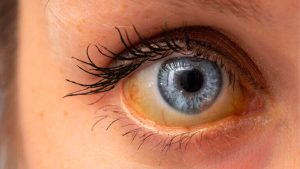
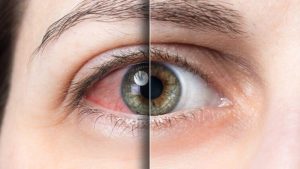
The eye is reddened and can cause severe pain. In addition, a clouded cornea is often a symptom of a herpes infection, which leads to blurred vision. Sometimes an eye herpes is confused by the layman with a conjunctivitis. That is why it is important to see an ophthalmologist to make the correct diagnosis and not risk damage to the eye.
The ophthalmologist will examine the eye with a slit lamp, he can assess the condition of the various corneal layers, in addition, he can take a smear on the eye to accurately determine the pathogen.
The following symptoms are also typical of eye herpes:
- Swollen Eyes
- increased lacrimation
- recurrent eye infections
- Irritation
- Foreign body sensation
- Eye redness
- Wounds to the eye
- watery discharge from the eye
- Sensitivity to light
In most cases, the symptoms only occur in one eye, but both eyes can also be affected.
How to treat herpes in the eye?
In addition to eye drops or eye ointment, systemic therapy with tablets can also show success in the treatment of eye herpes. These contain so-called virustatics, i.e. active ingredients that act against viruses that have invaded your body. Active ingredients such as acyclovir, valaciclovir or ganciclovir are mainly used here.
If a bacterial infection has also occurred, antibiotic eye drops can also help.
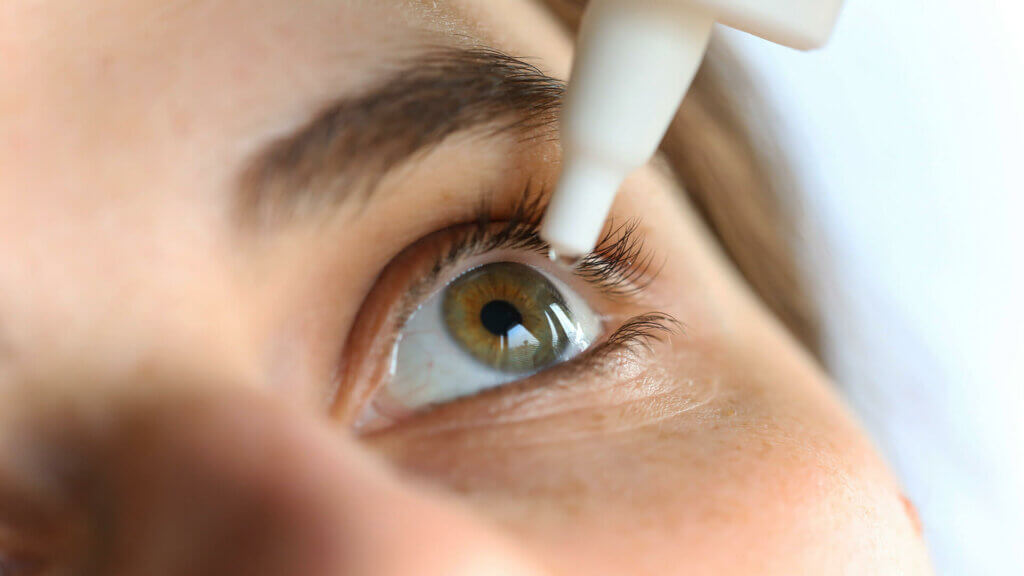
Depending on how well your body responds to the treatment and how effectively the viruses can be combated, the treatment will take about two to four weeks. Even if the herpes has already subsided, your symptoms may continue.
Tips against eye herpes
In addition to drug therapy, you can also support the treatment with home remedies and promote the healing of your herpes in the eye.
- Be sure to wash your hands frequently and keep your face clean. A regular care routine, if done correctly, can alleviate symptoms and speed up the healing process.
- Use your own towels and washcloths. These should be changed regularly and washed hot.
- Try to disinfect surfaces as best you can. Avoid direct contact with door handles or other surfaces in public as much as possible.
- For pain and itching, a disinfected cold spoon can be pressed onto the affected area. The cool metal soothes the itching and the redness can also go away.
Prevention of herpes in the eye
If you are susceptible to herpes, it is particularly important to pay attention to the cleanliness of the eye. Only reach into the face with clean disinfected hands, if at all. Care and hygiene should be an important part of your daily routine.
Try your best to avoid extreme external stimuli such as strong UV radiation and stressful situations. In this way, you avoid acute flare-ups and promote the healing of eye herpes that has already broken out. Read everything about the eye or find out more at the laser eye centre in Stuttgart or Karlsruhe with Ms Doctor-medic Bányai.
Another herpes infection that is known to many is the so-called shingles (herpes zoster virus). These viruses can also affect the eye.