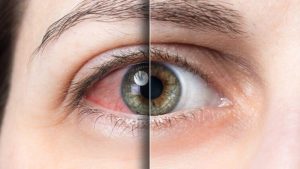

Swollen Eyes

Swollen eyes can have a variety of causes such as lack of sleep, a cold, inflammation or allergies. They are often accompanied by itching, sticking or burning up to pain in the eye area. A swelling on the eyes cloud our perception and is very uncomfortable.
Swollen eyelids can also be caused by wearing contact lenses, too dry air, or working on a screen for long periods of time. If the symptoms occur more often, the causes should be clarified by an ophthalmologist. But sometimes even simple home remedies can help to alleviate the unpleasant feeling.
So what to do if the eye is swollen? Below you can read all about causes, practical home remedies and when it is necessary to go to the ophthalmologist.
Possible causes of puffy eyes
Swollen eyes are quite common. Especially in the morning, looking in the mirror often shows a very swollen and red eye. The reason for this is a congestion in the lymph flow, which is due to the horizontal posture when sleeping and thus swelling under the eye.
The most common causes can be, for example, lack of sleep, drunk nights with excessive alcohol consumption or a diet rich in salt and protein. Medication side effects or hormones can also be responsible for changes in the eyelids.
If you have a cold, your eyes may also be affected. Especially with sinus infections, the eye-nose area can swell.
Low-humidity air and excessive computer work can often increase the sensation of dry eyes in contact lens wearers, causing swollen eyelids.
If the connective tissue around the eye relaxes, it can also give the appearance of swollen eyes. The so-called “lacrimal sacs” are created by the natural fat deposits becoming visible due to the sagging connective tissue.
Water retention around the eyes can also cause eye swelling. This is usually caused by hormone fluctuations. In women, this is often the case during ovulation or menstruation with the hormone estrogen.
Hypothyroidism can lead to chronically swollen eyes.
Allergies and infections cause swollen eyelids
One of the most common reasons for puffy eyes is allergies. Typical signs of an allergy are also watery, red, itchy or burning eyes. These symptoms may be mild or severe, single or in combination. Especially with contact allergies (for example, pet hair allergy or hay fever), the eyes often swell immediately. If possible, contact with the allergen should be avoided as much as possible.
Sometimes infections in the eye can also be the cause. They are caused by viruses, bacteria or foreign bodies in the eye. If you wear contact lenses, it is absolutely necessary to change the lenses immediately or even to pause wearing them if you have a bacterial infection.
An example of an infection is conjunctivitis. Not only swollen eyelids, but also increased tear flow, redness and severe itching are signs of inflammation of the conjunctiva. Another example is a barley grain on the eye (hordeolum) or a hailstone (chalazion).
Traumatic injuries, such as a blow to the eye, can also lead to swelling. There may also be an allergic reaction to makeup or creams.
Diseases can lead to puffy eyes
Serious diseases can hide behind swollen eyes, which urgently need to be clarified through further examinations by specialists.
For example, a tumor in the eye area or the eye socket may cause swollen eyes. In these very rare cases, however, the swelling is usually one-sided. Internal diseases of the thyroid gland, heart or kidneys can also be responsible for swelling around the eye. In addition, when yellow eyes appear, the liver is often affected. The liver has the function of filtering the orange-yellow waste material bilirubin from the blood. If the liver is damaged and bilirubin accumulates in the blood, this manifests itself with a yellowing of the eyes and also of the skin.
In Crohn’s disease, in addition to diarrhea and abdominal cramps, swollen eyelids can also occur due to the accumulation of fluid in the body.
Symptoms of puffy eyes
Swollen eyes due to insufficient sleep or crying are not a cause for concern. The swollen feeling usually disappears during the day. If the symptoms are painful, occur more frequently and are accompanied by several symptoms, the family doctor or a specialist should clarify the causes.
Acute inflammation, infections or a foreign object in the eye can be behind this. The doctor may also perform further examinations to rule out other conditions. The following symptoms can occur together with swollen eyes:
- Burning
- Gluing
- Eye pain up to eye migraine
- Weakening of the connective tissue (“lacrimal sacs”)
- Inflammation of the edge of the eyelid
- Irritated eyes with itching (herpes on the eye)
- Sensitivity to light
- Tearing eyes or increased tear production
- Blurred vision
- Redness of the eyelids (eye twitching)
- Dry eyes after surgery (Sicca syndrome)
- Constant pressure on the eyes
- Red eyes and/or inflammation of the conjunctiva
- Eye secretion
What can you do about puffy eyes yourself?
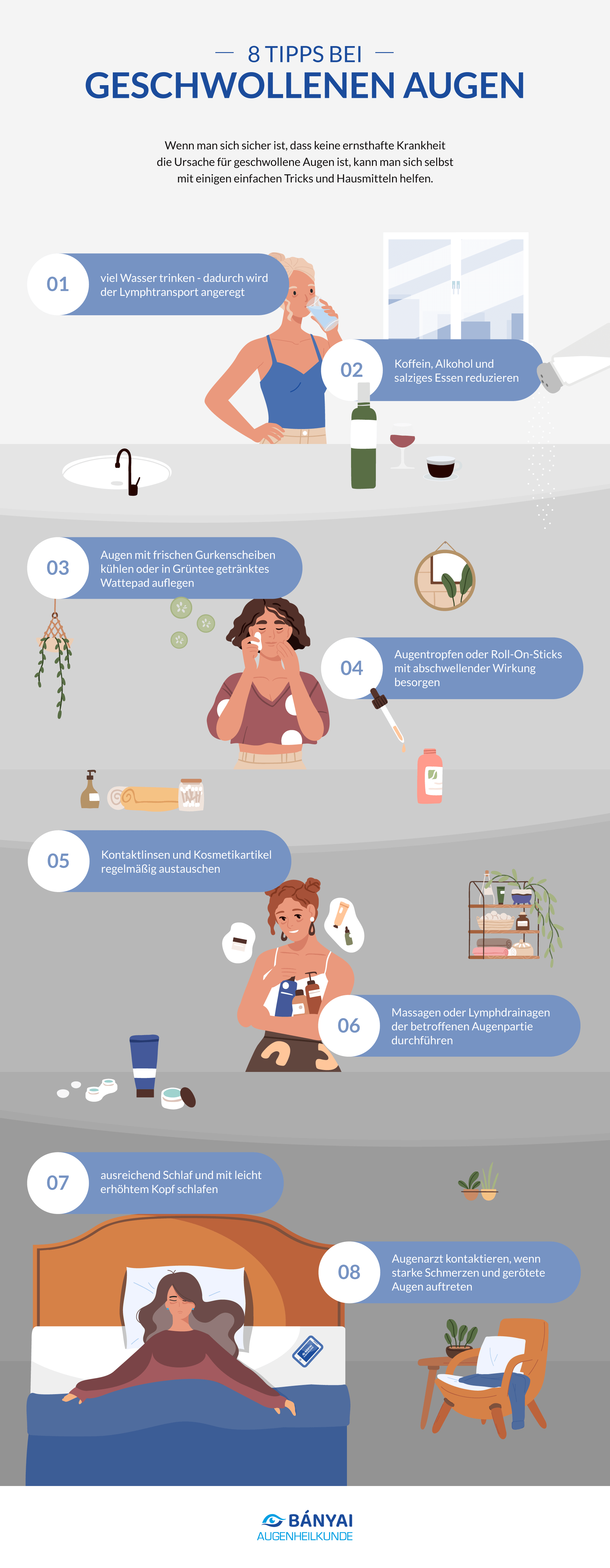
If you are sure that no serious illness is the cause of swollen eyes, you can help yourself with some simple tricks and home remedies.
So it often helps to drink enough water. Adequate hydration stimulates lymph transport and prevents congestion in the eye area. Also, abstaining from or reducing caffeine, alcohol, and excessive salty foods can prevent eye swelling.
Helping home remedies for puffy eyes

It is very pleasant if you cool the swelling of the eyes for a few minutes. Suitable for this are, for example, cooled spoons, cooling glasses or the tried and tested freshly cut cucumber slices. As well as compresses or tea bags, as well as a cotton pad soaked with green or black tea. The cooling effect can help to quickly subside the swelling of the eyelids. In any case, you should pay attention to the necessary hygiene or sterility of the products used.
Eye drops or roll-on sticks for eye care, with decongesting or dehydrating ingredients and active ingredients, support the decongestion process. To prevent swelling in the first place, eye cosmetics and contact lenses should be changed regularly.
Massages or lymphatic drains of the sensitive eye area have a gentle effect and often alleviate the swelling. For a self-massage with circular movements, start at the lower eyelid, then transition into gentle tapping from the root of the nose to the lower eyelid.
Getting enough sleep and sleeping with your head slightly elevated will help prevent puffy eyes and dark circles.
8 tips that can help with puffy eyes
When to see a doctor for swollen eyes?
You do not have to see a doctor if swollen eyes and dark circles appear after a night of partying or extensive crying. However, if you often have swollen eyelids for no apparent reason, you should see a doctor. The same applies to an atypical allergic reaction. Perhaps an undetected allergy is the cause or perhaps another disease is behind it. Especially in the case of an undetected allergy, a doctor can prescribe appropriate antihistamines.
You should immediately go to the ophthalmologist if the eyes hurt, tears, are very sensitive and accompanied by a strong redness. There could be a foreign object in the eye that needs to be removed. Otherwise, the pain may worsen and permanent damage to the eye could not be ruled out.
An infection could also be behind it, which needs to be treated. Not only because it could be contagious to others, but also to avoid risking damage to the eye.
If the swollen eyes are accompanied by diminishing vision, you should also see an ophthalmologist as soon as possible.
Conclusion on swollen eyes
The causes of swollen eyes are very different. The following triggers are considered completely normal, as they usually disappear quickly:
- Lack of sleep (dark circles are noticeable)
- Cold
- Strong crying
- screen work too long, dry air
- wearing contact lenses for too long
- Alcohol consumption
- too salty, protein-rich diet
- Hormone fluctuations
If painful symptoms occur more often, it is advisable to consult an ophthalmologist. In addition to the above causes, infections or foreign bodies can also be behind it. A specialist can quickly contribute to relief and healing here.