
Stye (Hordeolum), what now?

A stye is an unpleasant inflammation on the eyelid. This eyelid inflammation is also called hordeolum in the technical language and is caused by bacteria (staphylococci) or clogged sebaceous glands. The stye manifests itself through a painful, red and swollen area on the eye. Either these can be found on the edge of the lid (outer stye) or on the entire lid (inner stye). Pus can often form in the course of inflammation.
The inflammation caused by the stye usually heals on its own. Nevertheless, the ophthalmologist sometimes prescribes an antibiotic ointment or drops.
Depending on the severity of the infection, heat or antibiotic ointments promote the healing process. You should avoid classic home remedies for a stye grain, as they promote bacterial growth. The same applies to make-up – this contaminates the inflamed area and feeds the hordeolum.
Contact lens wearers should also switch to glasses to speed up the healing process. If you repeatedly suffer from a stye, this can indicate a chronic disease such as diabetes mellitus. If the acute infection does not disappear again, it is called a chalazion. This chronic form is also known as chalazion.
Whether it is a hordeolum or the chronic chalazion, you should always have the infection in the eye examined by an ophthalmologist. This will immediately initiate the optimal treatment so that the stye can heal.
In this article, you will learn everything important about stye, its formation and the possible treatment options.
Stye on the eye – what is a hordeolum?
Hordeolum is the technical term for a stye on the eye. This is a bacterial infection in the eyelid. This infection leads to a painful red swelling in the area of the infection focus and can cause a feeling of tension.
Sebaceous glands or hair follicles can become clogged with impurities. The impurities, in turn, can be caused, for example, by make-up, dead skin cells or dirt. As a result, bacteria can accumulate and cause an infection. The gland affected by the inflammation is called the stye.
Eye stye – video explanation
What types of styes are there?
In general, a distinction is made between 2 types of styes:
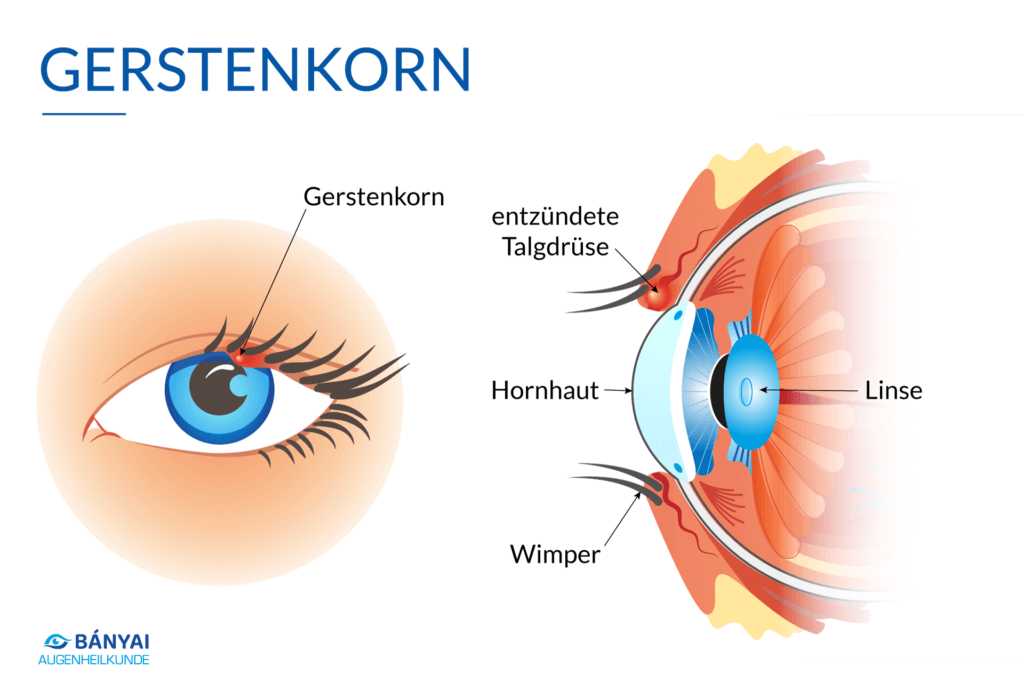
- An external stye (Hordeolum externum) sits at the base of the eyelashes, thus affecting the hair follicles.
- The internal stye (Hordeolum internum) is an infectious sebaceous gland on the inside of the eyelid.
Where does a stye form on the eye?
As a rule, styes are found on the eye on the inside of the eyelid or at the edge of the eyelashes and at the base of the eyelashes. Both the upper and lower eyelids may be affected. Various sebaceous and sweat glands ensure that the eyes do not dry out.
The meibomian glands on the inside produce sebum, the minor and Zeis glands on the outside produce sweat and sebum. These glands form secretions which in turn mix with the tear film to keep the eyes moist.
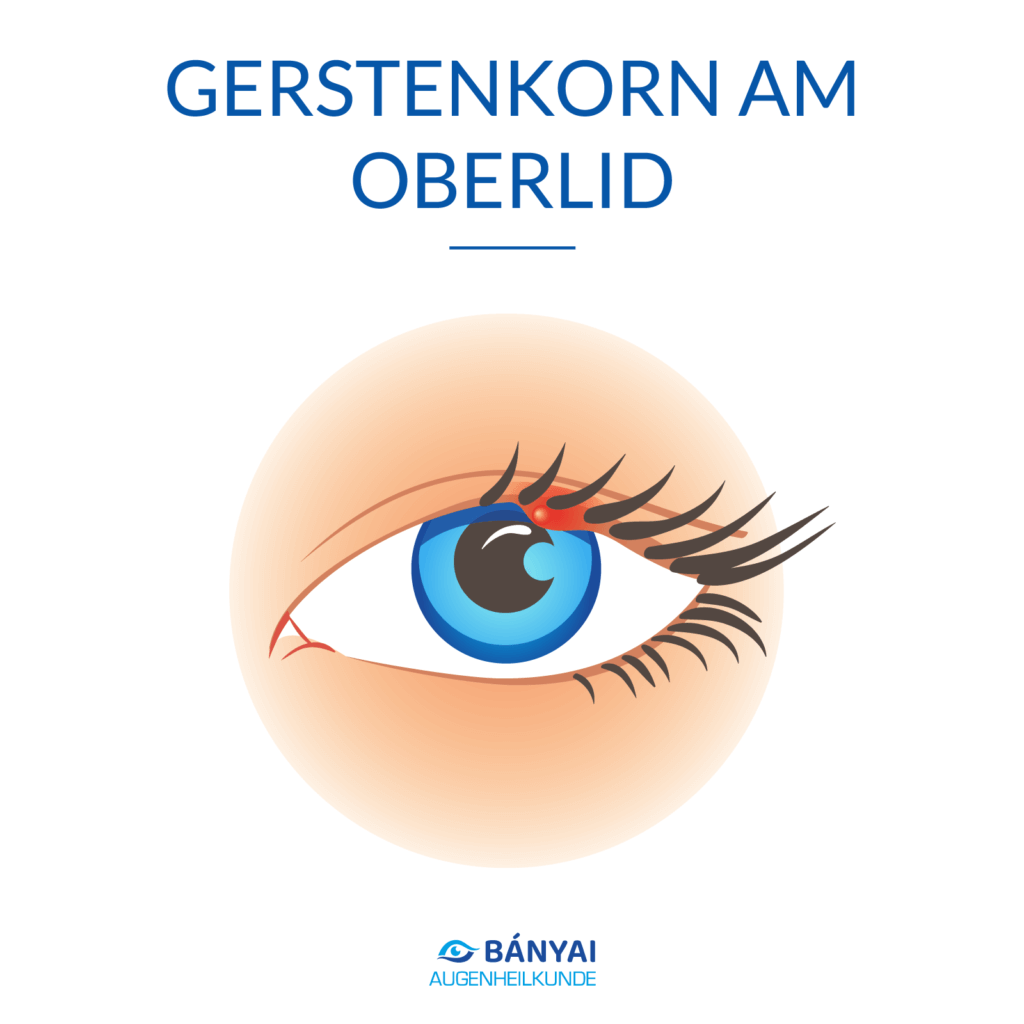
If the duct of these peripheral eyelid glands is blocked or infected with bacteria, the composition of the tear fluid can deteriorate and inflame the eyelid.
In general, a stye forms on one eye. Because it is a bacterial infection, the stye can be contagious and rarely affects both eyes.
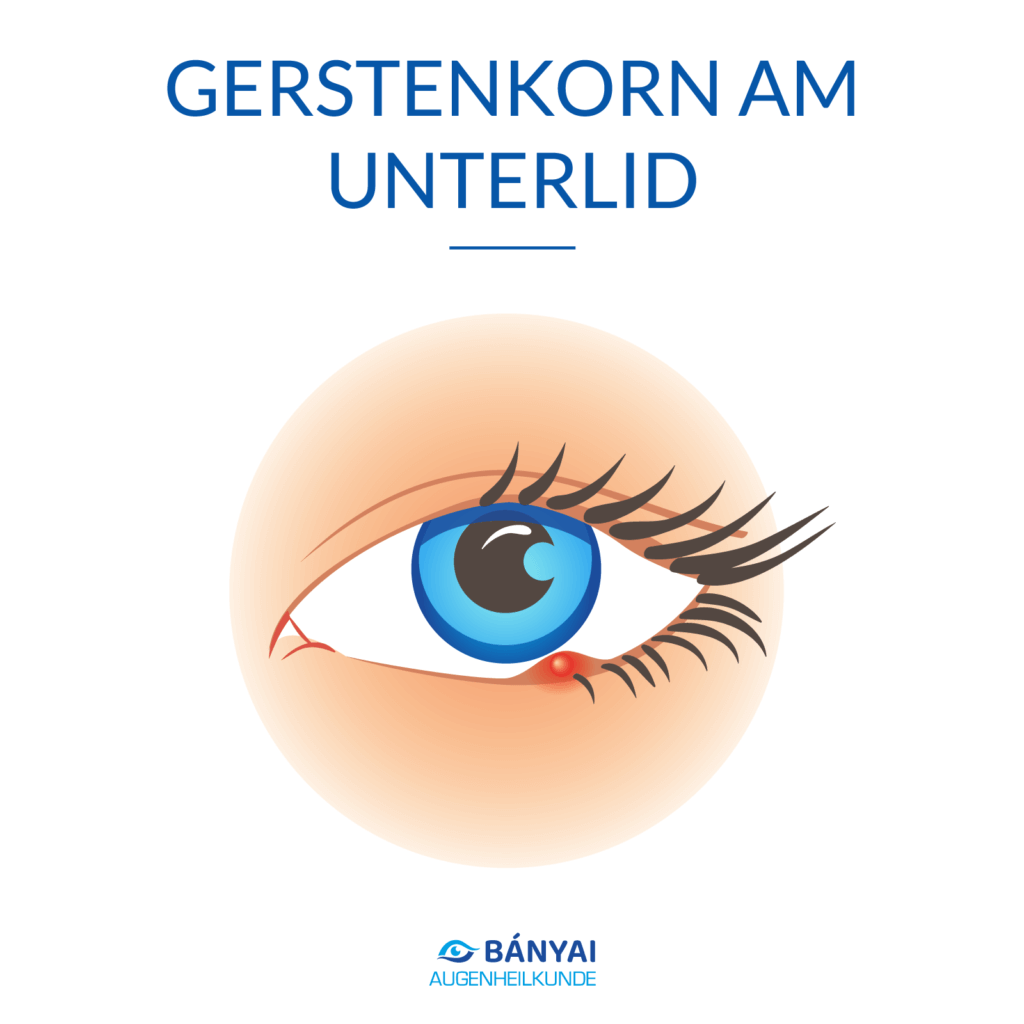
How long does it take for a stye to disappear from the eye?
When a hordeolum or stye disappears again depends on the infection and treatment. With a slight infection, the stye will heal on its own after a few days. In such cases, antibiotic ointments are usually not necessary to promote the healing process.
However, the stye can also grow into a chronic inflammation or a chalazion. If you generally have a weak immune system or the symptoms last for several days, you should consult an ophthalmologist.
The doctor can take the necessary steps to treat the inflammation. Medications, ointments, antibiotics and eye drops should show their effect after a few days.
Causes of stye – How does this infection develop in the eye?
There are various causes for the formation of a stye. For example, if you have a weakened immune system or acne, a stye can develop on the edge of the eyelid or on the inside of the eyelid.
Inner and outer stye differ not only in the affected area of the eye. In particular, a distinction must be made here according to the type of inflamed glands. Either the Zeis or Moll glands on the outside of the lid or the lower meibomian glands can be infected.
The infection is usually triggered by skin germs such as staphylococci, i.e. bacteria. In rare cases, streptococci may also be responsible. In addition, dirt on the fingers can easily get into the eye and promote the formation of a stye.
Children quickly come into contact with dirt or germs and like to grasp their faces with their unwashed hands. They are therefore significantly more likely to be affected by a stye than adults. Therefore, especially after playing on the playground, pay attention to clean hands with your protégé. This is an easy way to prevent unpleasant swelling on the eyelid.
Those who generally suffer from a weak immune system are constantly exposed to the risk of bacterial infection. A metabolic disease such as diabetes mellitus can therefore quickly lead to a stye or even a chalazion.
Stye symptoms – how do I recognize the inflammation?
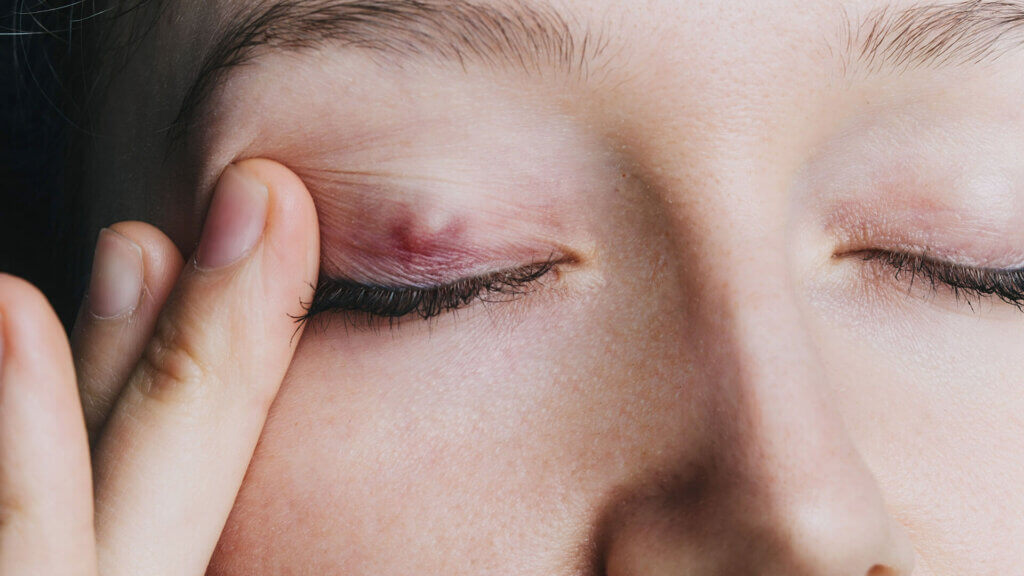
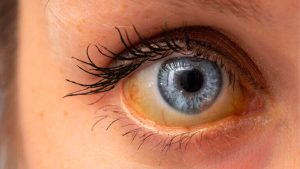
The stye typically manifests as a small but often painful pimple. The affected area is usually clearly swollen and may be covered with pus.
Other symptoms of a stye include:
- A lump on the eyelid
- Eyelid pain
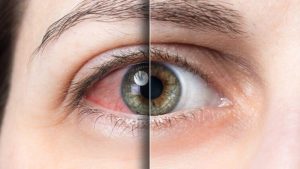
- Redness
- Swollen eyelids
- Sensitivity to pain
- Flaccid eyelids
- Eye discharge (crust around the eyelid)
- A burning sensation
- Increased lacrimal fluid
In rare cases, a stye can also become noticeable through fever and swollen lymph nodes in the area of the ears.
Stye treatment – what can you do?
Normally, a stye is not a cause for concern. The inflammation is usually uncomplicated and heals on its own.
If a stye occurs more frequently or for an unusually long time, it can be a chronic inflammation or a chalazion. In such a case, you should urgently contact an ophthalmologist. To prevent the infection from spreading, this prescribes antibiotic eye ointments or eye drops.
Since the inner glands of the eyelid are larger than the outer ones, an inner stye is often accompanied by stronger symptoms. The inflammation can easily spread to the conjunctiva or the eye socket, which is why other medicines, such as antibiotic tablets, are sometimes prescribed for the treatment of stye in addition to ointments.
What home remedy can help with stye (hordeolum) or chalazion?
Home remedies can only be used to a limited extent in the healing of styes. To restore the health of your eye at home, red light therapy is recommended, among other things. Dry heat is generated with the help of a red light bulb. This allows the pus to drain faster and thus supports healing.
Moist heat, on the other hand, would promote bacterial growth. This is therefore not recommended for treatment. Classic home remedies such as damp-warm envelopes are also not recommended. In most cases, these promote inflammation rather than fight it.
The same applies to moist warm compresses with chamomile tea or other warm pads. Unfortunately, these home remedies often lead to more harm than relief. Nevertheless, we have summarized a few stye home remedies for you.
Do not express styes on the eye under any circumstances!
The ophthalmologist may open the stye on the eye under local anesthesia. This is especially recommended if the pus cannot drain on its own.
Even if pain and swelling in the inflamed area of the eyelid should increase and a feeling of tension develops, it makes sense to open the abscess.
Under no circumstances try to express the pus yourself! This can not only be very painful, but also lead to further germs in the area of the eyelashes, especially with unwashed hands. This only aggravates the inflammation and unnecessarily complicates the healing process.
Stye and chalazion – medical treatment or home remedy?
Medical treatment is usually not necessary for a stye. Under normal circumstances, the Hordeolum heals on its own. Nevertheless, you should urgently consult an ophthalmologist in the following cases:
- Increasing swelling on the eyelid
- Impairment of your vision
- No improvement in sight even after days
- Chronic form: chalazion
A doctor will examine the infection with a slit lamp, initiate treatment and, if necessary, prescribe appropriate medicines. Treatment under local anaesthesia is only necessary in particularly severe cases.
If you have a stye, it is also important to rule out other eye diseases in order to avoid severe courses.
Is a stye or chalazion contagious?
A stye can be contagious and be transmitted. Those affected often try to express the inflamed stye themselves. This can cause the inflammation to spread further and maybe even infect the other eye.
Basically, you should keep your fingers off the stye to avoid further contagion. Caution should be exercised if the stye causes conjunctivitis. Conjunctivitis is very contagious in most cases.
In addition, a stye can grow into a chronic condition, i.e. a chalazion. To avoid this and not to infect other people, you should use your own towel and wash your hands regularly.
How to prevent a stye?
You can avoid styes by paying general attention to your health. Since this abscess is a bacterial infection, a weak immune system can be beneficial.
Therefore, try to strengthen your own defenses with regular exercise and a healthy diet in order to protect yourself against unpleasant pathogens.
In general, you should pay attention to extensive hand and eye hygiene. This allows you to easily prevent a bacterial infection on the edge of the eyelid, on the inside of the eyelid or in the area of the eyelashes. Since the pathogens for styes and chalazia live on the skin and mucous membranes, they can be transmitted very easily.
If they get into the eye, they can cause inflammation within a very short time. Therefore, wash your hands regularly. Try not to look at yourself with dirty hands.
If you still notice typical symptoms of a stye, do not use warm compresses and other home remedies.
Instead, consult an experienced ophthalmologist such as Ms. Doctor-medic Bányai. She is a proven expert in the field of laser eye treatments and the correction of refractive errors.
In the modern laser eye centers in Karlsruhe and Stuttgart, she offers individual advice and precise treatments at the highest medical level.
Frequently asked questions about stye
What is a stye?
A stye, medically “hordeolum”, is a mostly bacterial inflammation of a gland on the eyelid. Typical is a red, painful swelling and sometimes a pus-filled area.
What is the difference between an inner and an outer stye?
An external stye is usually formed at the edge of the eyelash or at the base of the eyelashes. An inner stye lies on the inside of the eyelid and can cause greater discomfort.
How long does a stye last?
A light stye often heals on its own within a few days. If the swelling persists, becomes stronger or the stye occurs repeatedly, an ophthalmologist should clarify the cause.
Can you express a stye yourself?
No. Squeezing can allow bacteria to spread further and aggravate inflammation. In the event of severe or non-healing inflammation, treatment should be carried out by an ophthalmologist.
When should you go to the ophthalmologist with a stye?
An examination is particularly useful in case of increasing swelling, severe pain, visual disturbances, fever, recurring styes or if there is no improvement after a few days.