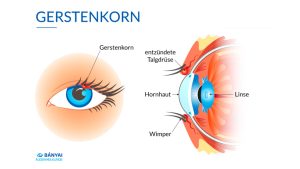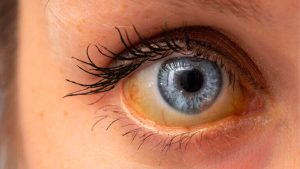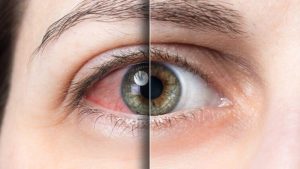
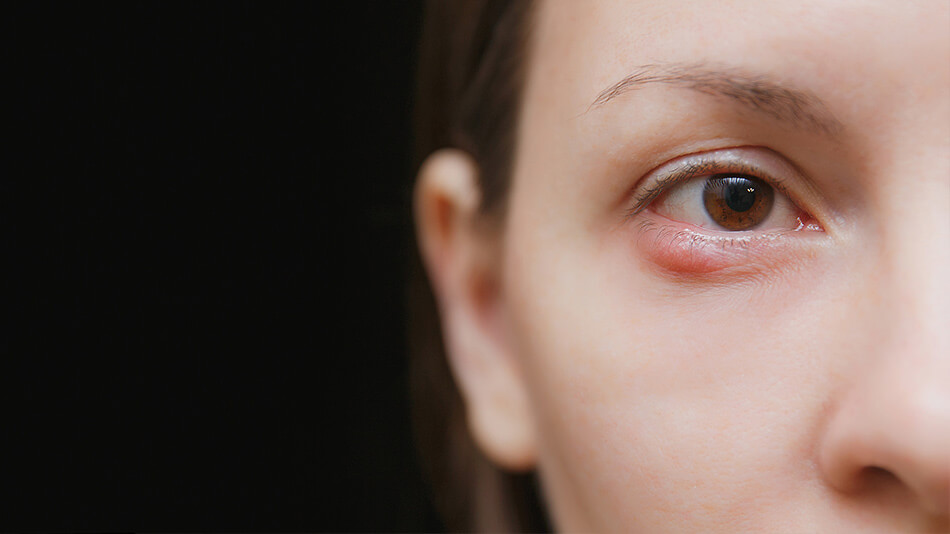
Stye treatment

Read all the important tips on stye treatment. To effectively treat a stye, you need to address the basic problem – that is, find the cause and eliminate it. If the cause is not found or handled incorrectly, the problem cannot be completely solved.
Even if symptoms improve, there is still a risk of the situation getting worse. Therefore, every patient with stye should be thoroughly examined and treated by the doctor or ophthalmologist.
Normally, however, a stye is not a cause for concern. Inflammation of the eye is usually uncomplicated and usually heals on its own.
How can a stye be treated on the eye?
There are many ways to treat a stye on the eye – from external applications to surgical procedures. However, it is important to note that each form of treatment has its limitations and that it may be necessary to use several methods at the same time.
This includes regular eye drops or ointments as well as medical advice to avoid further complications or to resolve existing complications. A stye home remedy for treatment is a red light bulb. This gives dry heat, which is good against the inflammation of the stye.
It is important that you visit your ophthalmologist or family doctor if the stye does not get better for a long time. This is the only way to properly diagnose and treat the problem – which ultimately benefits the patient’s condition.
What not to do with a stye on the eye?
Under no circumstances should you try to express the stye yourself, as this could aggravate the infection. In order to support and accelerate the opening process set in motion by the body, one can apply thermal radiation such as red light irradiation.
However, you should avoid damp heat, such as putting on damp wipes. If the stye has to be opened in order for the pus to drain, this should only be done by a doctor.
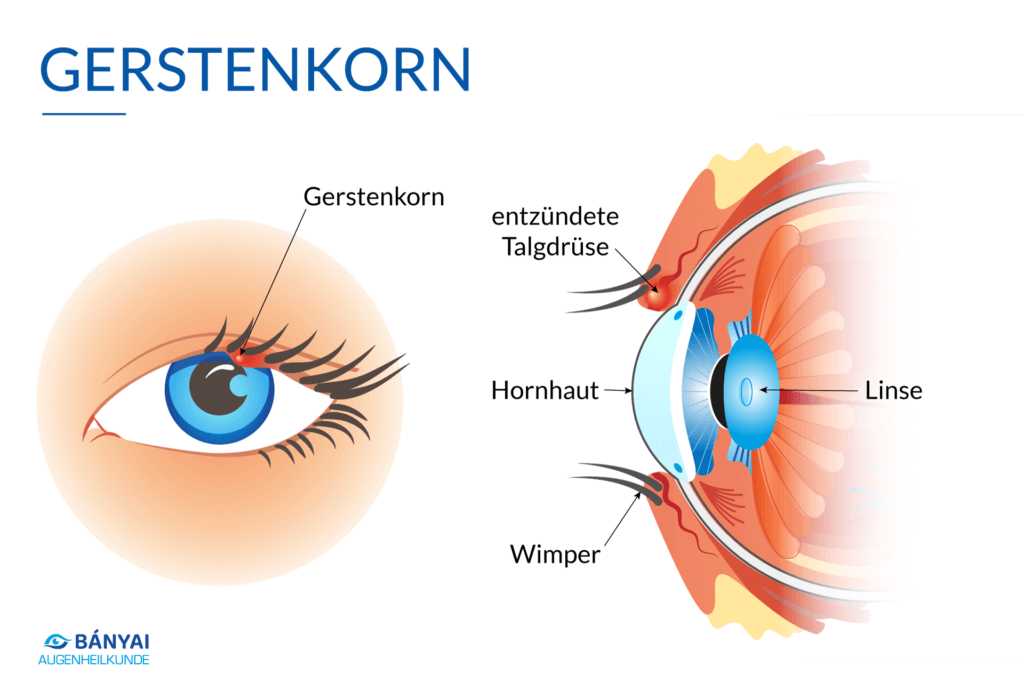
What problems can a stye cause
A stye on the eye is a common but painful condition of the eye. It is usually harmless, but can be very uncomfortable for the person concerned. If not treated properly, it can cause various complications.
Possible complications of a stye include:
- Inflammation in the conjunctival sac (conjunctivitis),
- Redness and swelling of the eye socket,
- Visual disturbances,
- Eyelid edge inflammation and even
- Infections of the eye.
All these problems can aggravate the symptoms of a stye and lead to more serious complications. Is a stye contagious? Yes, the stye can be contagious. Further details can be found in the following article.
So it is better to book an appointment with an ophthalmologist or family doctor in good time.
Conclusion on stye treatment
Basically, there are different stye treatments. Ointments, eye drops and dry heat should help the stye on the eye disappear on its own. If the inflammation is very painful or does not go away for a long time, then book an appointment with your ophthalmologist or family doctor.
Frequently asked questions about stye
Does a stye need to be treated by a doctor?
A light stye often heals on its own. However, an ophthalmological examination is important if the symptoms increase, the inflammation does not heal, vision is impaired or styes occur repeatedly.
What treatment is used for a stye?
The treatment depends on the location and severity of the inflammation. Depending on the findings, supportive measures or medically prescribed medications may be considered first. An antibiotic ointment or eye drops should not be used without a professional recommendation.
When does a stye need to be opened?
If the inflammation does not resolve on its own or a stronger abscess develops, a doctor can open the stye under suitable conditions. This should never be attempted on its own.
What is the difference between a stye and a chalazion?
A stye is usually an acute, painful inflammation that can be caused by bacteria. A chalazion is typically caused by a blocked gland and is often less painful. An investigation provides clarity.
What to do with a recurring stye?
In the case of recurring styes, the cause should be examined by an ophthalmologist. Possible beneficial factors can include eyelid edge problems or certain underlying diseases. Recurrent inflammation should not be permanently self-managed.
When is a stye an emergency?
In the event of severe pain, rapidly increasing swelling, fever, significant visual impairment or a spread of redness, medical help should be sought promptly.