
The most common eye diseases in 2026. Dr. med. Bányai informed

What are the most common eye diseases in 2026? This question cannot be answered without further ado: people worldwide suffer from a wide variety of eye diseases. Based on the data available to date, it is not possible to say which eye diseases occur most frequently.
An overview of the most common eye diseases in 2026
A large-scale study – the Gutenberg Health Study – took a closer look at the question of the most common eye diseases in relation to Germany and published the first figures in 2015. Based on these results, among other things, we would like to introduce you to some of the most common eye diseases in this article.
Macular degeneration
The most common cause of visual impairment in people over 60 in Germany is macular degeneration, AMD for short. The abbreviation AMD is derived from the English term for age-related macular degeneration: “Age Related Macular Degeneration”.
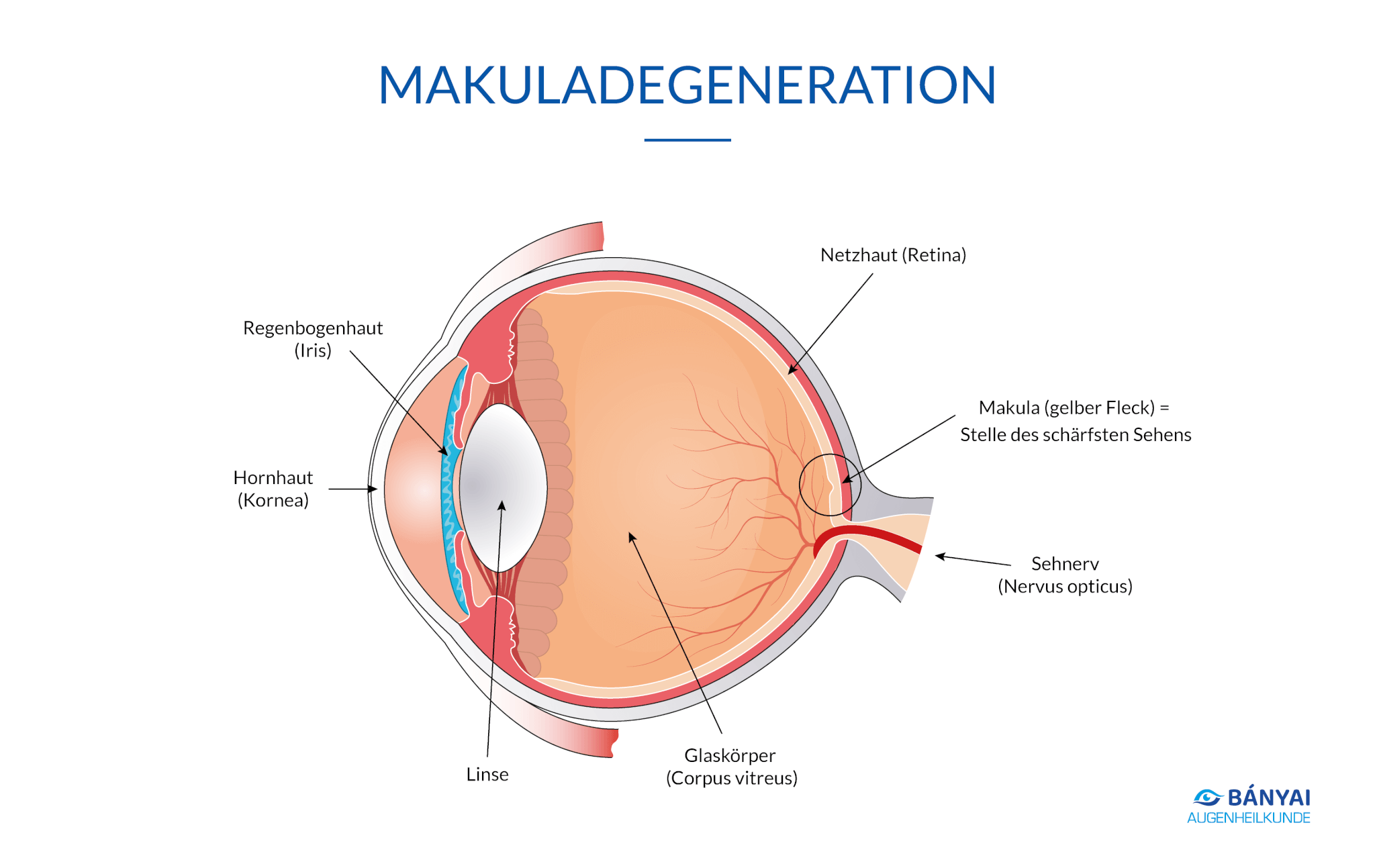
The macula is also known as the yellow spot; it describes a specific field on the retina in which there are a particularly large number of visual cells. If so-called Druze – white or yellowish deposits – form under this surface, the overlying visual cells are destroyed.
As a result, vision in this area declines, which manifests itself in the further course of the disease with a bright, black or gray spot in the middle of the visual field.
In Germany alone, more than 4 million people suffer from AMD. If macular degeneration becomes apparent, there is an acute need for action! An ophthalmologist should definitely be consulted here in order to be able to take measures in the event of an appropriate diagnosis.
Diabetic retinopathy
As the name of the disease already anticipates, diabetic retinopathy only affects diabetics. This results in damage to the blood vessels of the retina, which results in an undersupply of oxygen. As a result, there is damage to the retina, which is often not noticed by patients at first.
In Germany, more than one million people are affected by diabetic retinopathy; 21.7% of people with known diabetes in Germany are affected.1
Diabetic retinopathy should be diagnosed as early as possible in order to counteract the progression of the disease.
Cataract
The cataract is one of the most common causes of irreversible blindness in Europe; in Germany, over 900,000 people are affected by so-called glaucoma.1
A green cataract can be due to various factors: In addition to injuries to the eye and pre-existing conditions such as diabetes, a hereditary component can also lead to the occurrence of glaucoma. The nerve fibers in the eye are gradually damaged, which can lead to complete loss of vision.
This often has to do with too high intraocular pressure, which is countered with different measures after an earliest possible diagnosis.
Cataract
The cataract is not to be confused with the cataract. This disease is particularly common in old age. For example, about every second over-50-year-old in Germany suffers from it.
Cataracts lead to a clouding of the patient’s natural lens, which worsens their vision. The deterioration occurs gradually and manifests itself in its course through a clouded vision, which noticeably influences everyday life. The most effective solution against cataracts is cataract surgery.

Precisely because cataracts do not appear suddenly, but gradually, an annual check-up with your ophthalmologist is recommended. If a corresponding diagnosis is made, a cataract surgery is available, among other things.
Infections
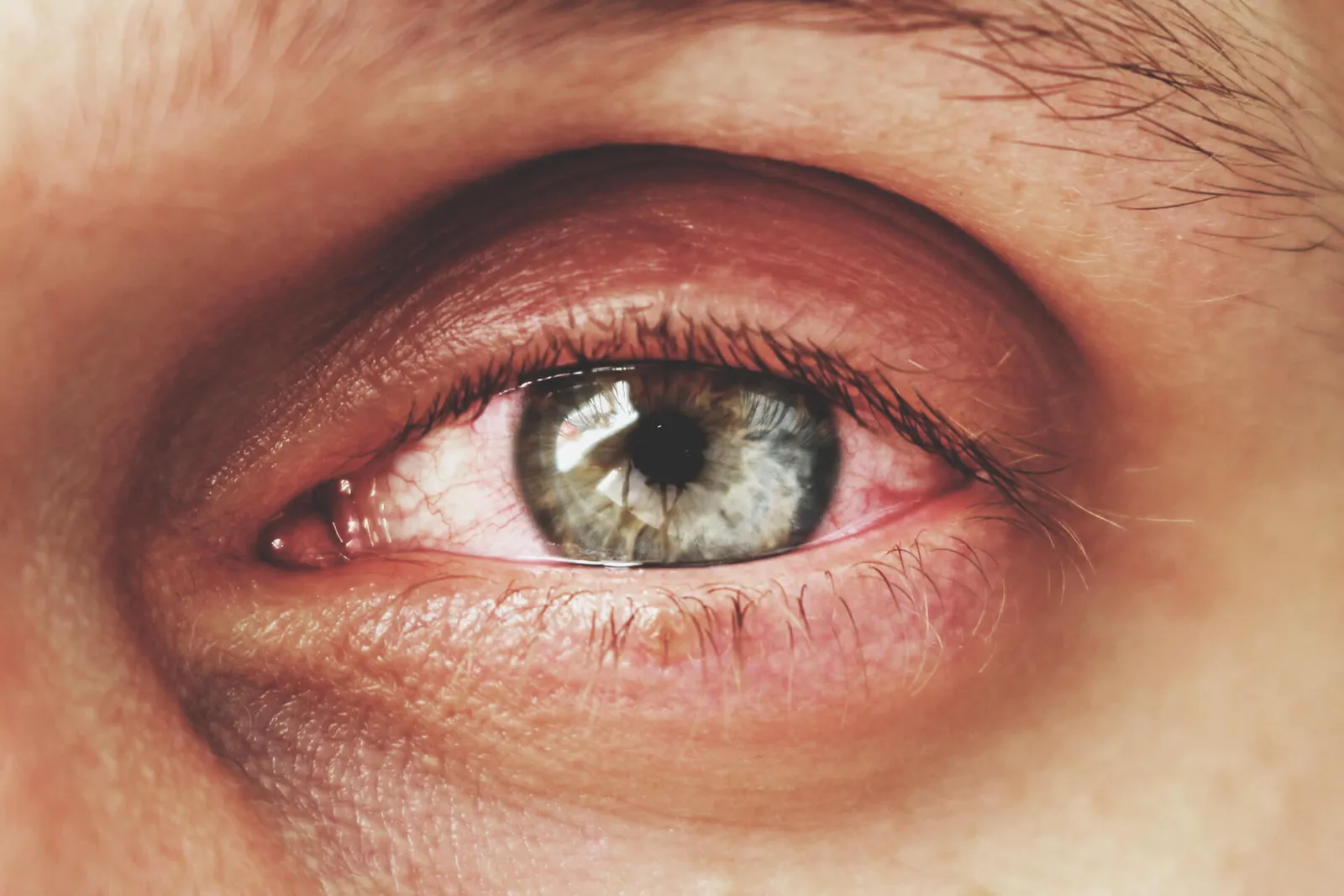
Infections in the eye can not only be unpleasant, but sometimes also require medical treatment. They can lead to inflammation, in the presence of which a doctor should be consulted.
Inflammation of the conjunctiva, for example, can often occur. Conjunctivitis usually has a bacterial or viral cause, which depends, among other things, on the exact symptoms. Because while in bacterial conjunctivitis pus is secreted from the eye, in viral conjunctivitis a rather watery fluid escapes.
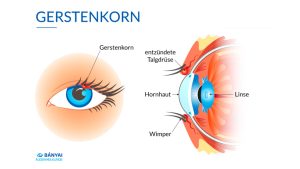
But the eyelid itself can also be affected by inflammation. The stye, for example, is caused by a clogged sebaceous gland or bacteria and is very unpleasant for those affected, because it not only causes redness of the affected area, but also swelling and pain.
Uveitis is also an inflammation, but can be located on the uvea or the middle eye skin. The symptoms vary depending on the area in which the inflammation occurs. For example, inflammation in the anterior area can manifest itself through redness and pain, while visual disturbances can typically occur when the posterior area is affected.
The treatment of uveitis also depends on the exact type of inflammation. Therefore, if you have any complaints, be sure to consult your ophthalmologist, who will make an exact diagnosis and initiate appropriate treatment.
Defective vision
In addition to the actual eye diseases, there are also a number of different refractive errors. These can occur either as their own symptoms or as a result of a primary illness.
The refractive errors include nearsightedness and farsightedness as well as corneal curvature, but also night blindness and color vision loss. Depending on the severity, refractive error can affect everyday life to a greater or lesser extent.
In any case, your ophthalmologist will advise you whether and which form of therapy is appropriate for your refractive error – this can be wearing glasses or contact lenses, but also considering laser eye surgery. Laser more details on laser eye surgery for nearsightedness, long-sightedness and laser presbyopia.
Presbyopia
We deliberately mention presbyopia in our list only at the end, and only with reservations. Because this is not a disease, but a natural aging process.
Nevertheless, presbyopia sometimes has a major impact on the everyday lives of those affected – and according to one study, this is at least around 80% of older people in Europe.2
If presbyopia is diagnosed, this is due to the declining elasticity of the natural lens. As a result, it can adapt less well to different distances, which can lead to lower visual performance, especially at close range.
In addition to reading glasses, patients also have surgical options to remedy their presbyopia. Among other things, in the course of consultations with your ophthalmologist, treatment with the Presbyond®procedure may seem sensible, and a refractive lens exchange may also be considered.
Many questions – one point of contact
Our list of eye diseases could go on for quite a while. However, it should have become clear by now that you are not alone with your eye disease, but that many other people also suffer from it.
This makes it all the more reassuring that your trusted ophthalmologist is at your disposal with the appropriate experience and competence to accompany you in the treatment of your eye disease. Book a consultation appointment now at our eye surgery centre in Stuttgart or eye surgery centre in Karlsruhe and get comprehensive information.
Sources and studies
1 http://www.gutenberg-gesundheitsstudie.de/ghs/willkommen.html
2 Albou-Ganem C. Presbytie et chirurgie refractive. Journal Français d ‘Ophtalmologie. Published online September 2019:790-798. doi:10.1016/j.jfo.2018.08.009