
Pressure on the eyes: What to do if the eye pressure is too high? Doctor-medic Bányai enlightens

Do you feel pressure on your eyes? Do you suffer from eye pain? This can have a wide variety of causes and, above all, serious consequences for the eyes. The trigger for the symptoms can lie in the eyes themselves, but can also result from other diseases.
In any case, you should consult an ophthalmologist for longer lasting or very severe complaints! Your vision should be preserved in the best possible way and as much quality of life should be regained as possible.
The eyes are one of the smallest organs in our body. Due to their performance, they are our most important sensory organ.
In this article, you will learn everything important about eye pressure, how to recognize crucial symptoms and why eye pain should be treated as quickly as possible.
What feelings of pressure and pain in the eyes can occur?
Depending on where the pain and pressure sensations in the eyes are localized, they can have different causes.
As a rule, a feeling of pressure on or behind the eye can be attributed to dry eyes or an uncorrected visual defect. Both represent an enormous strain on the eyes, resulting in unpleasant eye pain.
If you notice that the pressure on the eyes increases when bending over, it is important to clarify whether the cause is in the sinuses.
Prolonged pain is often the reaction of the eyes to foreign bodies under the eyelids. The symptoms tend to get worse here. If they get into the eyes due to external influences, such as an accident, splinters or chemicals, they can irritate the eyes and must be removed.
The most common causes of pressure on the eyes
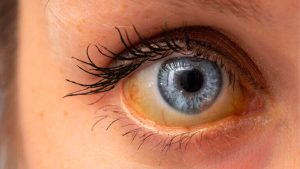
Pressure on the eyes or eye pain can have a wide variety of causes, which do not necessarily have to be directly in the eyes themselves. Often, certain diseases also lead to a feeling of pressure on the eyes. In addition to fatigue, headaches and dry eyes, more serious causes such as inflammation of the optic nerves or tumours can rarely cause painful eyes.
Other common causes include:
- Stye on the eye
- Defective vision
- Ocular pressure too high
- Conjunctivitis
In order to clarify this and to avoid serious long-term consequences, a doctor should always be consulted in the event of sudden, severe or persistent symptoms .
Conjunctivitis
Conjunctivitis is a disease of the eye caused by invading bacteria, viruses or other foreign bodies.
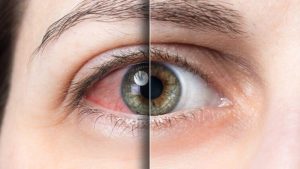
Typically, conjunctivitis can be recognized by a reddened, watery eye, as well as a foreign body sensation or pressure on the eyes. The disease is very common, but can be treated easily and successfully.
Stye
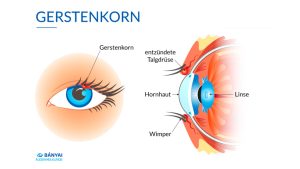
A stye, also called hordeolum, is formed as a result of bacteria entering the sebaceous glands of the eyelid. It is a small pus-filled bead that forms on the edge or inside of the eyelid. Slightly swollen eyes may occur.
A grain of stye must never be opened by the patient himself, otherwise serious infections can develop. Many sufferers describe an unpleasant feeling of pressure on the eyes.
In the healing process, this usually disappears without medication within a few days. If you regularly suffer from styes in the eyes, this may be an indication of a weakened immune system.
Pressure on the eyes and headaches (tension headaches and cluster headaches)
Constant pressure on the eyes can lead to various headaches and vice versa. Many people regularly suffer from dull feelings of pain and pressure in the head, so-called tension headaches. These can spread behind both eyes. “Migraine-like” eye pain and pressure behind the eyes can be triggered by this.
Cluster headaches are very severe headaches that occur unilaterally in the area of the eye or the temple and are also accompanied by eye pressure. Characteristic are additional accompanying symptoms such as watery eyes, a slightly drooping eyelid or a runny nose.
In the relapse of free time, patients are usually completely symptom-free. During an acute relapse, pure oxygen and migraine remedies can help.
Paranasal sinus disease
Throat, nose and ear diseases can often also cause eye pain or an increased feeling of pressure on the eyes. The eye socket is also the boundary of the paranasal sinus. Therefore, sinus diseases (so-called sinusitis) can radiate into the area of the eye socket and lead to pain and feelings of pressure.
Tumors behind the eye
In rare cases, a tumor in the sinus or behind the eye can also cause pressure on the eyes. Due to the spatial proximity to the eyes, the pain can radiate, so that the sinus disease is also perceived in the sensitive area of the eye. Those affected suffer from an unpleasant feeling of pressure.
Defective vision that has not been corrected
Different types of refractive errors such as nearsightedness, farsightedness or presbyopia can cause severe eye strain if left untreated. Such an overload of the eyes can manifest itself in a disturbing feeling of pressure in the long run.
Since this form of eye pressure is easy to avoid, you should have your vision checked regularly and adjust it with a visual aid if necessary. If you suffer from a particularly severe form of refractive error or visual impairment, you should also consider the possibility of laser eye surgery. A minimal intervention is enough to improve their eyesight. Disturbing accompanying symptoms such as eye pain or pressure on the eyes are reduced.
Laser Eye Center in Baden-Württemberg
In our specialized laser eye centers in Stuttgart and Karlsruhe, we will advise you in detail and find the right procedure together with you – individually tailored to your eyes and your visual needs.
Inflammation of the optic nerve
In connection with diseases such as multiple sclerosis, inflammation of the optic nerve often occurs, which can also lead to a feeling of pressure on the eyes. Depending on the position of the optic nerve inflammation, a distinction is made between different forms of inflammation, such as retrobulbar neuritis, optic neuritis or papillitis.
Green cataract – possible trigger for too high eye pressure
Green cataract, also known as glaucoma, is a serious eye condition in which too much eye pressure can damage the optic nerve. There are various possible triggers for increased eye pressure, which can ultimately lead to cataracts.
A common trigger is a drainage obstruction of the aqueous humor. Typically, the aqueous humor that nourishes and nourishes the anterior part of the eye drains through the trabecular system. However, when this drainage system is clogged or constricted, the aqueous humor builds up and the pressure in the eye increases.
Another possible trigger is an increased production of aqueous humor. If the eye produces too much aqueous humor, the drainage cannot keep up with production and there is an increase in eye pressure.
Genetic predisposition also plays a role. If there have already been cases of cataracts in the family, there is an increased risk of developing the disease. Certain genetic factors may increase susceptibility to increased eye pressure.
In addition, the risk of excessive eye pressure increases with age. Glaucoma is more common in people over the age of 40.
It is important to have eye pressure checked regularly by an ophthalmologist, especially if there are risk factors. Early diagnosis and treatment can help slow the progression of cataracts and preserve vision.
When should I see a doctor if there is pressure on my eyes?
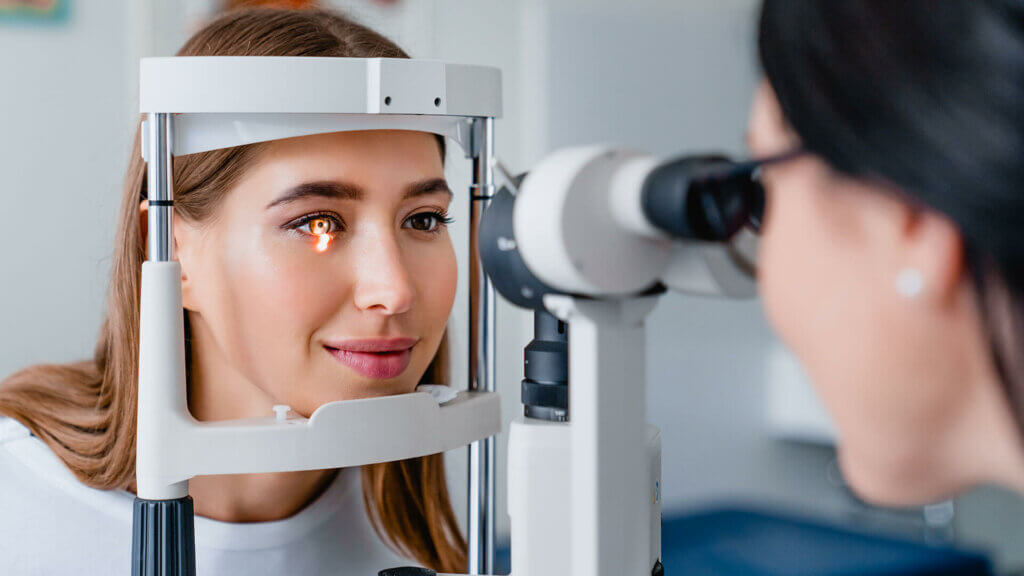
Have you already been struggling with eye pain or pressure on the eyes for a longer period of time and no improvement is in sight? Then you should urgently see an ophthalmologist. Sudden stinging in the eye or a foreign body sensation can also be warning signs that must be observed in order to clarify serious damage to the eye.
State-of-the-art diagnostic and treatment methods are available at the specialised laser eye centres in Stuttgart and Karlsruhe – even if you are interested in laser eye treatment to correct refractive errors.
If the following additional symptoms occur in connection with eye pain, you should consult an ophthalmologist as soon as possible:
- Nausea and vomiting
- Decreased visual acuity
- Seeing atria around light sources
- Protrusion of the eyeball from the eye socket
- Severely red eyes
Since the eye is a very sensitive organ, even slight impairments or persistent visual deterioration can lead to irreversible late effects. Therefore, do not hesitate to have your symptoms clarified by an ophthalmologist.
What is increased eye pressure?
If the pressure permanently rises above a value of 21 mmHg, this is referred to as increased intraocular pressure. This is caused by an overproduction of aqueous humor. If the excess fluid does not drain quickly enough, the pressure on the eyes increases.
“Unfortunately” causes NO pain and no feeling of pressure. Therefore, increased eye pressure is all the more dangerous because it develops unnoticed.
Eye pressure too high – green cataract as a result
Very often, glaucoma, the so-called “green cataract“, occurs as a direct result. Since the optic nerve can be damaged by the high intraocular pressure, negative side effects such as impairments of vision are the result, which are irreversible.
Since glaucoma in the severe stage can lead to vision loss, laser eye surgery (selective laser trabeculoplasty) is recommended as a safe treatment as an alternative to eye drops. This surgery prevents the progression of the disease.
High eye pressure – Regular examination by an ophthalmologist
In order to prevent permanent damage, it is very important that you visit an ophthalmologist regularly in order to detect increased intraocular pressure as quickly as possible. Since you will not necessarily notice the symptoms yourself, it is advisable to have the eye pressure checked once a year from the age of 40.
In most cases, high eye pressure can be treated very well with medication (for example, eye drops). If the external pressure is not adequately regulated with eye drops, eye surgery may be necessary.
What is low eye pressure?
Not only an increased, but also a low intraocular pressure can cause great damage inside the eye. If the pressure is permanently below a value of 10 mmHg, you should have it clarified whether too little aqueous humor is formed or whether the aqueous humor drains off too quickly.
If left untreated, this can lead to choroidal detachment, which should be treated. Otherwise, there is a risk of irreversible blindness. In addition, a reduced intraocular pressure can also lead to the development of glaucoma.
The following also applies in this regard: If you regularly have your intraocular pressure measured by an ophthalmologist using a so-called non-contact tonometer, there is nothing to worry about.
Eye pain due to pressure sensation – Conclusion
A feeling of pressure on the eyes can have various causes. Even if these are often harmless and the pressure on the eyes disappears on its own in most cases, emerging symptoms should be clarified by an ophthalmologist. A wide range of more serious causes of eye pain may be considered.
In any case, try to locate the eye pain to limit possible causes.
Does the pain increase or do you suffer from a foreign body sensation in the eye? Are past accidents or working with chemicals possible? Inform your doctor, such as Doctor-medic Bányai, about this! Every detail can be important to maintain their vision.
Frequently asked questions about eye pressure
Possible causes are dry or irritated eyes, overload, headache, sinus problems or inflammation. Other eye diseases may also have to be ruled out.
Pressure behind the eyes can have various causes and cannot be reliably assigned on the basis of feeling alone. In case of pain, visual disturbances, nausea or worsening, an examination should be carried out.
No. A subjective feeling of pressure does not automatically mean that the intraocular pressure is increased. This can only be measured by a suitable examination.
Dry or irritated eyes can cause a feeling of pressure, foreign bodies or grains of sand. If symptoms persist, the cause should be clarified.
In case of severe or sudden pain, nausea, reddening of the eye, sensitivity to light or deterioration of vision.