
Blurred vision? This is what ophthalmologist Dr. med. Bányai advises

Suddenly blurred – and in the middle of everyday life? What many initially attribute to fatigue or screen work can have very different causes – from harmless to in need of treatment.
In this article, eye specialist Dr. med. Daniel Bányai takes a closer look at the possible reasons for blurred vision and explains when you should act quickly. In addition, you will learn why it is worthwhile to have your eyes lasered for certain eye problems.
What are the causes of blurred vision
If you suddenly have blurred vision or flashes of light in front of your eyes, the first thing to do is to keep calm. In most cases, this situation has an easily explainable and harmless cause:
- Getting out of bed too quickly can lead to blurred vision. The most common cause is a brief drop in blood pressure. In technical language, this is called orthostatic hypotension.
- A blurred vision in the morning can also be due to an unfavorable sleeping position. Especially in patients with a so-called floppy eye lid syndrome, it can happen that the eyelids are not completely closed and the cornea dries out overnight. This problem then causes the known symptoms and in some cases can be normalized by a change of position.
- Another cause may also be an insufficiently corrected visual defect. This refers to farsightedness or nearsightedness that you are not previously aware of. In unfamiliar environments, you suddenly notice blurred vision in one or both eyes.
However, if the problem of blurred vision or the feeling of pressure in the eye does not go away, another medical cause could also be underlying. The following examples may be the cause:
- A clouding of the body’s own lens of the eye – this is the so-called “cataract”
- Diseases of the optic nerve, whereby the impulse of vision is not passed on to the brain or is disturbed
- Various changes to the retina in the back of the eye.

What can I do about it myself?
Do the above problems sound familiar to you? But you don’t want to go to the doctor yet or have to wait for your appointment? Then there are some health-promoting measures for your eyes.
- A balanced diet to provide the eyes with all the important nutrients
- Smoking impairs the circulation of the optic nerve and the retina and should therefore be avoided
- Do you tolerate certain foods, such as Not alcohol or coffee, these should be avoided
- Use sunglasses with adequate UV protection, as UV radiation can cause permanent damage to the retina or the surface of the eye
- Regular ventilation is necessary, especially in dry heating air in winter. Nevertheless, draughts should be avoided as the eyes dry out easily. Dry eyes are called Sicca syndrome in the technical language.
When do I need to go to the ophthalmologist?
Although these are usually harmless causes, you should definitely consult a doctor if your symptoms persist. If spots or dense black veils appear in the field of vision, it is important to consult a doctor immediately, as these can be serious circulatory disorders or even a stroke.
In addition, if pain occurs, it can also be inflammation or infection of the cornea or iris. Conjunctivitis or an inflamed stye should not be underestimated. For all causes, you should consult an ophthalmologist immediately in order to be able to make an accurate diagnosis. He will then initiate further treatment.
Can my eyes be lasered?
Use the laser eye aptitude test to find out whether you are suitable for laser eye treatment.
How do I recognize the cataract?
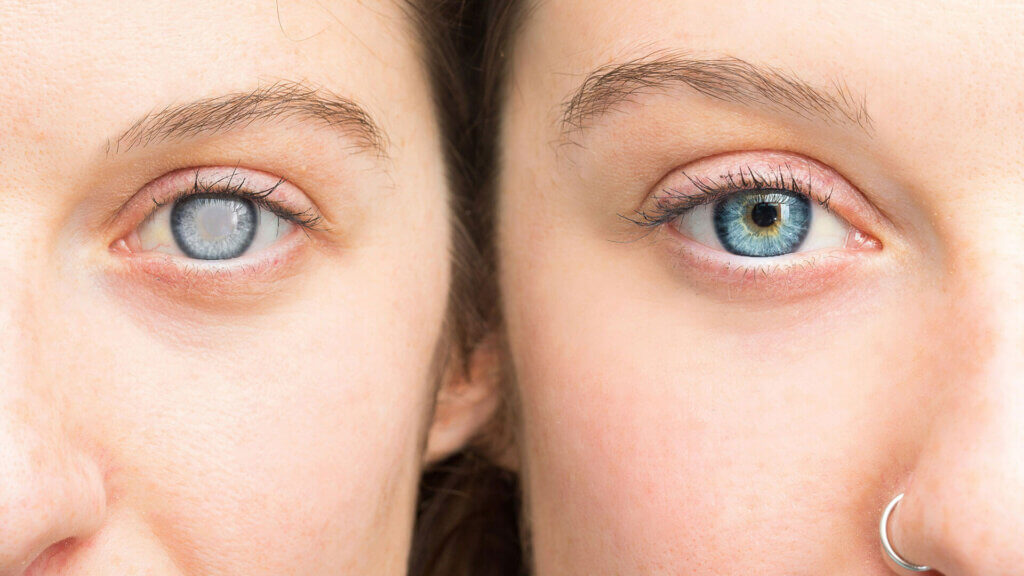
Cataract, also called cataract, is a clouding of the lens of the eye. The most common cause of this cloudiness is the natural aging process of the lens of the eye. The cataract symptoms are relatively harmless at first. In the initial stage, it causes visual deterioration as well as a haze of fog in the middle of the field of vision.
With this symptom, those affected feel as if every object disappears behind a veil, which becomes denser and denser depending on its duration. Color perception also suffers from this disease, as all color envelops itself in gray over time. These symptoms should definitely be taken seriously and not labeled as harmless.
Blurred vision in one eye
If blurred vision affects only one eye, the suspicion of a one-sided impairment of the visual system is obvious. Possible causes range from a corneal curvature or incipient retinal detachment to inflammation of the optic nerve.
A so-called macular edema or a stroke in the area of the retina can also lead to a sudden, unilateral deterioration of vision. Unilateral changes in visual acuity should always be taken seriously and clarified promptly by an ophthalmologist – especially if they occur suddenly.
Blurred vision in both eyes
If the blur occurs on both sides, systemic causes are often involved. The most common triggers include incorrectly fitted glasses or contact lenses, dry eyes due to screen work, but also diseases such as diabetes mellitus or high blood pressure.
The cataract can also make itself felt through a creeping, bilateral blurred vision. Especially in older people, bilateral vision loss is often an indication of age-related changes in the lens of the eye. An ophthalmological examination quickly brings clarity.
Short-term blurred vision
If the visual acuity only decreases for a few minutes or hours, it can be temporary and harmless – for example, after a long drive at night or due to overexertion of the eyes. Dry indoor air, dehydration or low blood pressure also often play a role.
Nevertheless, sufferers should remain alert: short-term blurred vision can also be an early symptom of migraine with aura or a visual disturbance in the context of circulation problems.
Never see blurry again. Help with eye lasers!
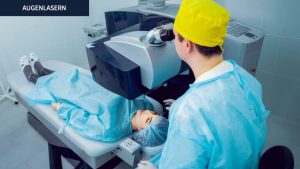
Laser eye surgery helps to treat refractive errors. While scalpel eye surgery was performed years ago, today it is being replaced by modern laser technology. In the case of cataract disease, the best treatment is cataract surgery with an eye laser. Dr. med. Daniel Bányai and Doctor-medic Liliana-Iulia Bányai personally perform eye lasers in their eye laser centers in Karlsruhe and Stuttgart.
During a standard surgery, the corneal incision is performed with a scalpel and all steps must be performed manually. Modern laser technology replaces the manual operation steps of the laser system. The procedure usually takes no more than 20 minutes and is performed on an outpatient basis, i.e. directly on site and under local anesthesia.
Of course, as with any procedure, there can also be slight side effects. This can be, for example, a burning or itching of the respective eye. However, it can be said with a clear conscience that laser-assisted lens replacement is an effective method to restore vision in the event of vision loss due to a cataract. After laser eye surgery, in many cases vision aids such as glasses or contact lenses are never needed again. The eye is corrected for the rest of its life.