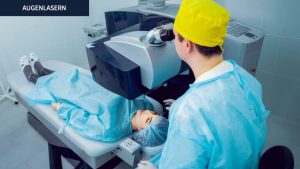
The LASIK eye laser procedure changes the refractive power and shape of the cornea and thus improves the vision of many patients with a defective vision such as nearsightedness, farsightedness or astigmatism (corneal curvature). The primary goal of modern refractive surgery is a lasting life without glasses or contact lenses.
Nevertheless, one question remains central in our consultations: How long will my vision fluctuate after LASIK? In this post, I, Dr. med. Daniel Bányai, ophthalmologist at Bányai Neue Augen, the exact recovery process after LASIK treatment and what you can realistically expect.
“Many patients expect 100 percent, rigid visual acuity immediately after the laser procedure. However, healing is a biological process. In the first few days, a slightly fluctuating vision is completely normal. In our practice, our data show that over 85% of our patients achieve a vision of over 90% on day 1 after femto-LASIK, but the fine stabilization takes a few weeks.”
– Dr. med. Daniel Bányai
The healing process at a glance: When does vision become stable?
After an eye laser correction such as femto-LASIK or alternative procedures, the healing process can vary individually. A realistic time frame helps to correctly assess your own expectations:
The first 24 hours
Immediately after the procedure, the vision is most often as if through a light veil. In this phase, the tissue rests in the area where the flap was prepared. Occasional mild foreign body sensation or lacrimation usually subsides after a few hours.
The first week
Within the first 7 days, almost all patients notice an enormous gain in vision. However, fluctuations over the course of the day are still common. Some patients report temporarily increased sensitivity to glare or halos around light sources in the dark. Regular use of moisturizing eye drops is the most important factor here, as a temporarily dry eye is the most common cause of hourly visual fluctuations.
The first month
At this point, large fluctuations have usually disappeared. Fine fluctuations – especially in the evening after long screen work – are normal. The eyes adapt to the new refraction of light.
Three to six months
In the vast majority of our patients, vision stabilizes completely within 3 to 6 months. Long-term studies confirm the high stability of the procedure.1 Rare slight regression (a slight decrease in correction) occurs in less than 2% of cases and can be easily treated if necessary.
Several factors can influence how long and to what extent your vision fluctuates after LASIK treatment:
Age: Older patients may notice that their vision becomes more stable more slowly than in younger individuals.
Visual acuity before surgery: People with higher visual acuity may experience greater fluctuations during the recovery period.
Healing response: Each eye heals differently, which affects the duration and intensity of visual fluctuations.
Follow the Aftercare Instructions: Following your surgeon’s aftercare instructions exactly can help stabilize your vision faster | read more about post-laser behavior
Expectations for the recovery process: Patience after LASIK
It is important to approach LASIK surgery with realistic expectations. Fluctuations in vision are a normal part of the recovery process, and patience after LASIK is key. Here are some tips to effectively manage this phase:
Follow your surgeon’s instructions: Follow all follow-up instructions, including using prescribed eye drops and attending follow-up examinations.
Protect your eyes: Avoid rubbing your eyes and do not expose yourself to potentially irritating environments (such as dusty or smoky areas) during the early stages of healing.
Report concerns: If you experience severe or persistent changes in vision, contact your surgeon. While fluctuations are to be expected, you should address any unusual symptoms.
What are the alternatives to LASIK?
If LASIK is not optimal, other procedures are available in modern ophthalmology:
Surface treatments: Methods such as PRK, LASEKor Trans-PRK treat the cornea directly at the surface.
Lenticule extraction: Gentle interventions such as Smile Proor ReLex Smile do not require a flap.
Distinction from eye diseases: It is important to distinguish between structural corneal changes such as keratoconus and diseases such as cataract, glaucoma or macular degeneration, which require separate treatments.
For most people, LASIK provides a permanent improvement in vision. While minor fluctuations may occur initially, the long-term outcome is usually stable. If the visual acuity changes slightly over the years, the result can be improved by post-treatment or post-correction. Annual eye exams are crucial to monitor your eye health and maintain your visual acuity.
Take the next step with Bányai Neue Augen
Are you considering having laser eye treatment performed at Bányai Neue Augen in Karlsruhe or Stuttgart? Start with a thorough screening and our aptitude test. You will receive an initial assessment of the extent to which laser treatment is suitable for you as an alternative to your previous vision aid. Answer a few simple questions (approx. 2 minutes) about your vision and the previous vision aids.
The most obvious visual fluctuations occur in the first few weeks. Long-term studies confirm that, for the vast majority, visual acuity stabilizes completely within 3 to 6 months.
The wetting of the cornea is temporarily altered by the surgical procedure. This can lead to symptoms such as dry eyes, increased sensitivity to glare or a slight foreign body sensation for a short time. Moisturizing eye drops effectively relieve these ailments.
Yes, higher diopter values require a slightly more intensive tissue removal. In addition, incipient presbyopia (presbyopia / presbyopia) affects near vision, which may still require reading glasses at a later age.
In rare cases below 2%, there may be a slight regression (return of a small deviation in visual acuity). In such cases, post-correction is usually possible without any problems as part of the post-treatment.
A sufficient corneal thickness is a basic prerequisite for a safe application of the flap. As part of the precise preliminary examination, it is measured whether LASIK or an alternative is more suitable.
Dr. med. Daniel Bányai ist Augenarzt bei Bányai Neue Augen und spezialisiert auf refraktive Augenlaserbehandlungen an den Standorten Stuttgart und Karlsruhe.