
When is a laser eye retreatment necessary? Dr. med. Bányai explains

Laser eye treatments have helped millions of people worldwide correct vision defects such as nearsightedness, farsightedness, and astigmatism. In most cases, patients achieve excellent results after the first treatment.
However, in some cases a follow-up correction may be necessary to further improve your vision. In this blog post, you’ll learn when a laser eye correction is required, what to expect, and what the chances of success are.
What is a laser eye enhancement?
A laser eye enhancement, also known as an “enhancement”, is an additional procedure performed to further improve vision after the initial laser eye treatment. It is usually carried out a few months after the original procedure, once vision has stabilized and further improvement is needed.
A secondary correction is less common than the primary laser eye treatment, but it is an important part of long-term care for patients who want to achieve the best possible visual outcome.
When is a follow-up correction necessary?
1. Undercorrection: In some cases, the first laser eye treatment may not be sufficient to achieve full visual acuity. This can occur if the correction was too weak to fully correct the refractive error. A follow-up correction can address the remaining refractive error and further improve vision.
2. Regression: After laser eye treatment, regression may occur in rare cases, where vision deteriorates after an initial improvement.
This means the refractive error partly recurs, and vision is no longer as clear as it was immediately after surgery. A follow-up enhancement can correct the regression and restore visual acuity.
3. Age-related changes: Vision naturally changes with age. Even after a successful laser eye treatment, age-related changes can develop over the years that may require further correction.
For example, someone who had laser eye treatment at a young age may later develop age-related farsightedness (presbyopia), which can be corrected with a follow-up procedure.
4. Irregular corneal healing: In rare cases, the cornea heals irregularly after the initial laser eye treatment. This can lead to visual irregularities such as light sensitivity or distorted vision. A follow-up corrective procedure can address these issues and create a smoother corneal surface, improving visual quality.
How is a post-correction performed?
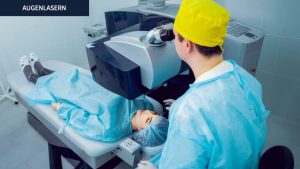
A laser eye enhancement is similar to the original procedure but is often less invasive and requires a shorter recovery time. The surgeon uses a laser again to further reshape the cornea and correct any remaining refractive errors.
In many cases, a follow-up correction is quicker and less involved than the initial treatment, since the majority of the correction was already achieved during the first procedure.
Recovery after a post-correction is usually rapid, and most patients can resume normal activities within a few days. Your doctor will provide specific aftercare instructions to ensure your eyes heal optimally and that you achieve the best possible result.
How successful are follow-up corrections?
Enhancement procedures generally have a high success rate, particularly when performed by an experienced surgeon. Most patients report a significant improvement in their vision following an enhancement procedure and are satisfied with the results.
However, it is important to note that not every patient requires a follow-up correction. In most cases, the initial laser eye surgery is sufficient to achieve excellent visual acuity.
A follow-up laser correction may be necessary in certain cases to further improve vision and achieve the best possible result. Whether it is due to an undercorrection, regression, or age-related changes, such follow-up procedures are a proven way to optimize your vision.
Your ophthalmologist will discuss with you whether you need a follow-up correction and will recommend the best possible treatment plan.
Take the next step.
Curious whether you’re suitable for laser eye treatment? Start with our aptitude test. You’ll receive an initial assessment of whether laser treatment could be right for you. Answer a few simple questions (approx. 2 minutes) about your vision and any glasses or contact lenses you’ve used.
Laser eye surgery in Baden-Württemberg
Whether you are interested in laser eye surgery in Karlsruhe or Stuttgart – at Bányai Neue Augen you benefit from state-of-the-art technology, many years of experience, and individually tailored treatment methods at both locations. Our specialist doctors will advise you comprehensively on all options for vision correction.
Book your no-obligation consultation now at one of our laser eye centers – for a life without glasses or contact lenses.