
Eye migraines, what helps?

Eye migraine is also known as ophthalmic migraine. Flashes twitch, lights flicker – About one in 200 migraine sufferers suffer from this form of migraine. In neurological disease, part of the nervous system is not adequately supplied, causing visual disturbances that limit the field of vision.
The attacks of these migraines usually do not last long and disappear without medical treatment. What is harmless in principle nevertheless becomes agony for those affected.
In very rare cases, the eye migraine also manifests itself as a retinal migraine.
IMPORTANT: An eye migraine is different from a classic migraine. Although a migraine attack can cause visual disturbances as well as blind spots, those affected ostensibly suffer from severe headaches. In the case of eye migraines, it is the visual disturbances or defective vision that come to the fore.
In this article, we will explain how an eye migraine develops, what you can do about it yourself and why it is still advisable to go to the doctor or neurologist at the first attack and prevent new migraine attacks.
Eye migraines – the most important thing about symptoms, causes, treatment
- Eye migraines are temporary, unilateral or bilateral visual disturbances that originate in the nervous system, which is connected to the optic nerve. Therefore, the symptoms do not disappear in an attack even when the eyes are closed.
- Eye migraines can be accompanied by headaches, nausea, dizziness, and photosensitivity. During a severe attack, additional hallucinations and double vision may occur. But retinal detachment can also be caused by an eye migraine.
- In retinal migraine, the visual disturbance does not occur on both sides, but only in one eye.
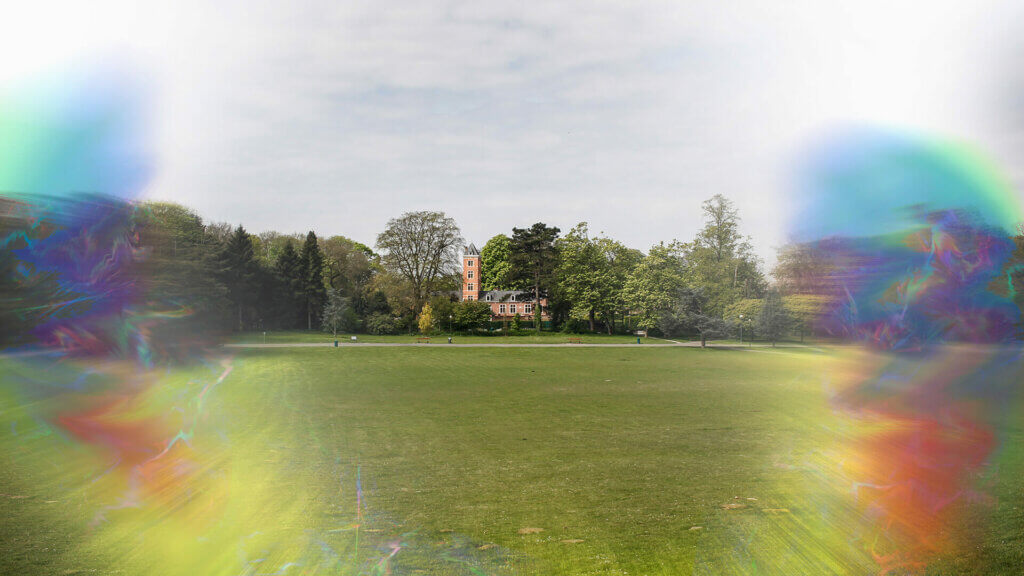
- Typical symptoms of an eye migraine are scotomas, i.e. visual disturbances in the visual field, which you perceive as dark spots or color changes. A special form of scotoma is flicker scotoma. These are characterized by flickering lights and flashes of light.
- An eye migraine attack usually lasts 10 to 30 minutes. Only in a few cases do the symptoms subside after an hour.
- How often an acute attack of eye migraine occurs depends on the patient himself. While some sufferers rarely have complaints, others suffer from the symptoms almost daily.
Eye Migraines – Causes and Possible Triggers
Ophthalmic migraine is a special form of migraine, the cause of which has not yet been fully clarified. It is assumed that stress, lack of sleep or hormone fluctuations are responsible for the fact that the area of the visual cortex in the brain is not supplied with enough oxygen and blood. This circulatory disorder leads to visual disturbances.
Subsequently, the perceived images are incorrectly forwarded to the brain, causing the typical visual field disturbances. Are dark circles increasingly noticeable?
But changes in the weather can also trigger an eye migraine.
Symptoms of eye migraine
Depending on the person and the extent of the attack, the symptoms of an eye migraine are perceived differently by those affected.
The most common symptoms of migraines include:
- Eye flickering or flickering in front of the eyes
- Light flashes and/or jagged lines
- temporary limitations of the visual field (usually from the inside out)
- temporary blindness
- rare side effects such as headache, photosensitivity and dizziness
- in the case of a strong seizure, also double images or hallucinations (e.g. magnifications, reductions and distortions)
It is extremely rare for paralysis of the eye muscles to occur. This is more likely to occur in children and must be treated immediately by an ophthalmologist, as the symptoms do not subside on their own.
How long does an eye migraine last?
In contrast to a typical migraine, which can last for several hours, an eye migraine is usually overcome after ten to 30 minutes.
However, this time can seem very long and distressing to those affected. Only in a few cases does an attack last up to 60 minutes.
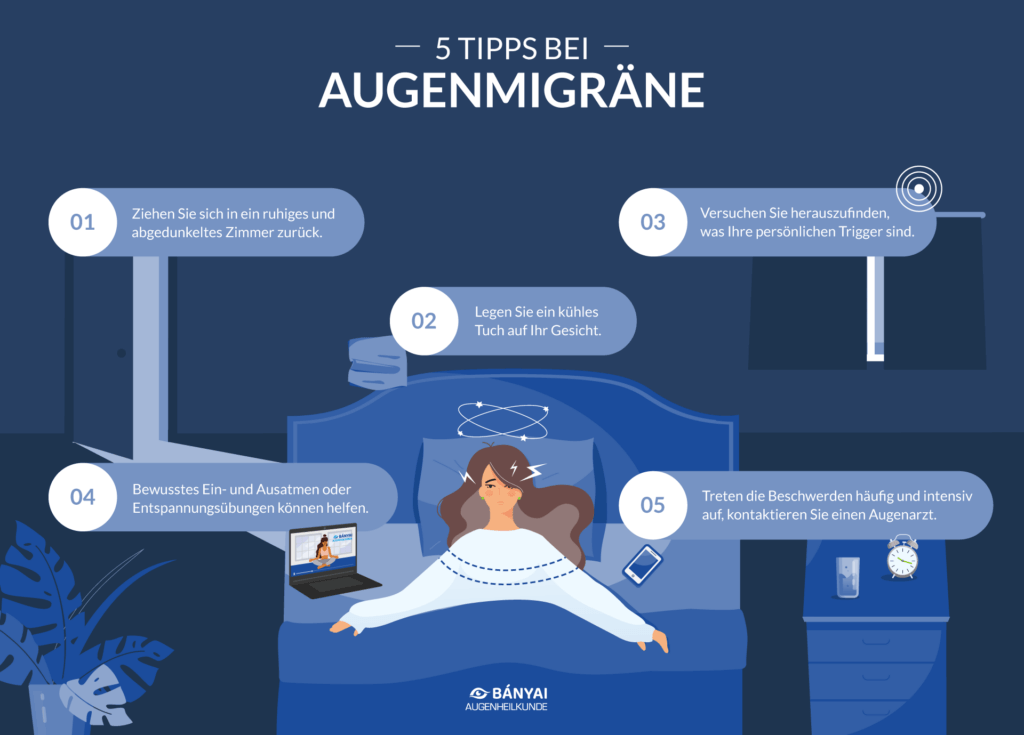
5 tips that can help with eye migraines
The treatment of eye migraines
As excruciating as an eye migraine can be, there is no real therapy. Once the attack is over, the symptoms disappear on their own.
At best, try to figure out your individual triggers to make the seizures more tolerable or even prevent them.
If you know how to best respond to a seizure, the symptoms may disappear even without the use of medication. However, if your symptoms are frequent and intense, consult your ophthalmologist.
This often prescribes painkillers, which are also used in migraine treatment for severe headaches. In any case, try to reduce your stress factors as a preventive measure. Various relaxation techniques such as autogenic training can also help you relax more easily.
Normally, an eye migraine is harmless without leaving permanent damage. Nevertheless, you should have perception disorders examined by a doctor in order to rule out other causes and avoid serious damage.
What to do in case of an eye migraine attack?
Those affected suffer enormously from the symptoms of an acute eye migraine attack. Especially since the flashes of light and scotomas (visual field failures) do not disappear even when the eyes are closed, there is often a feeling of helplessness.
But there are certainly ways you can do in an acute attack to alleviate their suffering. Especially the first time, it is important to keep calm.
- Retreat to a quiet and darkened room.
- Place a cool cloth on your face.
- Try to relax. Conscious inhalation and exhalation and relaxation procedures such as Jacobson’s muscle relaxation can help to overcome the attack.
- In general, try to find out what your personal triggers are to prevent or at least mitigate an attack.

As a rule, the visit to the ophthalmologist is not necessarily necessary, but it is still advisable. However, if the symptoms are particularly frequent, long or severe, you can ask your ophthalmologist, such as Dr. Liliana Bányai, for advice. Read more about the eye!
What can be other symptoms of eye problems?
- Burning
- Gluing
- Weakening of the connective tissue (“lacrimal sacs”)
- Stye
- Inflammation of the edge of the eyelid
- Irritated eyes with itching (herpes on the eye)
- Sensitivity to light
- Tearing eyes or increased tear production
- Blurred vision
- Redness of the eyelids (eye twitching)
- Dry eyes after surgery (Sicca syndrome)
- Constant pressure on the eyes
- Red eyes and/or inflammation of the conjunctiva
- Eye secretion
Laser eye surgery in Baden-Württemberg
Whether you opt for treatment at our eye lasers centre in Karlsruhe or Stuttgart, Bányai Neue Augen offers you personal care, many years of experience and state-of-the-art laser technology for a life with clear vision.
Frequently asked questions (FAQs) about eye migraines
Eye migraines are often referred to as temporary visual disturbances such as flickering, flashes of light or zigzag lines. The symptoms can occur with or without a headache.
The complaints are usually temporary. However, the duration, frequency and severity can vary. In the case of initial, unusual or persistent visual disturbances, the cause should be clarified by a doctor.
Tranquility and a reduced irritation environment can be helpful. Possible triggers should be observed. Medications should only be taken according to a doctor’s recommendation.
Not every temporary visual impairment is an eye migraine. In the event of sudden loss of vision, severe pain, new flashes of light or many black dots, immediate medical clarification is required.