Laser eye surgery for nearsightedness – What should I know?


Thanks to medical advances, nearsightedness laser eye surgery has become an everyday method that allows many people to see the world clearly again. But what exactly is behind the term “eye lasers”? What are the associated risks and what is the process like? In this article, we take a close look at the aspects that you should definitely know before you decide on laser eye surgery to correct your nearsightedness.
It is not uncommon for the problem of myopia to occur together with a corneal curvature. However, eye lasers to correct myopia and corneal curvature are not excluded. Both refractive errors can be compensated for with laser eye surgery in one procedure.
How does short-sightedness develop?
Short-sightedness is caused by too steep a curvature of the cornea or an eye that is too long. Then the point at which incident light rays arrive bundled at the retina lies in front of it.
Distant objects are then not properly perceived. With the help of various eye laser methods, the focal point can be placed back on the lens.
Laser treatment for short-sightedness: What eye surgery methods are available?
There are several laser eye surgery methods to successfully laser nearsightedness. Glasses and contact lenses are usually used to support the eye and only compensate for the defective vision caused by the additional lens. With laser eye surgery, however, it is possible to permanently correct myopia.
The laser eye methods for nearsightedness:
- SMILE® Pro,
- Femto-LASIK and
- PRK Lasek can be used for this.
Laser eye surgery for nearsightedness and presbyopia is an uncomplicated procedure that only takes a few minutes and is performed on an outpatient basis. Testimonials show that 90% of patients no longer need glasses or contact lenses.
ReLEx® SMILE now new – SMILE® Pro
The ReLEx® smile eye laser method at Doctor-medic Liliana Bányai is a precise and minimal intervention in the cornea. It is safer than other methods such as LASIK, Femto-Lasik or PRK Lasek. The new ReLEx® smile Metothe, SMILE® pro from Zeiss, is now even faster.
The risk of side effects due to the folding of the corneal cover is eliminated. The method is gentler and the patient does not feel any pain. A molded contact glass is used for fixation.
Read more: SMILE® pro for nearsightedness
In contrast to the Femto-Lasik method, the cornea is prepared, but without separating a layer. The femtosecond laser prepares the cornea with minimal cuts to improve defective vision.
Then a small opening of 2 to 3 mm is created and the contact glass is raised. The tissue to be removed is then carefully pulled through a prepared tunnel. After this step, the operation is over and no restrictions are necessary half an hour after the procedure.
Femto-LASIK
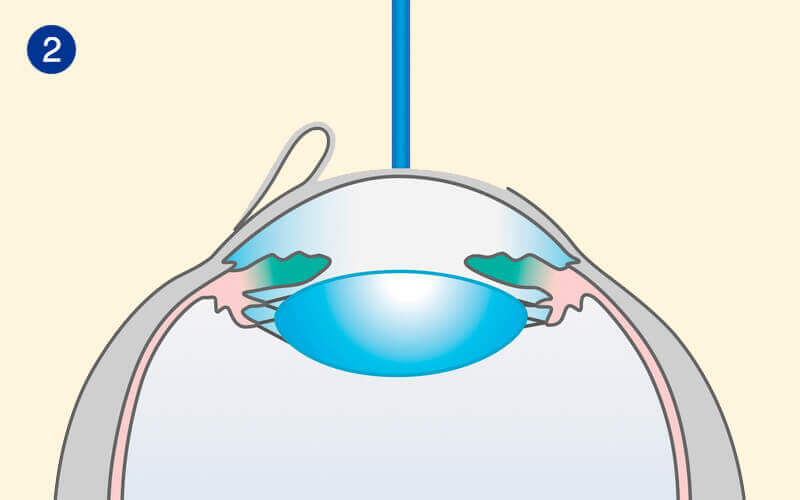
At the beginning of the procedure with the Femto-Lasik method, the top layer of the cornea is opened circularly with a femtosecond laser and unfolded. The resulting lid is called a flap.
The blade-free method is safe and the cornea remains undamaged. After opening, the corneal surface is specifically shaped with the excimer laser to compensate for unevenness. After that, the flap is brought back into position.


The recovery period is individual. As a woman, you should give up makeup for two weeks. Until further inspection, you must protect the eye as much as possible and protect it from the sun. Dry eyes may occur for a longer period of time and the eyes may be more dazzled.
PRK Lasek
PRK Lasek is a further development of the photorefractive keratomileusis method, PRK for short. In contrast to the predecessor, the postoperative pain is less, but the healing time is still increased.
In the PRK Lasek method, the epithelium is pretreated with alcohol and pushed aside. No flap is generated. After the correction of the cornea, a soft contact lens is used as a bandage.
This protects the eye from damage until the top layer is rebuilt. During the procedure, the eye tracker monitors the movements of the eye and thus guarantees a precise impact at the desired location.
Artificial lens for better vision – ICL lenses for nearsightedness
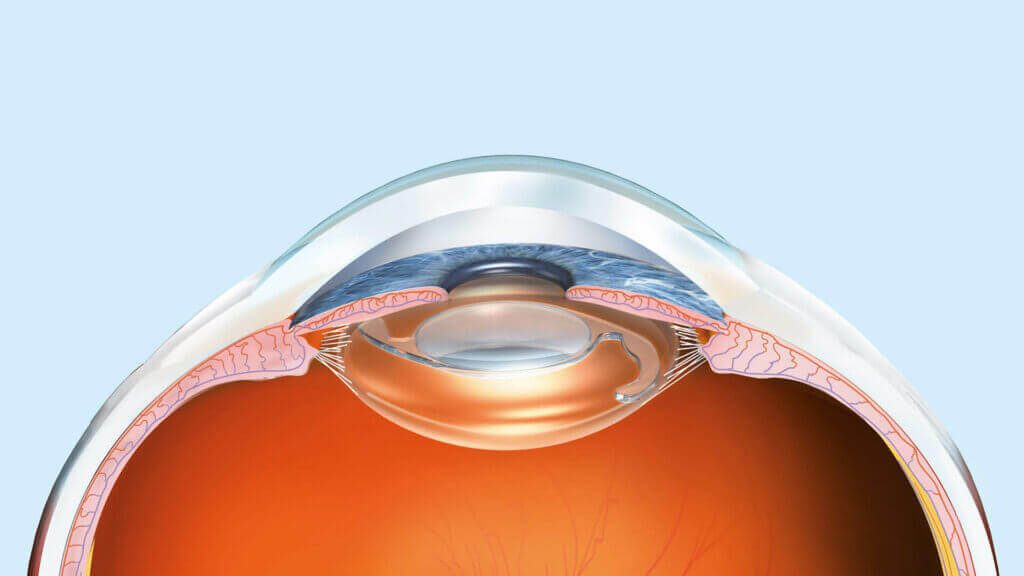
ICL lenses (Implantable Contact Lens) are an alternative to laser eye surgery and are also possible if the prerequisites for laser eye surgery are not met. For this purpose, an artificial lens is inserted into the eye, similar to contact lenses. In principle, these are implanted contact lenses.
Pre-processing with a laser is not necessary for this procedure. This method can also be used to correct a higher level of myopia. Another advantage is the interchangeability of the lenses. If vision deteriorates again, the artificial lens can be exchanged for a new one.
Up to how many dioptres can you have your eyes lasered for short-sightedness?
From how many dioptres is laser eye surgery possible? In order for this to be carried out, the nearsightedness should be between 1 and 10 dioptres and the eye should be healthy. Laser eye surgery is only possible within this specific diopter range. The nearsightedness is easily treatable in the range between 1 and 10 diopters. In addition to the manifestation of defective vision, the health of the eye is another factor for suitability.
What are the advantages of laser eye surgery for nearsightedness?
Laser eye surgery for nearsightedness offers numerous benefits that can significantly improve quality of life:
- Better visual quality: The most obvious improvement is the clear visual quality. After surgery, patients can often see clearly and clearly again without having to rely on aids such as glasses or contact lenses. These costs are waived.
- Independence of vision aids: With eye lasers, many people can permanently remove their glasses or contact lenses. This can be especially beneficial for people who lead an active lifestyle or work in certain professions.
- Quick results and short recovery time: Patients often notice a significant improvement in their vision the day after surgery. In addition, recovery time is usually short, allowing patients to quickly return to their normal activities.
- High success rate: Laser eye surgery has a very high success rate. Many patients achieve 20/20 vision or even better.
- Permanent results: The results of laser eye surgery are usually permanent. Once the healing phase is complete, no further correction should be required.
- Pain-free procedure: Laser eye surgery is a pain-free procedure. Anaesthetic eye drops are used during the operation so that patients do not feel any pain.
However, it is important to note that as with any surgical procedure, laser eye surgery also carries risks and is not suitable for everyone. Therefore, it is important to consider a thorough examination and consultation with a qualified ophthalmologist before making a decision.
What are the possible side effects of laser eye surgery to correct myopia?
Risks of short-sightedness in laser vision arise above all in the case of very pronounced visual impairment. Where it is necessary to work far into the eye, there is a risk of side effects or the need for a new operation.
However, in order to rule out such complications, many examinations are carried out in advance in order to thoroughly check the suitability.
Laser eye surgery under optimal conditions depends on the method used. Methods that generate a flap carry the risk of inflammation, scarring and displacement of the flap.
However, the likelihood of the doctor complying with the recommendations is low. The PRK procedure can lead to dry eyes because the top layer of the cornea is completely removed.
Most patients are satisfied with the laser surgery and have no side effects. Slightly swollen eyes can occur and is not a cause for concern. The risks of laser eye surgery are minimal, as with any other procedure. Of course, the eyes should be protected after the procedure by sunglasses and by avoiding irritating substances (make-up, soap).
Who is suitable for laser eye surgery for nearsightedness?
In principle, people from the age of 18 with healthy eyes, i.e. no chronic eye diseases, are suitable for laser eye surgery for nearsightedness.
It is only at this age that the refractive error behaves stably and can be corrected by eye surgery in the case of nearsightedness. Also, the cornea should not be too thin.
You can get an initial assessment of whether you are suitable for laser eye surgery for nearsightedness with this first laser eye aptitude test. The test is of course non-binding. Learn more about the eye! Read more about from time to time when eye lasers are possible.
Laser eye surgery: Cost of nearsightedness
At the Bányai Laser Eye Centre in Stuttgart, prices for laser eye treatment start at €990.00 per eye. However, the exact costs depend strongly on the treatment method chosen.
In a personal consultation with one of our qualified ophthalmologists, the details of your individual treatment and the associated costs will be discussed in detail. Our pricing is transparent and fair. We offer expertise in the field of ophthalmology and use state-of-the-art technology to provide you with the best possible service.
Here is an overview of the costs depending on the treatment method:
SMILE® Pro: Cost of nearsightedness
Prices start from €2,900 per eye and are aimed at people with myopia up to about -10 diopters and a corneal curvature up to about 5 diopters. The monthly installment is €121.
FEMTO-LASIK: costs for myopia
From €2,200 per eye. This method is suitable for nearsightedness up to approx. -10 diopters, farsightedness up to approx. +5 diopters and corneal curvature up to approx. 5 diopters. If you pay in installments, the costs amount to €91 per month.
PRK & LASEK: Cost of nearsightedness
Prices start here from €990 per eye (up to 1 diopter) and from €1,400 per eye (from 1 diopter). They are suitable for nearsightedness up to about -6 diopters, farsightedness up to about +2 diopters and corneal curvature up to about +4 diopters. The monthly rate here is €58.
PRESBYOND®: Cost
From €3,150 per eye, this method is particularly suitable for people with presbyopia from the age of 40. It is one of the most gentle treatment methods and takes only 15 minutes per eye. The monthly rate is €131.
We offer interest-free installment payments for all treatments. In this way, the treatment can be tackled flexibly and financially gently. We are your specialist in the field of refractive surgery.
Is laser eye surgery possible with nearsightedness and presbyopia?
Yes, both nearsightedness and presbyopia can usually be corrected by laser eye procedures.
Nearsightedness, also known as myopia, occurs when the eye does not focus light correctly, causing distant objects to appear blurry. Laser eye treatments such as LASIK or PRK can modify the shape of the cornea to better focus light on the retina and thus correct nearsightedness.
Presbyopia, also known as presbyopia, is a natural ageing phenomenon that usually starts around the age of 40. With presbyopia, the lens of the eye loses elasticity, which makes it difficult to see nearby. Although laser eye procedures are usually unable to directly correct presbyopia, there are special procedures such as PRESBYOND that can help reduce or eliminate the need for reading glasses.
It is important to note that each individual case is unique and therefore it is important to seek individual advice and evaluation from a qualified ophthalmologist to determine which vision correction options are best suited to your specific needs.