Up to how many dioptres can laser treatment for short-sightedness?

Short-sightedness can usually be lasered up to a diopter number from -12 to -10. However, the value depends very individually on the defective vision and on the person concerned. A preliminary examination is necessary in order to be able to provide accurate information.
Nearsightedness, also known as myopia, affects a large number of people worldwide. This visual impairment, where near objects can be seen clearly while distant objects appear blurred, often leads to difficulties in everyday life and can significantly affect the quality of life.
One way to correct nearsightedness is to laser the eyes. In this procedure, the shape of the cornea of the eye is changed with the help of a laser to properly focus the light on the retina.
In this article, we will give a comprehensive overview of the topic of nearsightedness lasers and answer the question of up to which diopter number a laser eye treatment can be carried out in nearsightedness. Basically, the laser eye surgery works with nearsightedness up to about -10 dioptres.
Laser treatment for short-sightedness: up to which diopter number is laser treatment used?
The decision as to whether laser eye treatment for nearsightedness can be performed depends on several factors. One of the most important is the degree of refractive error, measured in diopters. This value indicates how much the refraction in your eye deviates from the norm and thus how severe your refractive error is.
In general, it can be said that laser eye surgery to correct nearsightedness is usually possible up to a diopter count of about -10 to -12. However, this value may vary depending on the individual situation and the specific circumstances of your eyes.
It is also important to keep in mind that not all types of laser eye treatments are suitable for high dioptric values. For example, procedures such as LASIK or Femto-LASIK are usually only applicable to a certain degree of refractive error. PRK or LASEK are only used up to -6 dpt. The new SMILE® Pro method from Zeiss can also be used for higher diopter values.
The thickness of your cornea also plays a role. In laser eye treatments, the cornea is removed to correct the defective vision. If the cornea is too thin, treatment may not be possible.
Ultimately, the possibility and success of laser eye treatment depends on many individual factors and should therefore always be clarified in a personal consultation with an ophthalmologist or an eye clinic. Such a conversation also offers the opportunity to ask your individual questions and learn more about the various options for correcting your nearsightedness.
Influencing factors on laser eye treatment
Diopters
While the diopter value is a central factor in whether and to what extent laser eye treatment is possible in myopia, there are other aspects that must be taken into account.
Visual acuity
Vision is a decisive factor in the suitability of laser eye treatment. Severe nearsightedness with high diopter values can increase the risk of complications with laser eye treatment and affect the chances of success.
Thickness of the cornea
As already mentioned, the thickness of the cornea plays an important role in assessing the suitability for laser eye treatment. During treatment, the cornea is removed to correct the defective vision. If the cornea is too thin, treatment may not be possible.
Eye Health
In addition to the severity of the defective vision and the thickness of the cornea, the general health of your eyes is also crucial. Eye diseases such as cataracts, retinal detachment or chronic dry eyes can make laser eye treatment risky or impossible.
Age
Age can also have an influence on the suitability for laser eye treatment. Young people whose vision is still changing and older people who may have other age-related eye problems may not be suitable for such treatment.
These factors show that laser eye treatment must always be assessed individually. Therefore, it is important to seek comprehensive screening and counseling prior to such treatment.
How does laser nearsightedness work?
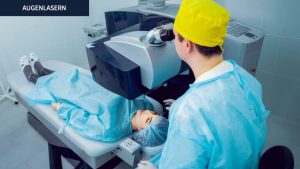
Laser nearsightedness is a procedure that aims to correct the refraction of the incident light in the eye so that it is properly focused on the retina again. There are various techniques and procedures that can be used in laser eye treatment to treat nearsightedness.
In an eye laser treatment, the shape of the cornea of the eye is precisely changed with the help of a laser. The exact sequence of the procedure may vary depending on the method used. In general, however, the following steps are carried out:
Preparation: A thorough preliminary examination is carried out before treatment to check the suitability for laser eye treatment. Various parameters such as diopter values, thickness of the cornea and general eye health are taken into account.
Anesthesia: before the actual treatment, anesthetic eye drops are used to numb the eye and reduce possible discomfort.
Corneal modelling: In some eye laser treatments, an excimer laser is used to specifically remove corneal tissue and thus make the necessary corrections. The laser removes tiny amounts of tissue to change the shape of the cornea and optimize the refraction of light.
The following eye laser methods are used for nearsightedness:
- SMILE® Pro (formerly ReLEx smile)
- Lasik
- Femto-LASIK
- LASEK
- PRK
What is myopia and what does diopters mean?
Before we deal further with the topic of eye lasers, we want to briefly clarify the terms nearsightedness and diopters.
Short-sightedness
Nearsightedness, medically referred to as myopia, is a form of refractive error in which nearby objects are perceived sharply while distant objects appear blurred. This is because the light entering the eye is not focused directly on the retina, but in front of it. This can have various causes, such as too long an eye shape or too strong a refractive power of the eye lens or cornea.

Short-sightedness is widespread worldwide and can begin as early as childhood. It manifests itself in symptoms such as blurred vision at a distance, headaches, eye strain and difficulty driving, especially at night.
Diopters
The term diopter refers to the unit in which the power of optical lenses, and thus also that of glasses or contact lenses, is measured. A diopter indicates how much a lens refracts the light. In the context of ophthalmology, the term is used to quantify the degree of refractive error.
In the case of nearsightedness, the diopter values are preceded by a minus sign (e.g. -3.0 D), while in the case of farsightedness a plus sign is used (e.g. +2.0 D). The higher the absolute value of the diopters, the greater the refractive error. A person without a visual defect usually has a diopter value of zero.
With these basics in mind, we can now continue to focus on the topic of laser eye treatment for nearsightedness.
What to consider when considering laser eye treatment
When thinking about laser eye treatment, there are a few important points to keep in mind. Here are our final thoughts and recommendations for you:
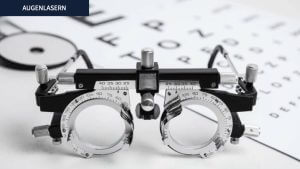
First of all, it is important that you have a thorough preliminary examination. This should include a full eye exam, which will assess your vision, the condition of your cornea, and your overall eye health. This will help identify potential risks or complications and identify the best options for your particular situation.
In addition, a detailed consultation is of great importance. Take the opportunity to ask all your questions and make sure you fully understand the benefits, risks and possible outcomes of treatment. Don’t forget to also discuss your individual expectations and goals. You are welcome to book a free consultation with Doctor-medic Bányai. Read more about eye lasers for nearsightedness costs.
Also note that not everyone is suitable for laser eye treatment. As we have already discussed, various factors, such as the severity of your refractive error, the thickness of your cornea and your general eye health, play a role in assessing your suitability for such treatment. Therefore, you should have realistic expectations of treatment and consider all alternatives.
Finally, we would like to emphasize that an informed decision is the key to a successful outcome. Inform yourself thoroughly, talk to professionals, and make a decision that best suits your needs and goals.
Laser eye treatment can change your life for the better, but as with any medical treatment, it should be approached with care and after careful consideration. You can start our free laser eye aptitude test before your consultation.
FAQ’s – Up to what number of dioptres can you laser short-sightedness?
Up to how many dioptres can be lasered for short-sightedness?
As a rule, you can have myopia lasered down to about -10 diopters. However, there are individual differences and not everyone is suitable for laser treatment. An ophthalmologist or refractive surgery specialist can give an accurate assessment based on a thorough examination of the eyes and other relevant factors such as corneal thickness and general eye health.
From how many dioptres can you have short-sightedness lasered?
Short-sightedness can usually be lasered from about -1 diopter. Again, a thorough examination by an ophthalmologist is necessary to determine whether laser treatment is possible and useful. The doctor will take into account, among other things, the stability of the defective vision and the thickness of the cornea.
Can laser eye treatment be performed at high dioptric values?
Yes, in some cases laser eye treatment is also possible at higher dioptric values. However, it depends on various individual factors, such as the thickness of the cornea, the stability of your vision and your overall eye health. A detailed preliminary examination and consultation with an ophthalmologist are required to determine your suitability.
Does laser eye treatment make sense for low diopter values?
Laser eye treatment can also be useful for lower diopter values if you have a desire to get rid of your glasses or contact lenses and want a permanent correction of your nearsightedness. A preliminary examination will help you determine whether laser eye treatment is recommended in your case.
Can laser eye treatment be performed on children with nearsightedness?
In most cases, laser eye treatment is not performed on children because their vision is still developing. It is recommended to wait for the growth of the eye and thus the development of vision before considering a permanent correction. Your ophthalmologist can help you identify the best options for treating your child’s nearsightedness.
What are the alternatives to laser eye treatment for high dioptres?
If laser eye treatment is not recommended for high diopters, there are alternative treatment options, such as the use of special intraocular contact lenses, which can correct your nearsightedness. Your ophthalmologist will recommend the best options according to your individual situation.