When letters blur while reading

You start to read, but it gets harder and harder. The letters are similar in part because the boundaries and contrast disappear.
Suddenly, multiple interpretations are available for one letter. Everything looks blurry. The eyes are very sensitive to light. In this way, you lose the desire to read, but reading is important in order not to miss the connection. In today’s society, there is no place for people who cannot read.
First, excuse it with excessive cell phone or computer use or increasing age. After all, you know more people with than without glasses. Do not wait too long, because there could be more to it than you would like.
When do contrasts become blurred?
If letters are to be recognized, the eye can no longer detect the contours of the contrast. The contours blur and the recognition of the details is made more difficult.
When do we speak of a lack of contrast?
Contrast weakness, also known as reduced contrast vision, describes a limitation in the ability to perceive subtle differences in brightness or color between an object and its background. While people with normal vision can easily recognize contours and transitions, these often blur for those affected – especially in difficult lighting conditions.
An intact contrast sensitivity is essential for everyday life: it helps us to see steps in good time, to recognize traffic signs at dusk or to distinguish the road from the surroundings in fog. If it is missing, this can significantly affect orientation and safety.
Typical signs of low contrast
People with low contrast often report certain everyday difficulties. This includes, among other things, problems with reading, especially if the text is printed in light grey tones on a white background. Recognising steps or curbs can also be a challenge – especially if they are not clearly highlighted in colour.
The low contrast becomes particularly noticeable in low light conditions: in twilight, in rain or in diffuse light, it is difficult to perceive details. Some sufferers describe it as if everything seems slightly foggy or blurry.
Deteriorated vision at close range?
When shooting, the distance to the film can be varied by rotating the lens. The eye does this adjustment without any help. The lens curvature undergoes a change. When things are to be looked at nearby, the ring muscles contract so that the lens ligaments relax. The lens becomes more convex so that the objects in the vicinity can be sharply imaged on the retina.

Poorer vision in the distance?
When the eye adjusts to seeing at a distance or at close range, this is called accommodation in technical terms. This adaptation to the distance or proximity is supported by the change in curvature.
The lens is elastic and is suspended from the lens bands. When looking into the distance, the ligaments of the lens are taut and the lens is pulled flat by these ligaments. This creates sharp images of things far away.
What are the dangers of a lack of contrast?
In addition to visual acuity, the ability of contrast vision is a basis for visual perception. Objects can only be recognized if the contrast vision works properly. If the subjective feeling arises that contrasts are fading more and more often, you should undergo a test for contrast vision. You can test yourself on the Internet.
What could be the trigger?
It is important to investigate the causes of the problem, as contrast vision can be impaired by several factors. Possible causes are:
- Illness of the eye
- Change in the cornea
- Cataract
- Cataract
- Presbyopia
- Age-related macular degeneration (AMD)
- Opacity of the vitreous body
- Defective vision (nearsightedness, farsightedness,…)
The problem can be confronted with a suitable visual aid.
What can I do about the lack of contrast?
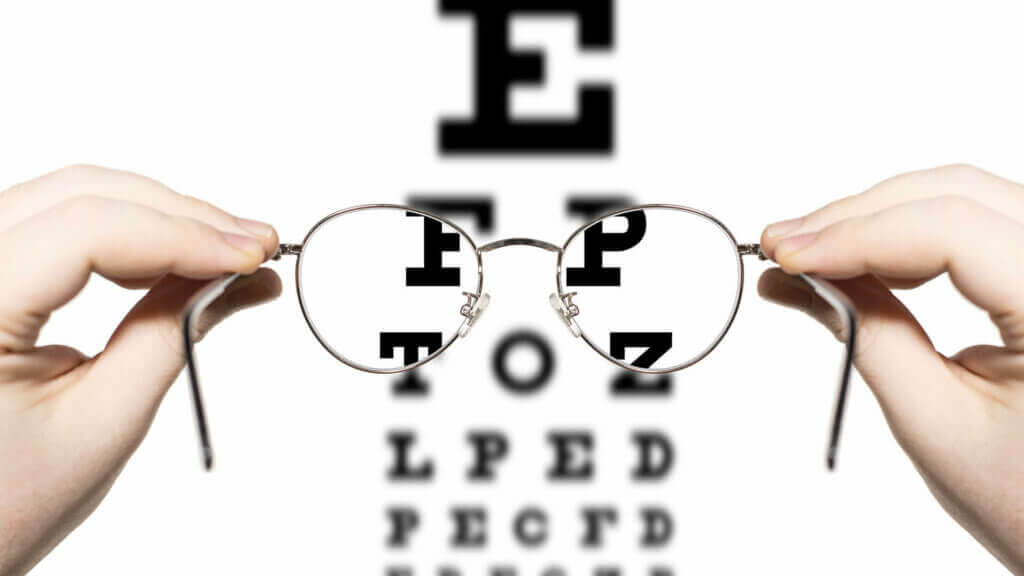
First, a test must be taken, which measures by means of various factors:
- Lines
- Landoltringe
- Letters
It is striking that the contrast vision weakness manifests itself above all in the twilight or in fog and is perceived as disturbing.
Ophthalmologist’s check-up is essential and very important for how the disease is progressing.
After all, the cataract is very often the cause of this contrasting visual impairment.
Can my eyes be lasered?
Use the laser eye aptitude test to find out whether you are suitable for laser eye treatment.
Cataract Symptoms
The cataract symptoms can be quite different. The first symptoms that usually occur are:
- Loss of sharpness of the image seen
- Months or years of development
- milky, greyish vision
- Eye sensitive to glare
What ways are there to help?
Unfortunately, cataracts cannot be fought with medication. You can only get rid of cataracts with a cataract surgery.
It is important to wait for the right time for an operation, as cataracts are only really corrected surgically once they have already been held responsible for many visual impairments.