
Eye lasers for corneal curvature and thin cornea

The desire for eye lasers for corneal curvature is very widespread: the corneal curvature affects around 80% of the population and has a hereditary component. Corneal curvature, also called intentionality or astigmatism, is an irregular curvature of the cornea that leads to visual disturbances and blurred vision.
In most cases, a combination with a smaller thickness of the cornea occurs. Can you also laser the eyes with a thin cornea? Yes, with the right method you can.
There are various methods to treat a corneal curvature (astigmatism). You can laser the corneal curvature, as a treatment for astigmatism there is also the lens implant for particularly thin corneas.
In this article, we will explain the symptoms of corneal curvature and the prerequisites for successful correction by refractive surgery.
Light refraction – how does astigmatism occur?
Does your field of vision remain blurry and blurry, regardless of distance or proximity? Then you could suffer from intentionality or astigmatism and should make an appointment with your ophthalmologist, such as Doctor-medic Bányai. This can then determine more precisely with an exact diagnosis.
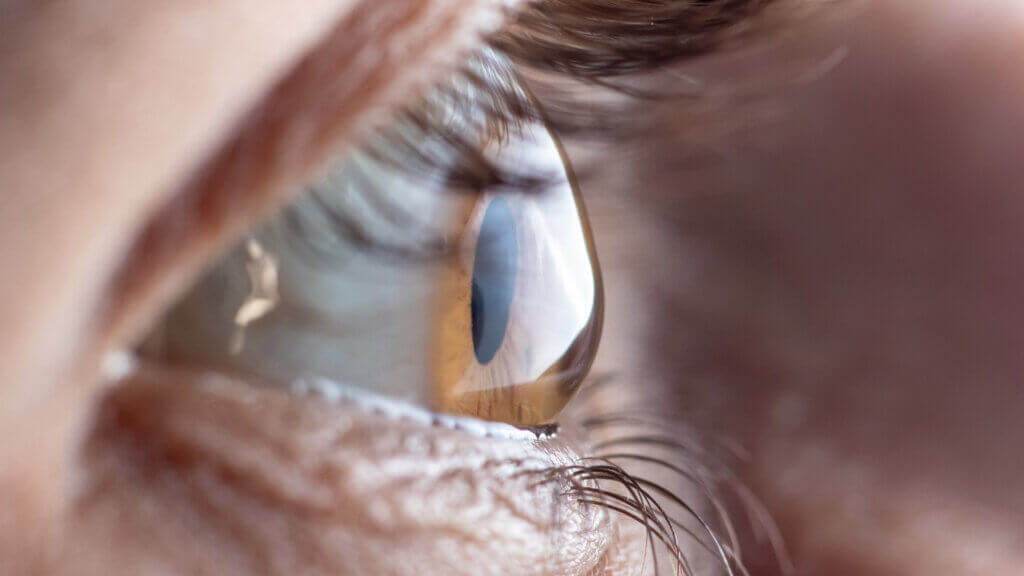
What is a corneal curvature anyway? As the name suggests, it is based on a curvature of the cornea: the front surface should ideally be regular and spherical. If deliberate, it is instead oval and has a different degree of curvature in different axes.
However, the curvature of the cornea is responsible for the refraction of light. In the case of a healthy, uniformly convex cornea, incident light rays strike the retina bundled to a point.
In the case of a curved cornea, however, it is not one focused beam of light that strikes the center of the retina, but two focal lines. The focal lines are reminiscent of sticks, which is why there is talk of deliberacy.
This is why sufferers only perceive blurred or curved lines. A distinction is made between two forms of corneal curvature (astigmatism).

Corneal Curvature: Forms of Astigmatism
Ophthalmology distinguishes between these forms of astigmatism (corneal curvature):
- Regular astigmatism: Corneal curvature with two mutually perpendicular meridians leading to two focal lines. This results in a distorted perception.
- Irregular astigmatism: This form occurs less frequently and leads to several focal lines. This is due to an irregularly curved cornea, which can be limited to certain points or affect the entire area. Incident light rays hit the retina at various points. Affected persons can only see blurred.
Intentionality often occurs together with another visual impairment such as farsightedness, nearsightedness or presbyopia. Depending on how severe the corneal curvature is, the symptoms of corneal curvature are more pronounced. If the cornea is only slightly deformed, the affected person may not experience any restriction.
Astigmatism should not be confused with keratoconus (cone of the cornea). This disease of the cornea leads to thinning and curvature of the cornea. It also leads to a visual defect or refractive error.
Symptoms of a corneal curvature
Symptoms of astigmatism include:
- Blurred or distorted vision
- Headache
- Dizziness
- Eye pain
If you notice blurred vision or other visual impairments, you should consult an ophthalmologist. This can then determine whether a corneal curvature is present and how pronounced it is. Our online astigmatism test provides a first indication of whether you are affected by a corneal curvature.
Corneal curvature is usually congenital. The causes of corneal curvature are manifold, and it can also develop due to various factors/diseases throughout life.
If the corneal curvature affects children, it is difficult to diagnose because children lack the comparison value to normal vision. With early diagnosis, the corneal curvature can be well compensated for with glasses in children.
To correct a corneal curvature with glasses, toric lenses are required that compensate for an existing visual impairment such as nearsightedness or farsightedness and also at the same time the corneal curvature.
Parents who suffer from corneal curvature themselves should therefore have their children checked for it in good time. Visual aids such as glasses and contact lenses also compensate for defective vision in adults.
In rare cases (for example, in the case of a corneal curvature due to scarring), it may be medically necessary to have the corneal curvature lasered.
Eye lasers for corneal curvature: treatment options
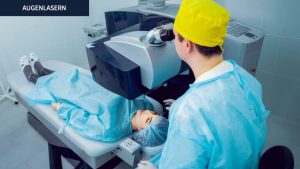
If you want to live your life without glasses, you can have the corneal curvature lasered. The irregularities of the cornea are removed.
In this way, the corneal curvature can be improved. Femto-LASIK treatment is often used for this purpose. Before treatment, the patient is given numbing eye drops.
Then a corneal lamella is prepared in the uppermost layer of the eye with the femtosecond laser, unfolded and the defective vision is treated within a few seconds with the eximer laser.
Then the corneal lamella is moved back into the correct position. The state-of-the-art SMILE® PRO procedure is also increasingly being used to correct a corneal curvature.
The course of an eye operation is clear and comprehensible. Make an appointment for a preliminary examination. Once the treatment method has been clarified, you can make an appointment for the surgical procedure. With us, you can find out in advance which laser eye correction is suitable for you by means of an aptitude test.
Corneal curvature lasers for thin cornea
Another method of treating a corneal curvature in persons with thin cornea is the PRK/Lasek method. The corneal lamella does not need to be prepared for this.
In the Advanced PRK & LASEK method, the excimer laser only works on the surface of the corneal layer and not on internal areas.
What eye laser methods work for astigmatism?
Whether the ReLEx® SMILE, LASIK or Femto-LASIK or PRK/LASEK method is used depends on the thickness of the cornea and whether it is farsightedness or nearsightedness.
With the PRK/LASEK method, it is possible in some cases to treat a cornea that is too thin for ReLEx® SMILE or Femto-LASIK.
The Femto-LASIK method is suitable for people with additional farsightedness. The ReLEx® smile operation is particularly suitable if there is additional nearsightedness. It works more precisely because the cornea remains stable and there is less risk of complications afterwards. The operation itself only takes 10 minutes per eye.
Afterwards, light sensitivity and dry eyes occur on the first days. However, with the right aftercare, this can be handled well.
Experiences with eye lasers for corneal curvature show that the use of glasses is no longer necessary in the long term. The visual acuity is maintained in the long term.
When can astigmatism not be lasered?
There are several reasons why laser eye surgery cannot be performed, including:
- Chronic eye diseases (especially diseases of the cornea)
- Injuries/scars to the cornea
- Cornea too thin
- Under the minimum age
- Certain systematic diseases
A complete list can be found in the article: Which eyes can not be lasered?
Whether laser eye surgery makes sense depends on the severity of the defective vision. With our laser eye aptitude test, you can see whether you are suitable in just a few minutes.
What alternatives are there to laser eye surgery for corneal curvature?
In addition to laser eye surgery, refractive surgery also includes other methods to correct intentionality. An alternative method to laser eye surgery is the surgical replacement of lenses with an implant. Lens implants are artificial lenses that are inserted in the course of the procedure.
It is mainly used at very high diopters (DPT). Phakic intraocular lenses, i.e. artificial lenses implanted in addition to one’s own lens, show great success here with very severe visual impairments. A lens implant is possible from the age of 18.
Learn more: Up to how many dioptres is laser eye surgery possible?
The procedure usually takes place on an outpatient basis and only takes a few minutes. Multifocal lenses are used to correct presbyopia. Read general information about the eye!
How much does it cost to laser a corneal curvature?
Costs: The correction of a corneal curvature by means of laser treatment is only covered by the statutory health insurance if medically necessary.
In most cases, the costs of correcting the corneal curvature must be financed yourself. There is a possibility of financing if you cannot pay the full amount immediately.
From what age is it possible to have the eyes lasered? In order for the corneal curvature to be operated on, a minimum age of 18 years is required. In the online laser eye aptitude test, you can quickly determine whether you are suitable for laser eye treatment.