
Stye Home Remedies: 10 Natural Tips for Relief – Bányai Augenheilkunde

Everyone knows it and everyone hates it: the stye. They are small, stubborn, painful bumps on the eyelids. The barley grain treatment can be very effective when using various home remedies. Some home remedies may help relieve discomfort, but they do not replace medical advice or treatment when symptoms persist or worsen.
In this article, I present 10 natural home remedies and tips that may help relieve a stye.
What is a stye?
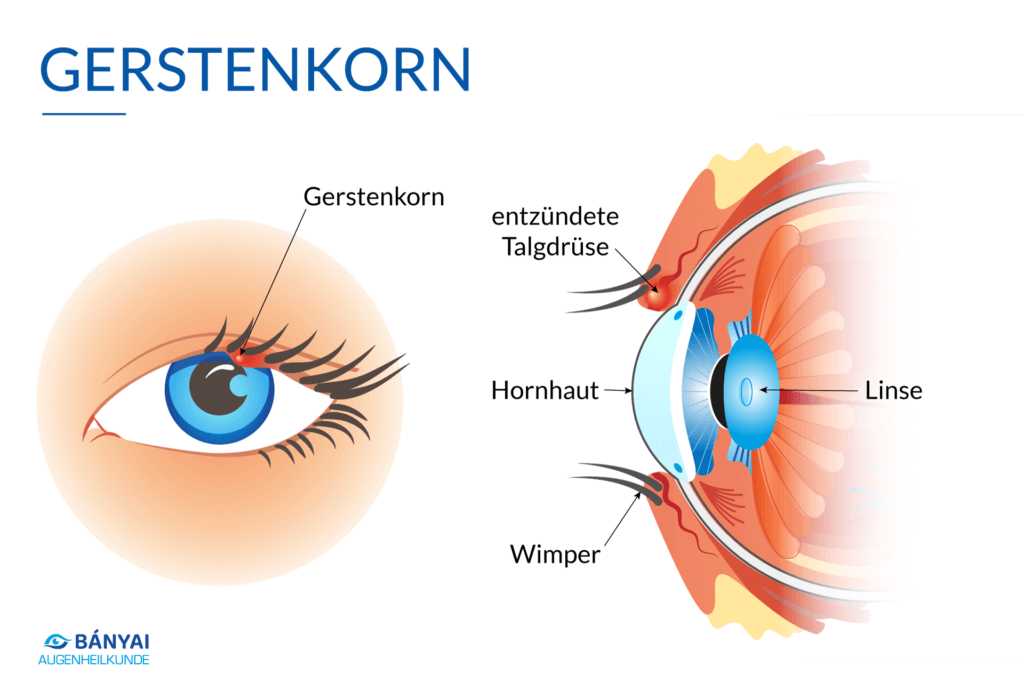
A stye is an inflammation of the eyelid that can cause unpleasant pain and itching. It is important to be informed about styes, as timely treatment can help relieve pain and reduce the risk of the inflammation progressing.
Some home remedies may help relieve symptoms, but use anything near the eye with caution. Good eyelid hygiene is important because bacteria can spread through hands, towels or eye makeup. Read more about whether a stye is contagious.
Which home remedies may help relieve a stye?
For people interested in home remedies for styes, here are 10 tips that may help relieve discomfort caused by a stye.
Warm compress
A warm, clean compress may help relieve discomfort and support the natural drainage of a stye. Soak a clean washcloth in comfortably warm water, wring it out and place it over the closed eyelid for 5–10 minutes. Re-warm the cloth as needed, but do not use hot water or apply pressure.
Cold water
A good first step is to rinse the affected area with cold water. This not only helps alleviate the inflammation but also reduces the risk of secondary infection.
Tea tree oil
Tea tree oil has anti-inflammatory properties and can be used as a natural antiseptic. Apply a small amount of tea tree oil to a cotton pad and gently dab it onto the affected eye. With regular use, this can help reduce inflammation and promote healing.
Chamomile and sage tea bags
Sage tea and chamomile tea are excellent natural remedies for treating a stye. Both teas have anti-inflammatory properties that can help improve the condition of the stye and relieve pain.
Put a teaspoon of chamomile or sage tea into a cup of hot water and let it steep for 3 minutes. Then soak a cotton pad in this infusion and place it on the affected eye for 10 minutes.
For best results, you should apply tea compresses regularly – every day or every night depending on the condition of the stye – to fully relieve your symptoms
Aloe Vera
Aloe vera has many anti-inflammatory properties, making it ideal for treating a stye. Apply some aloe vera gel directly to the affected eye, or soak a cotton pad in freshly pressed aloe vera juice and hold it against the eye for 10–15 minutes.
This will help reduce inflammation and speed up the healing process.
Honey
Honey has natural antibacterial and antioxidant properties and therefore can help treat the inflammation associated with a stye.
Soak a cotton pad in warm honey water and place it over the affected eye for 10–15 minutes; this should significantly relieve the symptoms.
Eye drops prescribed by a doctor
Use specialized eye drops to reduce inflammation and support the healing process. Apply them as directed by your physician.
Cold compress for pain relief
Apply an ice pack or cold compress to the affected area to relieve pain and reduce swelling. However, make sure to do this only for a short time — about 10 minutes at a time — to avoid frostbite.
Apple cider vinegar
Apple cider vinegar has many beneficial properties for skin health, particularly for inflammatory conditions such as a stye. Mix 1 teaspoon of apple cider vinegar with 2 tablespoons of warm water, and use a cotton pad to apply the mixture directly to the affected eye.
Let it sit for 10–15 minutes, then rinse it thoroughly with clean water. For optimal results, repeat this application several times a day until the stye has completely healed.
Dry heat from a red light lamp
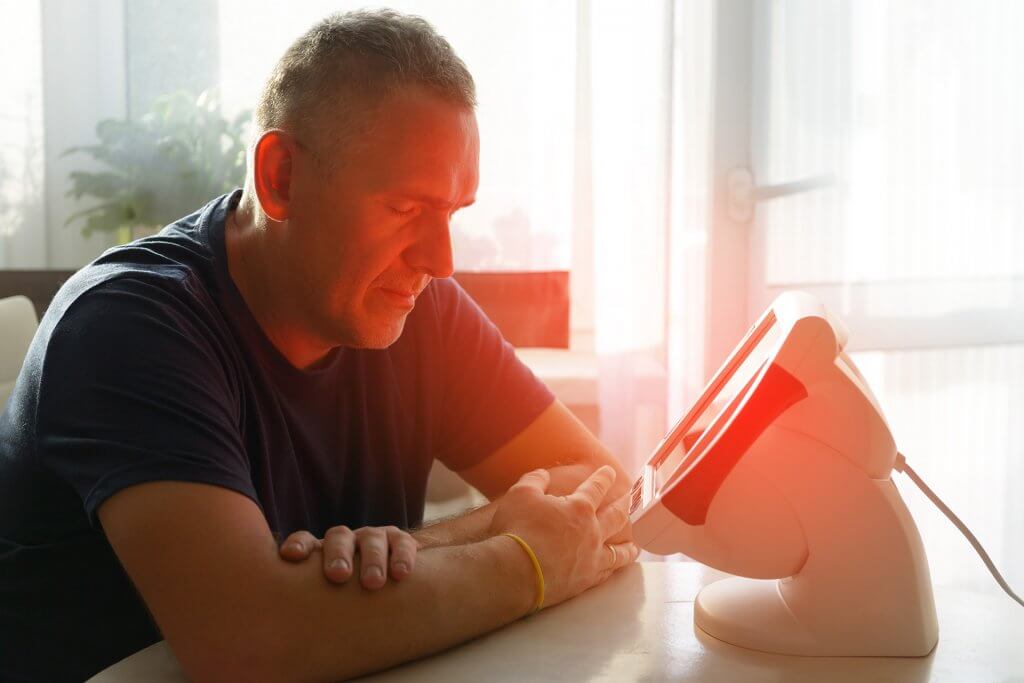
Another method for treating a stye, often recommended by doctors, is using a red light lamp. This type of treatment can relieve pain and speed up the healing process. Here are five tips on how to use a red light lamp effectively in your treatment.
First, make sure you are using a good-quality red-light lamp. There are different types of lamps, and not all of them are equally effective at treating styes.
Secondly, position the lamp correctly. The lamp should be about 10 to 15 cm from your eye. Also, ensure that the lamp does not shine directly into your eye — this can cause painful burns.
Third, for optimal effect, the treatment should be used for at least 15 minutes each day. However, begin slowly and gradually increase the time as needed and according to your comfort level.
Fourth, take care of your eye regularly during treatment with the red-light lamp. The dry heat can cause your eye to dry out, so it’s important to hydrate and lubricate it regularly with moisturizers or eye drops.
Fifth, take enough breaks during your treatment and don’t strain your eyes too much! Take breaks of 15 minutes or more – this step is especially important for people with sensitive eyes!
Overall, dry heat from red-light lamps is an effective way to treat styes — but make sure it’s used correctly! Pay attention to the quality of the lamp, keep the proper distance from the eye, and don’t overuse it!
Applying dry heat for a total of 15 minutes every 24 hours is sufficient. With a little care, it can provide relief and help you recover faster!
When should you see an ophthalmologist?
You should consult an ophthalmologist if the stye does not improve after a few days, becomes increasingly painful, affects your vision or keeps coming back.
If none of the measures help or if the swelling worsens, make an appointment with an ophthalmologist. Medical advice is also recommended if swelling spreads beyond the eyelid or if you develop fever.
The ophthalmologist can determine whether further treatment is necessary and provide a scientifically sound recommendation to resolve your problem permanently. This also applies to conjunctivitis and other eye conditions.
What should you avoid if you have a stye?
Do not squeeze or puncture a stye. Avoid eye makeup and contact lenses until the eye has healed, and wash your hands before touching the affected eyelid.
Conclusion – Home remedies for styes
A stye often improves on its own, and some measures may help relieve discomfort. However, home remedies are not a substitute for medical advice if symptoms persist, worsen or recur.
Although there is no guarantee that all methods will have the same effect, it is definitely advisable to try them and consult a doctor if necessary.
If you have any concerns or recurring symptoms, please feel free to seek professional advice at our laser eye centre in Karlsruhe or Stuttgart.
Frequently asked questions about styes
Which home remedies help with a stye?
Home remedies should be used with caution when you have a stye. Moist compresses, homemade liquids and non-sterile materials can further irritate the eye or introduce germs. If in doubt, seek medical advice.
Is dry heat helpful for a stye?
Dry heat may support the healing process. It should only be applied with a suitable device and at a safe distance. The eye must not be overheated. If you are unsure, ask an ophthalmologist for advice.
Can you treat a stye with zinc ointment or another ointment?
Do not apply ointments near the eye without medical advice. Whether an ointment is appropriate depends on the cause and location of the inflammation. Eye medication should only be used as recommended by a medical professional.
What should you avoid when you have a stye?
Do not squeeze or puncture the stye. Avoid eye make-up and, if possible, contact lenses until the inflammation has healed. Wash your hands thoroughly before and after touching the area around the eye.