
What helps with age-related vision loss?

Before you can consider what helps with age-related vision loss, you must first determine its individual cause.
Age-related vision impairment is an umbrella term for various problems that can occur over the course of a lifetime. It often refers to presbyopia, but cataracts, glaucoma and macular degeneration can also cause vision problems and limitations in old age.
Depending on the vision problem, lifestyle changes, early diagnosis, and various treatment options can help maintain or improve vision. In this article, you will learn what causes age-related vision loss, whether and how you can prevent it, and which treatments can help.
Possible causes of age-related visual impairment
The most common form of age-related visual impairment is presbyopia. It typically begins at around age 40 and makes near vision more difficult because the eye’s lens loses flexibility. As a rule, presbyopia worsens between the ages of about 40 and 60, then remains largely stable.¹
Another problem that affects many people is cataracts, in which the lens becomes cloudy and vision generally deteriorates. This cloudiness can be corrected with lens replacement, but otherwise it typically progresses steadily.
Age-related macular degeneration (AMD) can also lead to visual impairment – the risk of AMD increases as people age. It affects central vision and, in severe cases, can cause a significant deterioration in vision, even leading to vision loss.
Glaucoma, in which intraocular pressure rises and damages the optic nerve, is also a possible cause of age-related vision impairment. These conditions make it important to have regular eye examinations so symptoms can be detected early.
¹gesund.bund: Presbyopia.https://gesund.bund.de/alterssichtigkeit-presbyopie
Prevention of vision loss in old age – what helps?
Although presbyopia itself cannot be prevented, as it is a natural part of the aging process, certain measures can help support overall eye health. In addition, many eye diseases (e.g., diabetic retinopathy) can be influenced.
A healthy lifestyle that includes a balanced diet, regular exercise, and avoiding smoking can help prevent diabetes and high blood pressure, which in turn can damage the eyes. Omega-3 fatty acids, vitamins A and C, and antioxidants from foods such as kale, carrots, and salmon also help keep the eyes healthy.
Protecting the eyes from UV radiation by wearing sunglasses can also help prevent certain eye diseases. Finally, regular eye examinations are important to detect any changes early.

Why an early diagnosis is important
Early diagnosis can help prevent age-related vision impairment from progressing and worsening unnoticed. Many eye diseases, such as cataracts or age-related macular degeneration (AMD), develop slowly and may initially go unnoticed.
Regular visits to the ophthalmologist help detect age-related visual decline early and, ideally, allow treatment of the underlying cause before it irreversibly impairs vision.
Even presbyopia, which may initially seem harmless, can become increasingly burdensome in everyday life, especially if it is not treated early. With AMD and glaucoma, urgent action is required, as otherwise there is a risk of permanent blindness.
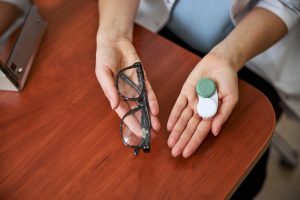
With early diagnosis, and depending on the type of vision impairment, appropriate visual aids—such as glasses or contact lenses—or medicinal or surgical treatments can be used to preserve quality of life and prevent serious complications.
Although the cause is often not serious, there are emergencies that require prompt action. Early detection and regular check-ups are therefore essential for maintaining good eye health.
– Bányai Neue Augen
These treatments can help with age-related vision impairment
Which treatment helps with age-related vision decline depends on the type of vision problem; in most cases, it is classic presbyopia. Reading or progressive glasses usually help. For those who do not want to wear glasses, Bányai Neue Augen offers various laser procedures such as PRESBYOND® Blended Vision. This method corrects near and distance vision, so that visual aids may no longer be necessary.
With cataracts, on the other hand, the cloudy lens is replaced by an artificial lens, which provides permanent clear vision. Treatment of glaucoma may require medication or, in advanced cases, surgery to lower intraocular pressure.
In macular degeneration, injections into the eye can help slow disease progression and stabilize vision.
In any case, you should make sure to have regular check-ups with your ophthalmologist, especially as you age. It’s equally important to see your ophthalmologist as soon as you notice any changes in your vision. That allows for prompt treatment to prevent both acute emergencies and the onset of age-related vision loss.
Read more about presbyopia:
• Presbyopia (age-related long-sightedness) simply explained
• Declining vision in old age: When does vision begin to decline?
• Do you become nearsighted or farsighted as you get older?
• Symptoms of presbyopia: How can I tell if I have presbyopia?
• What treatment options are available for presbyopia?
• How does presbyopia differ from other visual impairments?
• How does presbyopia affect my daily life?
• Which foods are good for your eyes as you age?
• What factors influence presbyopia?
• Presbyopia vs. myopia: What are the differences?
• Presbyopia vs. Farsightedness: What’s the difference?
• Does smoking affect presbyopia?
•Differences between presbyopia and farsightedness
• Myths about presbyopia: What’s true?
• Prevalence of presbyopia in Germany: Does everyone become presbyopic?
• Eye problems from presbyopia – an issue starting at age 40
• What are the costs for presbyopia? A comparison of treatment options
• The 10 most common eye diseases in old age
• Exercises to improve presbyopia
• What to do about presbyopia and nearsightedness?
• Reading glasses – 10 things to keep in mind
• Reading glasses or progressive lenses: Which solution is most sensible in the long term?
• Which pair of reading glasses is right for me?
• Contact lenses for presbyopia: What you need to keep in mind!
• Diopter chart for presbyopia