Visual disturbances – Causes, symptoms and risks explained by Dr. med. Bányai

In ophthalmology, changes in optical perception are referred to as visual disturbances. These include, for example, reduced visual acuity, visual field restrictions, eye fibrillation or double vision.
The causes are different and range from eye diseases to neurological disorders to brain tumors. In addition, after a long time, physical problems such as stress or migraines trigger various visual disturbances. Even severe tension in the neck, which originates from the cervical spine, can lead to a change in perception. Obesity and diabetes mellitus can also be triggers.
Dr. med. Daniel Bányai deals with visual disturbances on a daily basis at the laser eye sites in Karlsruhe and Stuttgart. In this blog article, you will learn important information about visual disorders directly from the ophthalmologist, how to treat them and what you can do to prevent them.
Visual disturbances Symptoms – What types are there?
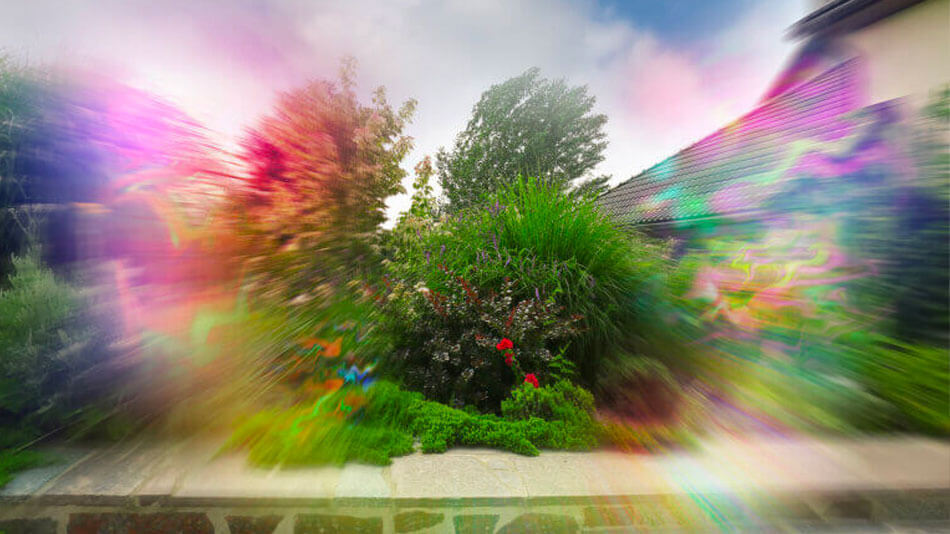
Visual disturbances are associated with various symptoms, such as flashes of light, colorful spikes, flickering or fog in front of the eyes. Some sufferers see flying mosquitoes, double images or suffer from visual field defects.
Example image of a visual disorder

Doctors understand a visual impairment to mean all changes in our vision. They can develop gradually or appear suddenly. Children’s eyesight is particularly prone to disturbances. Changes can occur in one eye or in both eyes.
Sometimes vision problems are harmless, but most of the time they are a sign of a serious condition that needs immediate treatment. The BVA (Professional Association of Ophthalmologists in Germany) stated that 60 percent of visual impairments in children are detected and treated too late. Therefore, a regular check-up with the ophthalmologist is recommended.
As different as the symptoms are, so different are the causes of visual disturbances. Circulatory problems or stress usually cause temporary visual disturbances. Vision can also change during pregnancy. Sudden visual disturbances often result from a migraine and can be accompanied by severe headaches.
Nausea or dizziness are also common side effects of visual disturbances. Severe neck tension in the area of the cervical spine or side effects of medication are also causes of altered perception. In the event of a stroke or retinal detachment, a doctor should be contacted immediately.
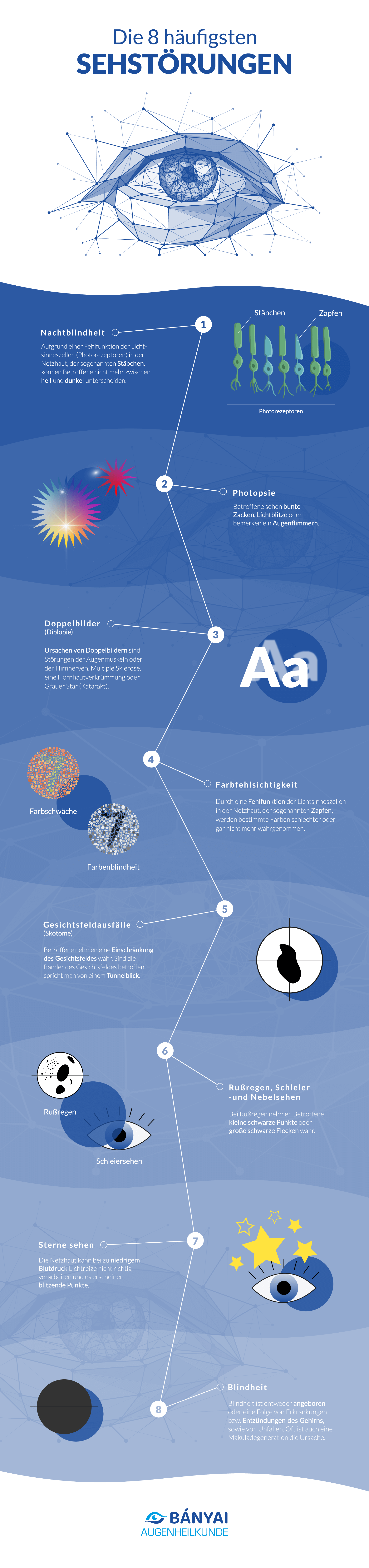
1. Night blindness
People with night blindness (nyctalopia) do not see much or nothing at all in the dark. They find it difficult to orient themselves. This is due to a malfunction of the light sense cells in the retina. Behind night blindness can also be an inherited eye disease (retinitis pigmentosa).
This disease is a genetic defect that gradually worsens vision. If night blindness develops over time, retinal detachment may be behind it. If diabetics suffer from proliferative retinopathy, they are usually nocturnal.
2. Flashes of light, zigzag lines, flicker
Some people with impaired vision see colourful spikes, flashes of light or perceive a flicker in their eyes. These light phenomena are called “photopsia” and are common accompaniments to migraines or epilepsy. Such light phenomena can also occur with an eye migraine. Headaches and other symptoms such as eye fibrillation, flashes of light or visual field impairments are typical for an eye migraine.
Sudden visual disturbances usually disappear on their own. If not, you should see an ophthalmologist immediately. This is because the retina can become detached or the vitreous body can lift off. This can lead to complete blindness.
3. Double vision (diplopia)
Double images are not just side effects if you have drunk too much alcohol. Rather, they are a consequence of eye diseases or other diseases. A disorder of the eye muscles, certain cranial nerves or the autoimmune disease “multiple sclerosis” can be causes. Corneal curvature or cataract can also cause double vision in one eye (monocular diplopia).
4. Colour vision loss and colour blindness
Color weakness and color blindness are forms of color vision deficiency. Mistakenly, these three terms are often used as synonyms.
Special light-sensitive cells in the retina – the cones – are responsible for colour vision. Due to a malfunction of these cones, certain colours are more difficult to perceive in the event of colour weakness or are even confused in unfavourable lighting conditions. The most common form is the red-green weakness, which almost only men suffer from.
In the case of color blindness, one or more cone types are missing, so that those affected no longer see certain colors at all. The worst form is complete color blindness, where you only see the world in gray.
Sometimes diseases such as cataracts, Alzheimer’s or diabetes are the cause of color blindness. These diseases can weaken the function of the cones or cause them to fail completely.
5. Visual field defects (scotomas)
In the case of visual field defects (scotomas), those affected perceive a restriction of the field of vision and a deterioration in visual acuity. If the edges are affected, this is referred to as tunnel vision.
This can be triggered by diseases such as glaucoma, age-related macular degeneration, optic nerve inflammation or retinal damage. Even with a stroke, visual field failures can occur.
6. Soot rain, veils and fog
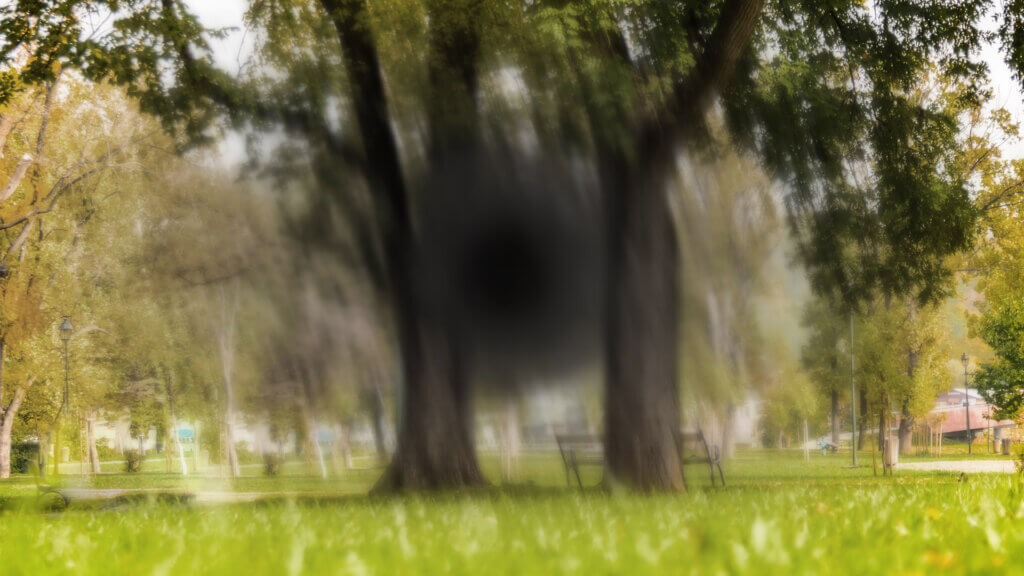
With a shower of soot, those affected see many small black dots, flashes of light or large black spots in front of their eyes. The cause of such vision problems may be a tear in the retina. In the event of a retinal tear, the vitreous body detaches from the retina and tears. Symptoms such as a veil or fog in front of the eye can be the result. In the event of such phenomena, go to a doctor immediately!
7. Blurred vision
Do you see blurry, blurry, perceive the environment as if through a fog or veil? Blurred vision as a widespread visual disorder has different causes. It is likely that your eyes are overextended or you suffer from defective vision (nearsightedness/farsightedness). A cataract or, in the worst case, a retinal detachment can also be reasons for this.
8. Dots and small threads in the field of vision
Dots and small threads in front of the eye are called flying mosquitoes or, in French, “mouches volantes”. The reason for the visual disturbance is a clouding of the vitreous body and is usually harmless. However, if your vision is severely impaired, this could indicate a detachment of the vitreous body or a retinal detachment. In this case, an ophthalmologist should be contacted immediately.
9. See stars
Hopefully you only see stars at night. If you “see stars” during the day, you may have too low a blood pressure. Not enough oxygen-rich blood gets into the brain and blood pressure drops.
This means that the retina can no longer process the light stimuli properly and flashing dots appear in front of the eyes. There is a risk of fainting if blood pressure continues to fall. If you suffer from low blood pressure, it is best to have it clarified by a doctor.
10. Blindness
Blindness is either congenital or arises in the course of life. Vision is completely missing (amaurosis). Often, blindness follows macular degeneration, in which the retina is damaged. In addition, diseases, injuries or inflammation in the brain are the cause of blindness.
Causes of visual impairment
The possible causes of visual impairment are manifold. Eye, internal or neurological conditions can cause vision problems. Head injuries, side effects of medication, or poisoning can affect vision.
Less dramatic reasons for visual disturbances are overextended eyes or poor circulation. In old age, visual disturbances are even common, because older people increasingly suffer from various diseases and have to take medication. So you see, the types of vision problems are extremely complex and the cause requires close examination.
Visual disturbances – causes in the eye
Many people have visual impairment in the form of ametropia, such as nearsightedness or farsightedness. Both forms are associated with a loss of visual acuity. Children and the elderly are already affected.
In the case of nearsightedness, people only see near objects in sharp focus, the vision in the distance remains blurred because the eyeball is too long. Laser eye surgery is becoming more and more interesting for athletes. Because they can do without glasses and contact lenses after the treatment.
In the case of presbyopia, the elasticity of the lens decreases after a long time, which leads to blurred images.
Squinting often affects children and is usually accompanied by double images. The eye muscles do not function adequately. Often, doctors cannot justify which triggers lead to strabismus.
In the case of a corneal curvature (astigmatism), sufferers see distorted, blurred or blurred.
Age-related macular degeneration (AMD) affects the visual cells in the middle of the retina. The cells can no longer renew themselves and the central visual acuity is partially or completely lost.
Cataract leads to slowly increasing visual disturbances and possibly also to strong glare. Affected persons often report ‘‘ veiling ”.
Green cataracts (glaucoma) are associated with visual field deficits. Those suffering see fog in front of their eyes or coloured rings around bright light sources. A glaucoma attack should be treated by the doctor as soon as possible.
Patients who perceive flying mosquitoes in front of the eye are affected by vitreous opacity or vitreous detachment. Visual disturbances such as dots and small threads can be the result.
If there is a vitreous hemorrhage, those affected recognize black spots or soot in the field of vision. Visual impairment with hypoglycaemia is also a possible cause.
With retinal detachment, sudden flashes of light, dark spots, and shadows may occur. You should contact a doctor immediately!
The eye migraine may be accompanied by a headache. Much more, however, eye migraines lead to eye fibrillation, flashes of light and visual field failures. Stress, hormone fluctuations or bright light can be causes of this.
Dry eyes can cause conjunctivitis or corneal inflammation. The environment is perceived as blurry and unclear.
Other causes of visual disturbances are corneal inflammation and vascular dermatitis. These are in turn attributed to other diseases.
In addition, vision problems can occur due to optic nerve inflammation. Affected people see less sharply and colours appear pale.
Eye tumors greatly reduce visual acuity and cause dark spots and visual field defects.
Visual disturbances – causes that do not emanate from the eye
The nerve disease multiple sclerosis is associated with visual disturbances, which are often the first sign of the disease. Affected persons see blurred, blurred or perceive double images. See an ophthalmologist immediately!
Visual disturbances can be an indication of a stroke. Some go blind in one eye, see double vision, or notice visual field deficits.
Diabetes can damage the fine vessels in the retina. If the disease is not treated, retinal detachment may even occur. Symptoms include soot rains or flashes of light.
Migraines with aura can cause visual disturbances such as eye flickering, flashes of light, colorful spikes or visual field failures. These phenomena often cause severe headaches.
The autoimmune disease Graves’ disease leads to hyperthyroidism, which affects vision. The disease is often accompanied by deterioration of vision, photophobia, double vision and a foreign body sensation in the eye. Dry eyes, eye swelling or redness may also occur.
Inflammation of the arteries (temporal arteritis) occurs especially after the age of 50. In the case of the disease, the artery walls of the temporal or cerebral artery become inflamed. The inflammation that occurs in sections leads to one-sided vision loss, which is reflected in the second eye within a few weeks.
Aneurysm in the brain denotes an enlarged cerebral artery. Constant or changing double images are the result. If a cerebral artery ruptures, a life-threatening cerebral hemorrhage threatens.
Cerebral hemorrhage occurs when a brain aneurysm ruptures and leads to sudden double vision, clouding of consciousness or paralysis.
Not only malignant, but also benign brain tumors can cause visual disturbances. Patients are affected by an increasing deterioration of vision, double vision and visual field failures.
Circulatory problems can be accompanied by visual disturbances, which in turn are responsible for dizziness or gait insecurity.
Alcohol and other drugs such as cannabis, cocaine or heroin impair visual perception and can also cause visual disturbances.
Side effects of medication can lead to visual disturbances and affect colour perception. Antibiotics and dehydrating agents (diuretics) are examples where symptoms may occur.
Furthermore, neck tension can also cause a visual disturbance under certain circumstances. Severe tensions of the muscles of the cervical spine (cervical spine) are also often accompanied by headaches and dizziness.
Visual impairment or dangerous eye disease? Diagnostics
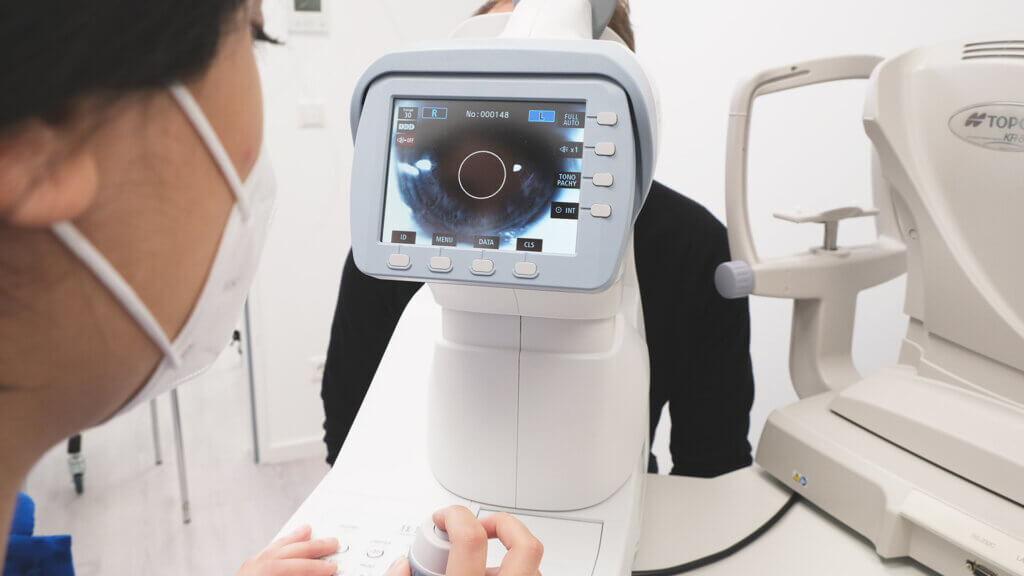
In the course of a specialist diagnosis, you will first be asked about your medical history. It is important to know when and in what form visual disturbances occur and whether they are accompanied by other complaints.
There are some examinations that can clarify the cause of vision problems:
- Ophthalmological examination: The first route leads to an ophthalmologist who, among other things, checks the visual performance and can thus detect possible defective vision.
- Slit lamp examination: With the help of a slit lamp, the ophthalmologist can detect diseases of the anterior segment of the eye. These include cataracts or inflammation of the middle eye skin (uveitis).
- Eye mirroring: The background of the eyes can be examined by means of eye mirroring (ophthalmoscopy). This method is used if there is a suspicion of retinal disease or an eye tumor.
- Intraocular pressure measurement: If a cataract (glaucoma) is suspected as a reason for visual disturbances, doctors perform an intraocular pressure measurement (tonometry).
- Blood tests: They are important if there is an underlying infectious inflammation of the optic nerve or Graves’ disease.
- Neurological examinations: If certain neurological disorders or diseases such as multiple sclerosis or optic nerve inflammation are suspected, the doctor checks the condition and function of the nerve pathways.
- Ultrasound examination: The eye ultrasound (sonography) is used to clarify a retinal detachment, eye tumor or a change in the optic nerves.
- Angiography: In this examination, the vessels in the retina and choroid are made visible by dyes in images. This examination of the blood vessels (angiography) is used if age-related macular degeneration is suspected.
- Magnetic resonance imaging (MRI) and computed tomography (CT): If visual disturbances due to tumours, brain aneurysms or cerebral hemorrhages are considered, these methods can provide information about the exact cause behind them.
Visual impairment in one eye – What is behind it?
If visual disturbances occur only in one eye, this is referred to as a one-sided or monocular visual disturbance. This can be noticeable through blurred vision, flickering, shadows or even sudden vision loss.
The causes are manifold: often a disease of the retina (e.g. retinal detachment or macular degeneration), inflammation of the optic nerve or a glaucoma attack is behind it.
A corneal curvature or cataract can also lead to one-sided complaints. Important: Sudden visual disturbances in one eye are always a warning signal and should be clarified immediately by an ophthalmologist – especially if they are accompanied by flashes of light, visual field failures or pain.
In our laser eye centers in Stuttgart and Karlsruhe, Dr. med. Daniel Bányai regularly advises patients with such symptoms and individually on causes and treatment options.
Treat visual disturbances
To treat visual disturbances, there are quick solutions as well as long-term correction by laser eye surgery in Karlsruhe or Stuttgart.
In the case of inflammation, various medications often provide relief. Glasses or contact lenses can be temporary solutions if they are vision problems due to defective vision.
Laser eye treatment is a sustainable method to cure vision defects and eye diseases. A cataract (cataract) and sometimes a glaucoma (glaucoma) requires surgery.

How are neurological visual disturbances treated?
Diagnosis is the basis for successful treatment. Patients are asked about changes in their vision and perception. Diagnostics also include special neurological examinations. Vision can be improved with targeted therapies.
In the event of visual field failures due to a stroke or brain injury, two forms of therapy are primarily used. One of these is Visual Exploration Training (VET). The aim is to compensate for visual field deficits through rapid and targeted eye movements.
With visual restitution therapy (VRT), the expansion of the restricted visual field is trained. Furthermore, visual disturbances can often be remedied very well with drug therapy, physiotherapy, relaxation therapy, psychological therapies or occupational therapy. Caution – sudden visual disturbances are often an important precursor for a stroke (cerebral infarction).
Tip – what to do in case of vision problems yourself?
Below we summarize some tips on how to prevent vision problems and ensure healthy eyes.
- Balanced nutrition: Carrots, red beets, broccoli, citrus fruits and spinach provide your eyes with important nutrients.
- Avoid alcohol, coffee, chocolate: If stimulants trigger a migraine attack, you should avoid them.
- Abandonment of nicotine: Smoking impairs the circulation of the optic nerve.
- Physical exercise: Sport promotes blood circulation and thus also ensures healthy eyes.
- UV protection: Use sunglasses with sufficient UV protection, as UV rays can damage the retina and eye lens.
- Fresh air: Heating air promotes dry eyes, which in turn can lead to inflammation. Regular blast ventilation ensures fresh and humid air.
- Eye exercises: By eye circles or looking back and forth, you promote your eye muscles.
- Eyes relax: Place your hands on your eyes in between if you do a lot of screen work. Darkness relaxes.
- Massage eyes: You can tap the eye area with two fingers to stimulate blood circulation and tear flow.
- Ophthalmologist checks: Visit your ophthalmologist regularly, because early diagnosis increases the chance of successful treatment.
Can my eyes be lasered?
Use the laser eye aptitude test to find out whether you are suitable for laser eye treatment:
Visual disturbances – when do I need to see a doctor?
There are some indications that you should see a doctor immediately. For example, if new and sudden visual disturbances such as sudden deterioration of vision or double vision occur (double vision), it is best to go to an ophthalmologist immediately. Duplicate images may indicate an injury to the eye socket.
Do you always see flashes of light, color rings around light sources or soot, such as black dots, spots? Or are visual disturbances accompanied by other complaints such as severe headaches or nausea? You should also urgently contact a doctor for these signs.