
Spongy vision in the distance and nearby?

Spongy vision is not a medical term in and of itself. Nevertheless, visual impairment is often perceived by the person concerned due to a “blurred vision”. Vision is more difficult and near or far can appear blurred. This is especially noticeable in a new and unfamiliar environment. Here, the ophthalmologist speaks of a so-called defective vision.
These range from nearsightedness (myopia) to farsightedness (hyperopia) to corneal curvature (astigmatism). All these terms refer to a state of the eye that leads to impaired vision. Blurred, spongy vision is the result. In the following article, you will learn how this spongy vision arises and why laser eye surgery can be your permanent solution.
When do I see blurred?
Sometimes it is already noticeable in childhood when looking at the blackboard – sometimes much later, at the best age, when suddenly the contrasts of letters become blurred when reading. Blurred vision is usually annoying for those affected (such as constant eye twitching) and can limit the quality of life. The blurred vision is particularly noticeable in these areas:
- Getting up in the morning
- Working on the PC
- Read
- Driving
- Television
Especially in adulthood, it is increasingly noticeable. The blurred, spongy vision impedes the sufferer in their everyday life. Whether in sports, driving, watching TV or in his professional environment. People with poor vision are disadvantaged and have to do without some treatment. But when this is the case can be different from situation to situation.
Standing up
Perhaps it has happened to you before: you wake up and notice that you can no longer clearly see the time of the alarm clock. The reasons for this can be varied. For example, an unfavorable sleeping position can be responsible for this. However, an unbalanced visual defect is also conceivable. After getting up, this can be noticed until the affected person slowly gets used to poorer vision again.
Working on the PC
In today’s world, computer work is constantly increasing and thus determines the everyday work of numerous people. Especially with full concentration on the PC, it is quickly noticed that the eyes are strained and tired. Again, an uncorrected visual defect may be responsible.

While reading
At the latest in the middle of the fortieth year of life, the time has come for all of us. Nearby there is blurred vision. This is usually a creeping process and suddenly small fonts, such as leaflets, can no longer be deciphered. Sooner or later, farsightedness becomes apparent in every person in old age. The adaptability of the lens, also called accommodation, decreases and it can no longer adjust so well to things nearby. You can have your long-sightedness lasered.
When driving
Sometimes a defective vision is discovered when applying for a driver’s license. There, a certificate of sufficient visual performance is required to be fit to drive. If traffic signs are only detected late, short-sightedness could be responsible.
Why is vision blurred?
There are several reasons why vision is blurred. Defective vision can be caused by a corneal curvature or a disproportion between eye length and the refractive power of the media. For example, in a myopia, the eye is longer than the norm. A viewed image is not displayed at the point of sharpest vision in the retina. The person concerned sees a blurred image. In this case, the lens does not have the correct refractive power in relation to the eye length. Negative lenses help to see clearly again with appropriate correction.
Acute vision loss
Since the growth of the eye and the change in refractive power usually do not change overnight, it is advisable to act immediately in the event of acute visual deterioration. A medical examination is urgently needed.
What can the ophthalmologist do?
Although ametropia is usually responsible for impaired vision, the ophthalmologist should clarify whether the eye is otherwise healthy. This includes looking at the anterior, outer section of the eye and the fundus. Impaired vision can also be a sign of untreated diabetes, for example.
Low blood pressure can also be blurred. Especially in old age, vision can become cloudy over time. One reason for this is the opacity of the lens, which is also called cataract. The cataract symptoms begin gradually, but can be detected early by the ophthalmologist. Once all medical factors have been clarified and the eye is healthy, the person concerned can visit the optician.
Glasses and contact lenses
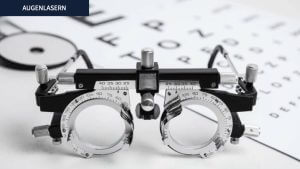
The optician will measure your eyes in the first step. This gives him the appropriate values for the correction. It is possible to compensate for defective vision via glasses or contact lenses. Both have some advantages and disadvantages for the wearer, which are briefly explained below.

Advantages and disadvantages of glasses and contact lenses
In the meantime, opticians have a colourful selection of models. Unlike previous years, the glasses are now considered an accessory. Whether you prefer a striking model with a thick plastic frame or a discreet and delicate frame is up to you.
The choice is now enormous. When buying glasses, not only the aesthetics are decisive, but also many other factors, such as weight and fit. Many spectacle wearers are familiar with unpleasant pressure points on the bridge of the nose and ears. This problem does not exist with contact lenses.
However, you have other disadvantages with this type of correction of refractive error. For example, contact lenses are associated with care costs. The lenses need cleaning and storage so that they are ready for use again the next day. There are numerous people who are not entirely happy with both variants.
Can the defective vision be lasered?
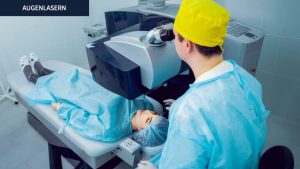
There is also the option of having your eyes lasered. After the eye laser treatment, glasses or contact lenses are no longer necessary. There are now numerous people who have enthusiastically removed their glasses after the operation. For people who no longer want to rely on vision aids, lasering is a good way to achieve clear vision.
Laser eye surgery has become a standard procedure over the years that helps the patient immediately and eliminates his problem. Laser eye surgery is basically permanent. However, if another eye disease occurs, such as presbyopia, presbyopia must be retreated with a laser. Glasses would also be an alternative, but only with laser eye treatment can you do without glasses or anything else for a lifetime.